
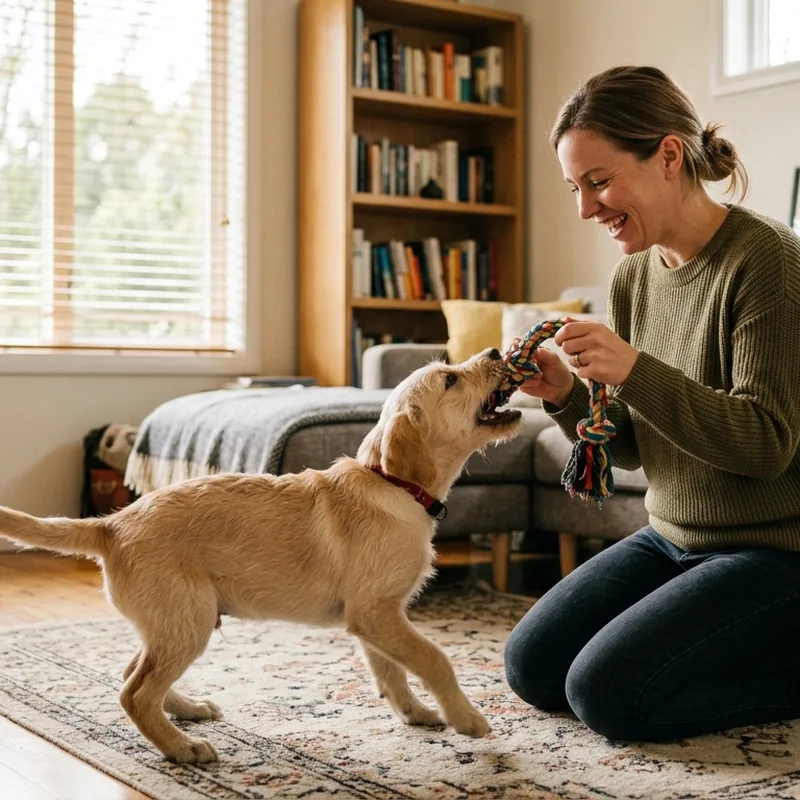
Puppy Nipping vs. Serious Biting
Most biting from young puppies is exploratory play or teething discomfort, not aggression — puppies explore the world with their mouths the way toddlers do with their hands. Adult dogs that bite out of fear or resource guarding are a different situation that usually benefits from a professional trainer or behaviorist, especially if the biting is intense or unpredictable.
The Yelp-and-Withdraw Method
When a puppy’s teeth touch your skin too hard, give a sharp ‘ow’ and immediately stop playing or withdraw your attention for a short moment. This mimics how littermates teach each other bite inhibition, and most puppies pick up the pattern within days to a couple of weeks of consistent repetition.
Redirect to an Appropriate Chew Toy
The moment you stop the nipping, offer a toy instead so your puppy still gets to bite something — just not you. This teaches the difference between acceptable and unacceptable targets rather than just suppressing the biting urge entirely, which tends to work better long term.
Consistency Across Everyone in the House
If one person tolerates rough mouthing during play while another discourages it, the mixed signals slow down training considerably. Getting everyone in the household on the same page — same response, same redirection — makes a noticeable difference in how quickly the behavior improves.
When to Get Professional Help
If biting is intense, drawing blood repeatedly, escalating rather than improving, or appears alongside growling, stiff body language, or resource guarding, that’s worth a session with a certified trainer or veterinary behaviorist rather than continuing to manage it alone.
FAQ
Yes, it's a normal part of teething and play exploration for most puppies, and it typically improves significantly with consistent training by 5-6 months of age.
No — physical corrections like this can create fear or confusion rather than teaching the behavior you actually want. Redirection and consistent response work better.
Play often gets a dog more excited and less inhibited, which is exactly why redirecting to a toy during play sessions is such an effective, low-conflict training method.
Most puppies show major improvement in mouthing by 5-6 months as adult teeth come in and training takes hold, though some gentle mouthing during play may continue longer in certain dogs without being a concern.
