
Reptiles and amphibians aren’t low-maintenance pets in the way people sometimes assume — they’re precise-maintenance pets. Get the temperature, humidity, and lighting right, and most species are remarkably easy to keep. Get those wrong, and even hardy species struggle.
The Terrarium Comes First
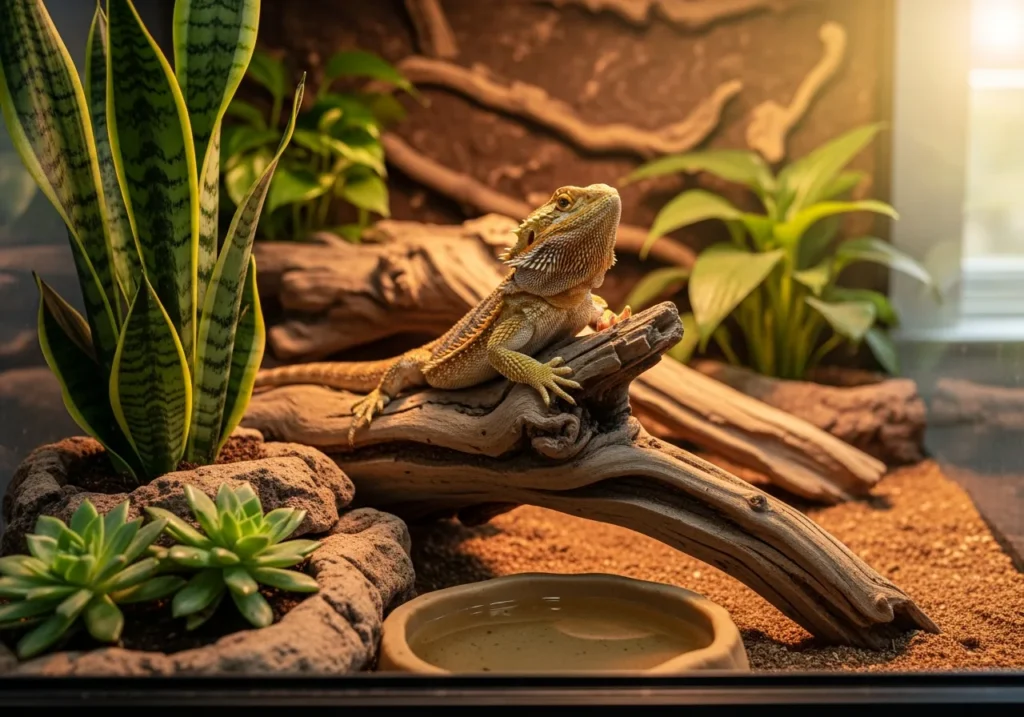
Before choosing a species, understand what you’re building. Most reptile setups need a temperature gradient (a warm basking side and a cooler side), and many need specific humidity ranges maintained with substrate choice and misting. Desert species like bearded dragons need dry conditions with a strong basking spot; tropical species like crested geckos need higher humidity and more moderate heat.
Lighting Isn’t Optional for Most Species
Diurnal reptiles (active during the day) need UVB lighting to properly process calcium — without it, many develop metabolic bone disease over time, a serious and painful condition. UVB bulbs also lose effectiveness over months even if they still produce visible light, and need replacing on a schedule, not just when they burn out.
Feeding Varies Enormously by Species
Insectivorous species (crickets, dubia roaches, mealworms) need gut-loaded, dusted insects. Herbivorous species need a rotating variety of leafy greens and vegetables. Carnivorous snakes typically eat appropriately sized rodents on a set schedule. See our nutrition guide for specifics.
Picking Your First Reptile
Leopard geckos and bearded dragons are consistently recommended starting points — well-documented care requirements, generally calm temperaments, and forgiving of minor husbandry mistakes. See our species guide for a full breakdown by difficulty.
Health Comes Down to Husbandry
The vast majority of reptile health problems trace back to incorrect temperature, humidity, or lighting rather than infectious disease. Our health and wellness guide covers the warning signs worth acting on.
Comparing Common Beginner Species
Leopard geckos are frequently the first recommendation for a reason — they’re small, don’t require UVB as strictly as diurnal species (though it’s still beneficial), tolerate handling well once settled, and their insect-only diet is straightforward to source. Bearded dragons need a bigger setup and stricter UVB and heat requirements, but they’re famously food-motivated, calm, and genuinely interactive once established, which makes them a favorite for owners who want a reptile that seems to “know” them. Crested geckos are a good fit for someone who wants a lower-handling pet — they do well on a mostly fruit-based commercial diet, don’t need live insects as a strict requirement, and tolerate room-temperature housing without a demanding heat gradient. Ball pythons are the most common beginner snake, calm and rarely aggressive, but their feeding schedule (whole prey every 1-2 weeks) and tendency to go on unexplained feeding strikes catches some new owners off guard. Corn snakes are a close alternative, generally considered even more forgiving of husbandry mistakes and reliable feeders.
Setting Up the Enclosure Right the First Time
Buy a thermostat before you buy the animal. An uncontrolled heat lamp or heat mat is one of the most common causes of preventable reptile injury and death — thermostats keep temperatures in a safe range even if you’re not home to adjust them. Use a digital thermometer/hygrometer at both the warm and cool ends of the enclosure rather than trusting the built-in dial on cheap heat lamps, which are frequently inaccurate by several degrees.
Substrate choice matters more than it seems. Loose substrates that hold humidity (like coconut fiber) suit tropical species; drier substrates suit desert species; and some keepers use reptile-safe carpet or paper towel for easy-clean, low-risk setups while learning. Avoid substrates marketed as “sand” for young or inexperienced setups — impaction from accidentally ingested substrate is a real and common injury, especially in young lizards.
Size the enclosure for the adult animal, not the juvenile you’re bringing home. Many species grow substantially, and a setup that fits a baby bearded dragon or ball python will need replacing within the first year if bought too small.
Common Beginner Mistakes
- Skipping the thermostat to save money. This is the single most common cause of preventable burns and heat-related deaths in captive reptiles.
- Trusting the heat lamp’s built-in dial instead of an independent thermometer. Built-in gauges are frequently inaccurate.
- Handling too soon and too often. A newly acquired reptile needs a settling-in period, often 1-2 weeks, before regular handling begins.
- Assuming “reptile” means one care sheet fits all. A bearded dragon’s needs and a crested gecko’s needs have almost nothing in common beyond both being reptiles.
- Not researching adult size before buying the enclosure. Several popular beginner species grow far larger than their juvenile size suggests.
Handling and Taming
Most reptiles aren’t naturally seeking interaction the way a dog or even a rat might — tolerance of handling is learned, not innate, and it varies significantly by individual temperament as well as species. Start with short sessions once the animal has settled into its new enclosure (typically after the first week or two with minimal disturbance), and let the animal come to associate your hand with calm, low-stress experiences rather than being chased or grabbed. Snakes in particular can be stressed by handling too soon after feeding — give at least 24-48 hours after a meal before handling to avoid regurgitation.
Signs Your Reptile Is Doing Well
A healthy reptile has clear, bright eyes, regular shedding that comes off in full or near-full pieces (not stuck in patches), consistent appetite for its species’ normal feeding schedule, and normal basking behavior (using the temperature gradient as expected, not constantly pressed against the glass or hiding at all times). Weight should stay stable between vet checks — noticeable weight loss over a short period is one of the more reliable warning signs across nearly all reptile species.
What Reptile Keeping Actually Costs
The enclosure and equipment (tank, heating, lighting, thermostat, substrate) is almost always the biggest upfront cost, often exceeding the price of the animal itself for common beginner species. Ongoing costs include electricity for heating and lighting (which runs continuously for most setups), UVB bulb replacement every 6-12 months regardless of whether the bulb still visibly works, and food — live insects for insectivorous species add up faster than many new owners expect, especially for actively growing juveniles.
When to Involve a Vet
Find a reptile-experienced exotic vet before you need one, not during an emergency — not every general practice sees reptiles, and the ones that do vary widely in reptile-specific experience. Warning signs worth a prompt vet visit include stuck shed that doesn’t resolve after a humid soak, sudden appetite loss lasting beyond what’s normal for that species (some snakes fast for weeks normally; a gecko skipping more than a few meals is different), visible swelling, or labored breathing.
Amphibians Are Not “Wet Reptiles”
Amphibians like frogs, salamanders, and newts get lumped in with reptiles constantly, but their care is genuinely different. Most amphibians breathe partly through their skin, which makes them extremely sensitive to chemicals — tap water needs dechlorinating before use, and even trace soap or lotion residue on hands can harm them during handling. Many amphibian species are best kept as display animals rather than handling pets, since frequent handling itself can stress their skin and immune system. Humidity control tends to be even more critical for amphibians than for most reptiles, since it’s tied directly to how they breathe and hydrate.
Building a Feeding Schedule That Actually Works
Consistency matters more than most new keepers expect. Feeding on an irregular schedule makes it harder to notice when an animal’s appetite genuinely changes, since there’s no reliable baseline. For insectivorous species, gut-loading feeder insects (feeding the insects a nutritious diet 24-48 hours before offering them to your reptile) meaningfully improves the nutritional value passed on, and dusting with calcium and vitamin supplements on a set schedule — not just “sometimes” — is one of the most consistent factors separating a genuinely thriving reptile from one that merely survives.
Whichever species you choose, the same principle holds across every reptile and amphibian: research the exact care sheet for that specific species before buying anything, rather than relying on general “reptile care” advice. Two animals that look superficially similar in a pet store display can have completely different temperature, humidity, and feeding requirements.
Frequently Asked Questions
Do all reptiles need UVB lighting?
Most diurnal reptiles like bearded dragons need UVB to synthesize vitamin D3 and process calcium properly. Some nocturnal species, like leopard geckos, need less but still benefit from low-level UVB.
How often do reptiles need to eat?
It varies widely by species — insectivorous juveniles may eat daily, adult snakes might eat every 1-2 weeks. Always research your specific species rather than following a generic schedule.
Why is a temperature gradient important?
Reptiles are ectothermic and regulate their body temperature by moving between warmer and cooler zones. A single-temperature enclosure prevents this natural behavior and can cause health problems.
What’s the easiest reptile for a beginner?
Leopard geckos and bearded dragons are commonly recommended — both are hardy, well-documented, and tolerant of minor husbandry mistakes while you learn.
Do reptiles need a vet?
Yes — an exotic-animal or reptile-experienced vet should see your pet for checkups and any signs of illness. General small-animal vets aren’t always equipped for reptile care.
Explore This Category

Frequently Asked Questions
Most diurnal reptiles like bearded dragons need UVB to synthesize vitamin D3 and process calcium properly. Some nocturnal species, like leopard geckos, need less but still benefit from low-level UVB.
It varies widely by species — insectivorous juveniles may eat daily, adult snakes might eat every 1-2 weeks. Always research your specific species rather than following a generic schedule.
Reptiles are ectothermic and regulate their body temperature by moving between warmer and cooler zones. A single-temperature enclosure prevents this natural behavior and can cause health problems.
Leopard geckos and bearded dragons are commonly recommended — both are hardy, well-documented, and tolerant of minor husbandry mistakes while you learn.
Yes — an exotic-animal or reptile-experienced vet should see your pet for checkups and any signs of illness. General small-animal vets aren't always equipped for reptile care.