
Reptile nutrition depends heavily on what kind of reptile you have — there’s no single “reptile food” that works across species.
Insectivores
Crickets, dubia roaches, and mealworms should be gut-loaded (fed nutritious food themselves) 24-48 hours before offering them to your pet, then dusted with calcium powder (and vitamin D3 if your pet doesn’t get natural sunlight or strong UVB).
Herbivores
Leafy greens like collard greens, mustard greens, and squash form the base of a herbivorous reptile’s diet. Iceberg lettuce should be avoided — it’s mostly water with little nutritional value.
Carnivores
Snakes typically eat appropriately sized pre-killed rodents on a species-specific schedule, often every 1-2 weeks for adults. Never feed live prey unsupervised — it can injure your snake.
Calcium and Supplementation
Calcium deficiency is one of the most common and preventable reptile health problems. Most insectivores and herbivores need regular calcium dusting or supplementation as part of every feeding routine.
Feeding Insectivorous Reptiles Correctly
Gut-loading — feeding nutritious food to feeder insects for 24-48 hours before offering them to your reptile — meaningfully improves the nutritional value passed on, since a poorly-fed feeder insect provides far less nutrition than a well-fed one, despite looking identical. Dusting insects with calcium powder before every feeding (and a calcium-plus-D3 or multivitamin powder a few times weekly, depending on species and UVB access) is essential for preventing metabolic bone disease, one of the most common and most preventable health issues in captive reptiles.
Feeding Herbivorous and Omnivorous Reptiles
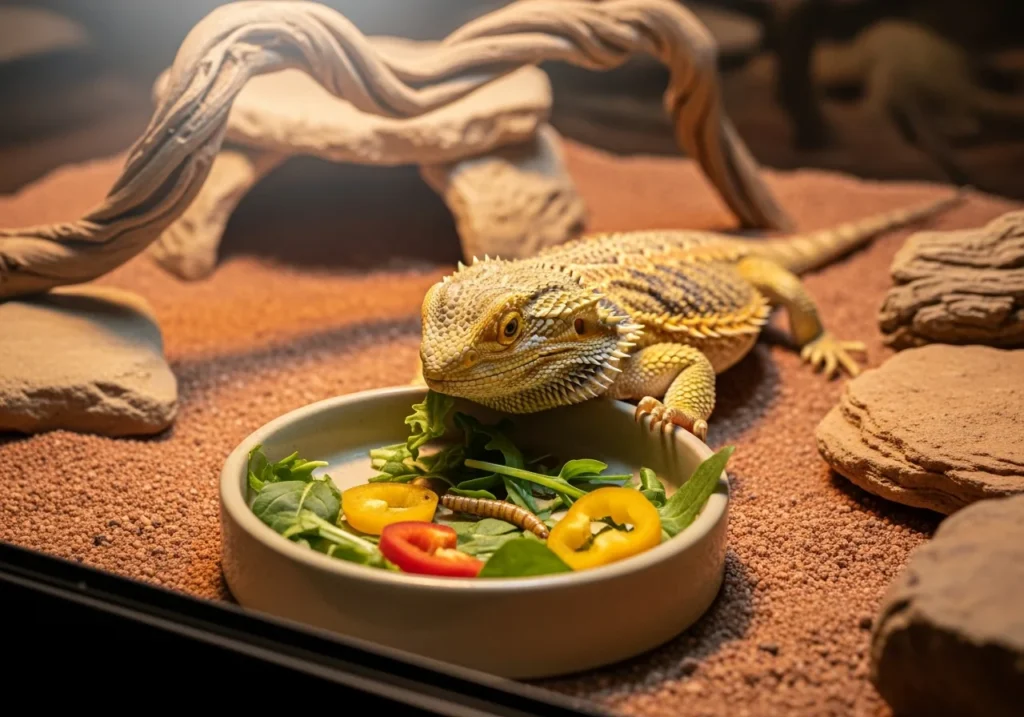
Species like bearded dragons (omnivorous, shifting toward more plant matter as adults) and tortoises (largely herbivorous) need a genuinely varied rotation of leafy greens and vegetables, not a repetitive single-food diet. Collard greens, mustard greens, and squash are common staples; iceberg lettuce should be avoided as a primary food given its minimal nutritional value. Fruit, where appropriate for the species, should be a small, occasional addition rather than a dietary staple, since excess sugar isn’t appropriate for most reptile digestive systems.
Feeding Carnivorous Snakes
Appropriately sized whole prey (typically pre-killed frozen-thawed rodents for pet snakes) provides complete nutrition without the supplementation needs of insectivorous or herbivorous species — this is one of the simpler feeding structures in reptile keeping once you understand appropriate prey sizing and feeding frequency for your specific species and age of snake. Never feed live prey to a captive snake if avoidable; it poses a genuine injury risk to the snake and is considered inhumane by most modern husbandry standards.
Feeding Frequency by Life Stage
Juvenile reptiles across most species need to eat more frequently than adults to support growth — daily or near-daily for many young insectivorous lizards, for example. Adult feeding frequency varies enormously by species: some adult snakes eat every 1-2 weeks, while many adult lizards eat daily or every other day. Research your specific species’ life-stage feeding schedule rather than assuming a flat, universal frequency applies.
Water and Hydration
Fresh water should be available at all times for most species, though how it’s delivered varies — some species drink readily from a bowl, while others (certain chameleons and some tree-dwelling species in particular) only recognize moving water droplets and need misting or a drip system to stay hydrated. Humidity-dependent species also absorb some moisture through their skin, making correct humidity levels part of overall hydration, not just a comfort factor.
Common Feeding Mistakes
- Skipping calcium dusting because the reptile “seems fine.” Metabolic bone disease develops gradually and isn’t obvious until it’s advanced.
- Feeding prey that’s too large. This is a common cause of regurgitation and digestive stress, particularly in snakes.
- Not gut-loading feeder insects. An unfed feeder insect passes minimal nutrition to the reptile eating it.
- Handling a snake too soon after feeding. This can cause regurgitation — wait at least 24-48 hours after a meal before handling.
- Assuming “reptile food” is universal. Nutritional needs vary enormously between insectivorous, herbivorous, and carnivorous species.
Supplementation Schedules by Species Type
Calcium dusting frequency depends on both species and UVB access — a reptile with strong UVB exposure needs calcium dusting less frequently than one with limited or no UVB, since UVB drives the vitamin D3 synthesis needed to actually use dietary calcium. As a general guideline (always verify against your specific species’ care sheet), insectivorous species with good UVB access might need calcium dusting every other feeding, while those without adequate UVB may need it more consistently, sometimes alongside a D3-inclusive supplement.
Amphibian-Specific Feeding Notes
Amphibians are more sensitive to nutritional gaps than many reptiles, given their generally faster metabolism and higher moisture-dependent physiology. Most captive amphibians are insectivorous and need the same gut-loading and dusting principles as insectivorous reptiles, but amphibian skin’s permeability means any residue on your hands (soap, lotion, even natural skin oils) can be absorbed during feeding or handling — always rinse hands thoroughly with plain water before any amphibian contact.
Recognizing Nutritional Deficiency
Signs of calcium deficiency or metabolic bone disease include soft or rubbery jaw bones, difficulty walking or a wobbly gait, spinal or limb deformities in advanced cases, and reduced activity. These signs develop gradually, which is exactly why consistent supplementation from the start matters more than trying to correct a deficiency after it’s already visible — by the time symptoms are obvious, meaningful bone damage has often already occurred.
Feeding Schedules for Popular Beginner Species
Leopard geckos (adults) typically eat every 2-3 days, appropriately sized insects, dusted with calcium at most feedings. Bearded dragons (adults) often eat daily, with a diet shifting toward more vegetables than insects compared to their juvenile diet. Ball pythons (adults) commonly eat every 1-2 weeks, an appropriately sized single prey item. These are general starting points — always verify current recommendations for your specific species and life stage, since feeding guidance is periodically refined as reptile husbandry knowledge improves.
Storing and Sourcing Feeder Insects
Feeder insects should be kept in appropriate conditions (temperature, ventilation, their own food source for gut-loading) between purchase and feeding, not simply left in the original container indefinitely. Buying from a reputable source matters too — poorly raised feeder insects may already be nutritionally deficient before they even reach the gut-loading stage, undermining the entire supplementation process regardless of how well you dust and feed them afterward.
Overfeeding Risks in Reptiles
Obesity is a genuine, growing concern in captive reptiles, particularly species like bearded dragons and leopard geckos that are prone to eating readily whenever food is offered. Excess weight puts strain on joints and organs and can shorten lifespan, similar to obesity risk in other pets. Following species-appropriate feeding frequency and portion guidelines, rather than feeding to apparent appetite alone, helps avoid this — a reptile that seems eager to eat isn’t necessarily an accurate signal of genuine nutritional need at that moment.
Transitioning Diets by Life Stage
Many omnivorous species shift their natural diet ratio as they mature — bearded dragons, for example, eat proportionally more insects as fast-growing juveniles and shift toward a more vegetable-heavy diet as adults. Failing to adjust the diet ratio as an animal matures is a common, gradual mistake that can lead to excess protein intake and associated health issues in adult animals still being fed like juveniles.
The Bottom Line on Reptile Nutrition
Correct reptile and amphibian nutrition comes down to matching feeding type (insectivorous, herbivorous, carnivorous) to your specific species, maintaining consistent supplementation appropriate to your UVB setup, adjusting portions and ratios by life stage, and sourcing quality feeder insects or produce. Get these fundamentals right and consistent, and nutritional health problems — among the most common and most preventable issues in captive reptile keeping — become far less likely across your pet’s entire life.
Working With a Reptile-Experienced Vet on Diet
If you’re ever unsure whether your feeding routine is genuinely meeting your reptile’s needs, a reptile-experienced exotic vet can assess body condition, bone density concerns, and overall health at a routine checkup, catching subtle issues well before they become visible problems. This is particularly valuable in the first year of keeping a new species, when you’re still calibrating what “normal” growth and body condition looks like for that specific animal.
Building a Sustainable Feeding Routine
The most successful reptile keepers tend to treat feeding as a scheduled, consistent routine rather than an ad-hoc task — set feeding days, a standing gut-loading and dusting habit, and a periodic (monthly or so) reassessment of body condition as the animal grows. This kind of consistency matters more in reptile care than in many other pets, since the health consequences of inconsistent supplementation or feeding compound slowly and often aren’t obvious until real damage has occurred.
A little consistency in feeding and supplementation goes a remarkably long way toward a genuinely thriving reptile or amphibian, far more so than any single expensive piece of gear could on its own.
Keep it simple, keep it consistent, and revisit your routine as your reptile grows and its needs shift over time.
That’s genuinely the whole formula, applied patiently over months and years of care.
Trust the process.
More Reptiles & Amphibians Guides
