

A good tarantula enclosure has appropriate size for the species and age (often smaller than expected), real cross-ventilation on at least two sides, and a secure, escape-proof lid. Front-opening designs are easier and safer to maintain than top-opening ones.
A good tarantula enclosure comes down to three things: appropriate size for the species and age, secure ventilation, and an escape-proof lid. Here’s what to look for.
| Enclosure Type | Best For | Notes |
|---|---|---|
| Front-opening terrestrial enclosure | Ground-dwelling species | Easier and safer to access for feeding/maintenance than top-opening designs |
| Tall, ventilated arboreal enclosure | Tree-dwelling species | More vertical space, needs secure latching — arboreal tarantulas are fast |
| Small deli-cup style enclosure | Slings (juveniles) | Sized up gradually as the animal grows; oversized enclosures stress young tarantulas |
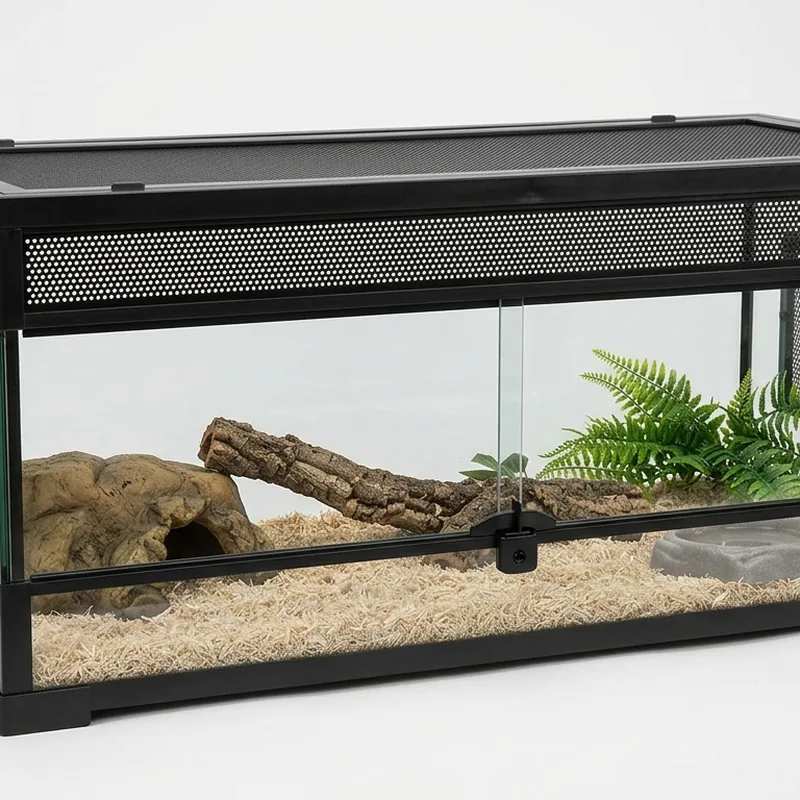
Front-Opening Terrestrial Enclosure
Cross-ventilation on two sides prevents the stagnant air that leads to mold, and front access makes maintenance far easier than reaching in from the top.
Check Price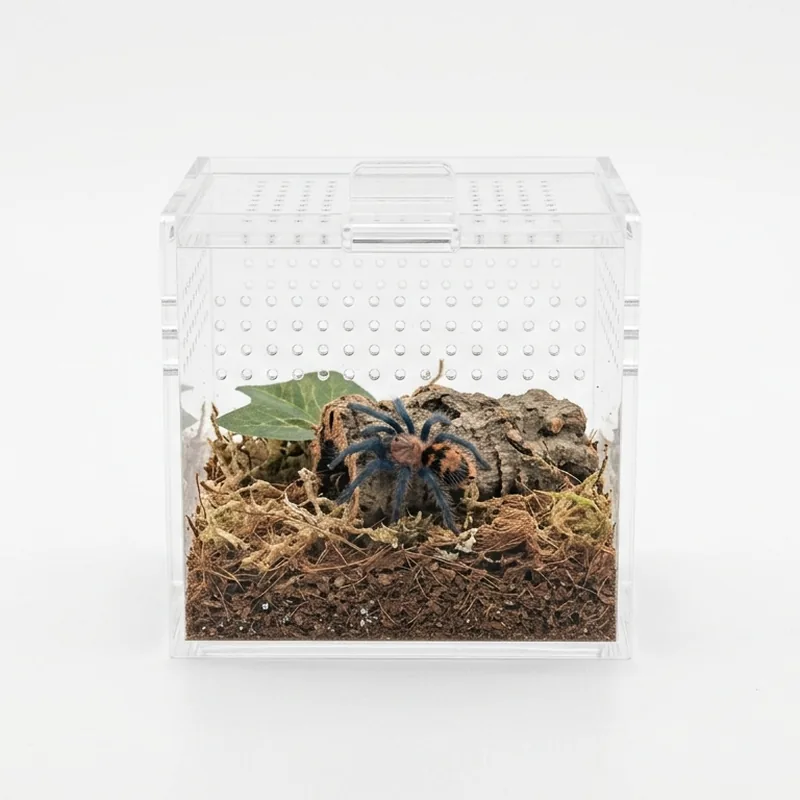
Small Ventilated Sling Enclosure
Right-sized for a young tarantula, with room to size up as it grows through several molts.
Check PriceSkip anything without real cross-ventilation — mesh only on the top isn’t enough for most species and leads to stagnant, overly humid air.
Front-Opening vs. Top-Opening Access
Front-opening enclosures let you reach in without approaching from directly above, which many tarantulas find less startling than a hand descending from overhead — this matters more for defensive or fast species, where a calmer approach angle genuinely reduces stress and defensive reactions during routine maintenance.
Sizing Rules of Thumb
A commonly used general guideline for terrestrial species is floor space roughly 2-3 times the tarantula’s leg span, prioritizing floor area over height. Arboreal species flip this — height matters more than floor space, since they climb and rest vertically rather than burrowing horizontally. Oversizing either type “to be safe” often backfires, particularly for young or small tarantulas that can struggle to locate food in an enclosure sized for an adult.
Locking Mechanisms and Security
Tarantulas, especially larger or stronger species, are capable of pushing against loosely fitted lids over time — a secure locking or latching mechanism isn’t optional extra security, it’s a real requirement, since an escaped tarantula is both stressful to locate and genuinely risky for the animal itself if it ends up somewhere unsafe in the home.
Upgrading Enclosures as a Sling Grows
Young tarantulas typically move through several enclosure sizes as they grow through multiple molts before reaching adult size — planning for these upgrades in advance, rather than buying the final adult-sized enclosure immediately, both saves money and gives the growing animal a more appropriately scaled environment at each stage.
Enclosure Placement in the Home
Away from direct sunlight (which can overheat a small enclosure fast), away from heavy foot traffic or vibration sources like speakers, and at a stable ambient room temperature — placement affects the animal’s stress level and the accuracy of your temperature control as much as the enclosure itself does.
Enclosure Modifications for Specific Behaviors
Some tarantula species show strong web-producing behavior and benefit from enclosure decor (cork bark, artificial plants) that gives structure for webbing — species that don’t web heavily need less of this and benefit more from open floor space instead. Researching your specific species’ natural behavior helps you furnish the enclosure appropriately rather than defaulting to a generic decor approach.
Temperature Stability Within the Enclosure
An enclosure placed near a window, exterior wall, or HVAC vent can experience more temperature swing than the room’s general ambient reading suggests — placing your thermometer at animal level, away from these specific trouble spots, and choosing enclosure placement away from them in the first place, both help maintain the stability most species need.
Enclosure Upgrades Signaling It’s Time to Size Up
Watching for specific size cues — a tarantula that seems to take up most of the floor space, or one that struggles to fully turn around — is a more reliable signal for upgrading than a fixed calendar schedule, since individual growth rates vary even within the same species and age group.
Enclosure Choices for Multiple Tarantulas in One Space
Individual tarantula enclosures should never be combined into a shared space regardless of how large — nearly all tarantula species are solitary and will predate on tankmates. Keepers managing multiple tarantulas need multiple separate enclosures, arranged efficiently (a dedicated shelf system, for instance) rather than attempting any form of cohabitation.
Enclosure Aesthetics for Display Purposes
For keepers who want their collection visually presentable, matching enclosure style and shelving across a collection creates a more cohesive look without compromising function — this is purely an aesthetic choice layered on top of the functional requirements, not a substitute for them.
Long-Term Enclosure Cost Planning for a Growing Collection
Each additional tarantula means a full additional enclosure setup, not a shared cost — planning for this per-animal cost honestly before expanding a collection avoids the common surprise of underestimating total setup costs when moving from one tarantula to several.
Enclosure Considerations for Species That Web Extensively
Heavy web-producing species can partially or fully obscure enclosure visibility over time, which some keepers find appealing (a more naturalistic look) and others find frustrating for observation purposes — worth knowing this tendency for species you’re considering, since it affects the practical experience of keeping that particular animal on display.
Enclosure Upgrades and Cost Planning Together
Budgeting for at least one, sometimes two, enclosure upgrades over a growing tarantula’s juvenile period — rather than assuming the first enclosure will be the only one needed — gives a more realistic total first-year cost picture than pricing only the initial purchase.
Enclosure Choices That Simplify Long-Term Maintenance
Enclosures with removable substrate trays or clearly accessible water dish placement reduce the friction of routine maintenance tasks, which matters more over years of ownership than it might seem at the point of initial purchase — a slightly harder-to-clean enclosure becomes a recurring minor frustration rather than a one-time inconvenience.
Enclosure Choices That Support Natural Behavior Observation
Clear-sided enclosures (versus enclosures with opaque or heavily decorated lower panels) let you observe natural behaviors like burrowing or web construction more easily, which some keepers specifically prioritize for the observational aspect of the hobby, separate from the animal’s own care needs.
Weighing Enclosure Cost Against Expected Ownership Duration
For a species with a decade-plus expected lifespan, investing somewhat more in a genuinely well-built, durable enclosure upfront often makes more sense than repeatedly replacing a budget option — the math shifts meaningfully compared to a short-lived species where a basic enclosure only needs to last a year or two.
Final Word on Choosing an Enclosure
A good enclosure is one you’ll be comfortable maintaining consistently for years, not just one that looks impressive on day one — factor in your own long-term maintenance realities alongside the animal’s needs when making a final choice.
A Practical Enclosure Trial Period
Set up and monitor a new enclosure’s temperature and humidity stability for at least 48-72 hours before introducing an animal — this reveals whether your specific room and enclosure combination holds stable conditions before you add the added variable and stress of a living animal to the equation.
Enclosure Sizing by Tarantula Type: Terrestrial, Arboreal, and Fossorial
Enclosure dimensions that work well for one tarantula lifestyle can be actively harmful for another, so sizing should always start with which of the three broad categories your species falls into. Terrestrial species, which spend most of their time on the ground, need floor space more than height — a good rule of thumb is roughly 2-3 times leg-span in horizontal footprint, with height kept modest since excess vertical drop space is actually a fall-injury risk for a heavy-bodied ground dweller that occasionally climbs decor.
Arboreal species need the opposite proportions: tall, narrow enclosures with more vertical climbing space than floor area, since these species live and web primarily above ground level in the wild and floor-heavy housing leaves them stressed and overly exposed. Fossorial, or burrowing, species need deep substrate above all else — often 4-6 inches or more depending on the species’ adult size — since their natural behavior is to dig a permanent burrow and spend the large majority of their life inside it rather than on the visible surface. Getting this category wrong is one of the most common avoidable stress factors in tarantula keeping, even when temperature and humidity are otherwise correct.
More Insects & Invertebrates Resources
FAQ
Smaller than most people expect — many terrestrial species do best in an enclosure only slightly larger than their leg span, since oversized enclosures make food harder to find and can add stress.
Yes — cross-ventilation on at least two sides (not just the top) is important to prevent the stagnant, overly humid air that leads to mold and mite problems.
Yes — terrestrial species need more floor space and shallower height, while arboreal species need a taller enclosure with vertical climbing surfaces.
