
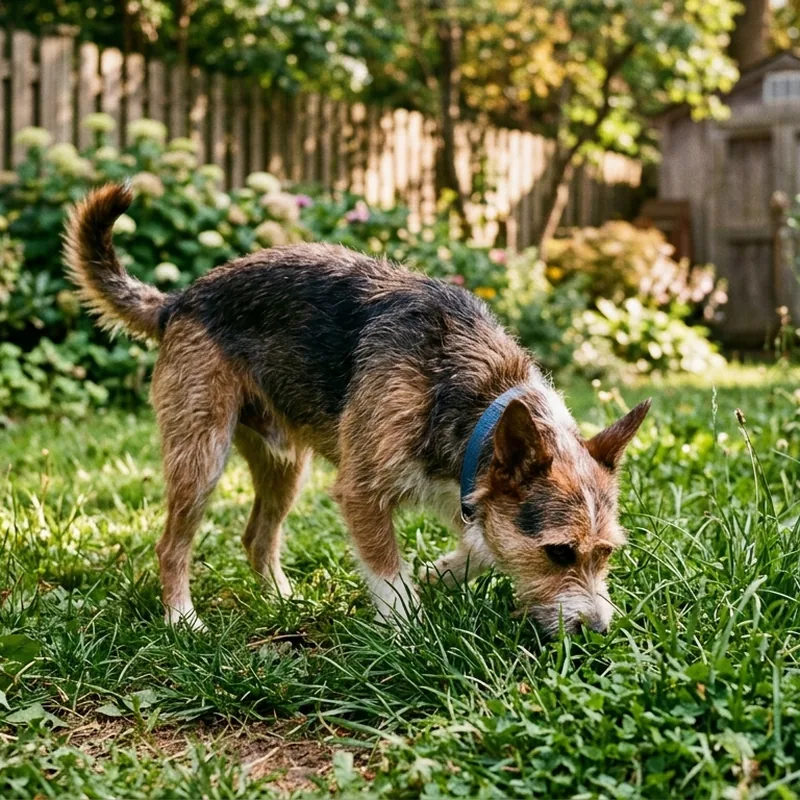
Most dogs eat poop (a habit called coprophagia) out of instinct, curiosity, or a learned behavior from puppyhood, not because something is medically wrong. It’s unpleasant but usually harmless — it only becomes a real concern if it’s new, sudden, or paired with other symptoms like weight loss or diarrhea.
If you’ve just watched your dog casually snack on something in the yard that absolutely should not be a snack, you’re not alone — and you’re definitely not the first owner to frantically search this exact question. Coprophagia (the technical, slightly less horrifying term for it) is one of the most common behavior complaints vets hear, right up there with digging and counter-surfing.
The good news is that in the vast majority of cases, this isn’t a sign of a serious problem. It’s gross, it’s a habit worth breaking, but it rarely means your dog is sick. Here’s what’s actually driving it, and the specific situations where it’s worth a closer look.
Why Dogs Eat Poop in the First Place
Researchers and vets have studied this behavior more than you’d think, mostly because so many owners ask about it. A few explanations come up consistently:
- It’s leftover instinct from denning behavior. Mother dogs clean up after newborn puppies by eating their waste, both to keep the den clean and to hide the scent from predators. Puppies raised around this can pick up the habit without ever being taught it directly.
- Puppies explore the world with their mouths. Just like they’ll chew a shoe or a stick, some puppies go through a phase of investigating their own waste, or another dog’s, simply because it’s there and it’s new.
- Boredom and lack of stimulation. A dog left alone in a yard for long stretches with nothing to do will sometimes turn to this out of sheer under-stimulation, the same way some dogs dig or bark excessively when understimulated.
- Attention-seeking. If a dog has learned that eating poop gets an immediate, dramatic reaction from their owner, some dogs will repeat the behavior simply because it reliably gets a response, even a negative one.
- Anxiety or stress. Dogs who are anxious, particularly around cleanliness or punishment history related to house-training accidents, sometimes develop this as a stress behavior — eating the “evidence” before it can be discovered.
Is It Ever a Sign of a Nutrient Deficiency?
This is one of the most persistent myths about coprophagia, and it’s worth addressing directly: a genuine nutrient deficiency is a real but relatively uncommon cause. Dogs on a poorly balanced or incomplete diet can, in some cases, develop this behavior because their body is seeking something missing, such as certain enzymes or B vitamins.
That said, most dogs eating a complete, commercially balanced diet are not nutrient-deficient, even if they’ve picked up this habit. If you’re feeding a reputable, AAFCO-complete food and your dog is otherwise healthy, a deficiency is unlikely to be the main driver. It’s still reasonable to mention it to your vet, especially if the behavior started suddenly alongside other changes like a dull coat or weight loss.
Does It Mean My Dog Has Worms or a Digestive Problem?
Some digestive issues can make stool more appealing to a dog, particularly conditions that cause malabsorption, where nutrients pass through undigested and the stool still smells and tastes “interesting” to a dog’s nose. Exocrine pancreatic insufficiency (a condition where the pancreas doesn’t produce enough digestive enzymes) is one specific example vets sometimes investigate in persistent cases.
Intestinal parasites themselves don’t typically cause coprophagia, but a dog with an untreated digestive issue may show other signs alongside it: weight loss despite normal appetite, soft or greasy stools, or increased hunger. If any of those show up together with the poop-eating, that combination is worth a vet visit rather than the behavior alone.
Puppies vs. Adult Dogs: Does the Reason Change?
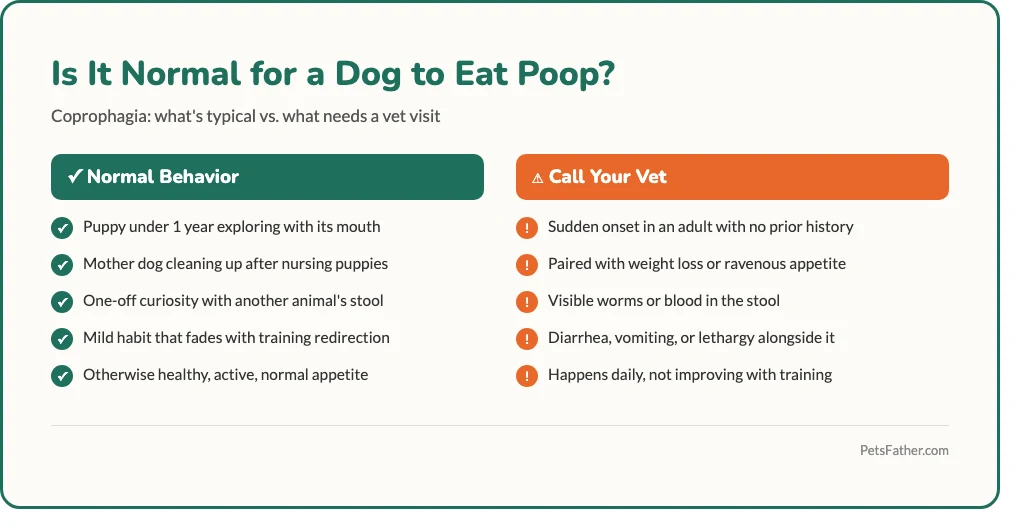
Puppies are far more likely to grow out of this than adult dogs who’ve had the habit for years. In puppies, it’s frequently just an exploratory phase tied to teething and general curiosity, and it often fades on its own between six months and a year old as they mature and their diet and routine settle.
In adult dogs, especially ones who didn’t do this as puppies and suddenly start, it’s more worth paying attention to. A new behavior in an adult dog is more likely to be tied to a diet change, a new stressor in the home, boredom from a change in routine, or, less commonly, an underlying medical issue that’s worth ruling out with a vet.
When Poop-Eating Actually Becomes a Problem
Occasional coprophagia in an otherwise healthy dog isn’t a medical emergency, but a few patterns mean it’s time to loop in your vet rather than just managing it at home:
- The behavior started suddenly in an adult dog with no history of it.
- It’s paired with weight loss, a dull coat, or a noticeably increased appetite.
- Your dog’s own stool looks abnormal — greasy, very pale, or undigested food is visible.
- Your dog seems anxious or compulsive about it, rather than casually doing it once in a while.
- It’s happening alongside vomiting, diarrhea, or lethargy.
None of these automatically mean something serious, but they’re the kind of details worth bringing to a vet appointment rather than waiting to see if it resolves on its own.
Is It Dangerous for My Dog’s Health?
The behavior itself isn’t usually dangerous, but there’s real risk depending on whose stool it is. Eating their own waste carries minimal health risk beyond the unpleasantness. Eating another dog’s waste is where the actual concern lives — it’s one of the more common ways dogs pick up intestinal parasites like roundworms, hookworms, or giardia, especially at dog parks or shared outdoor spaces.
If your dog regularly eats other dogs’ stool, keeping their parasite prevention and deworming schedule current with your vet is genuinely important, separate from whatever’s driving the behavior itself.
Why Do Dogs Specifically Go for the Litter Box?
If your dog lives with a cat, litter box raids are an extremely common version of this behavior, and it has a slightly different explanation. Cat food is higher in protein and fat than most dog food, so cat waste often smells more appealing to a dog’s nose than their own diet’s byproducts. It’s less about a behavioral quirk and more about a genuinely stronger scent signal.
The fix here is mostly practical rather than behavioral: a covered litter box, one placed somewhere your dog can’t reach (a baby gate with a cat-sized gap works well, or a raised surface a cat can jump to but a dog can’t), or a litter box in a room with a door your dog doesn’t have access to. Scolding the dog rarely works as well as simply removing access, since the smell itself is the real draw.
How to Actually Stop the Habit
Punishment tends to backfire here — a dog scolded after being caught often just learns to do it faster or more secretly, not to stop doing it. A few approaches work better in practice:
- Clean up promptly. The simplest fix for yard access is removing the opportunity — pick up after your dog quickly, and after other pets in a multi-dog household too.
- Increase mental stimulation. If boredom is a factor, more structured walks, puzzle feeders, or training sessions can reduce the behavior meaningfully.
- Work on a reliable “leave it” cue. Training a strong, rewarded “leave it” gives you a tool to interrupt the behavior in the moment without a confrontation.
- Ask your vet about taste-deterrent additives. Some vets recommend food additives designed to make stool taste unappealing, though results are mixed and it doesn’t work for every dog.
- Rule out the medical angle first if it’s new. If this just started in an adult dog, a vet visit to rule out a digestive or nutrient issue is worth doing before assuming it’s purely behavioral.
Should I Be Worried About Kissing My Dog After This?
It’s a fair hygiene question. Letting your dog lick your face right after this happens isn’t a great idea, mainly because of the parasite and bacteria risk mentioned earlier, not because of the behavior itself. A quick rinse of their mouth area or just waiting it out before affectionate face-contact is a reasonable, low-effort habit to build.
More Dogs Guides
FAQ
Yes — it's common during the exploratory teething phase and usually fades on its own between six months and a year old as puppies mature.
Eating their own waste carries minimal risk, but eating another dog's stool can transmit intestinal parasites like roundworms, hookworms, or giardia. Keeping deworming and parasite prevention current matters most here.
It's possible but relatively uncommon, especially in dogs eating a complete, balanced commercial diet. It's worth mentioning to your vet if the behavior is new or paired with other symptoms.
No — punishment often makes dogs do it more secretly or quickly rather than stopping the habit. Prompt cleanup, more stimulation, and a trained "leave it" cue work better.
A sudden new habit in an adult dog is more worth a vet visit than a lifelong puppy habit — it can be tied to diet changes, stress, boredom, or occasionally an underlying digestive issue.
Results are mixed — they work for some dogs and not others. It's reasonable to try one alongside behavioral changes, but it shouldn't be the only strategy.
