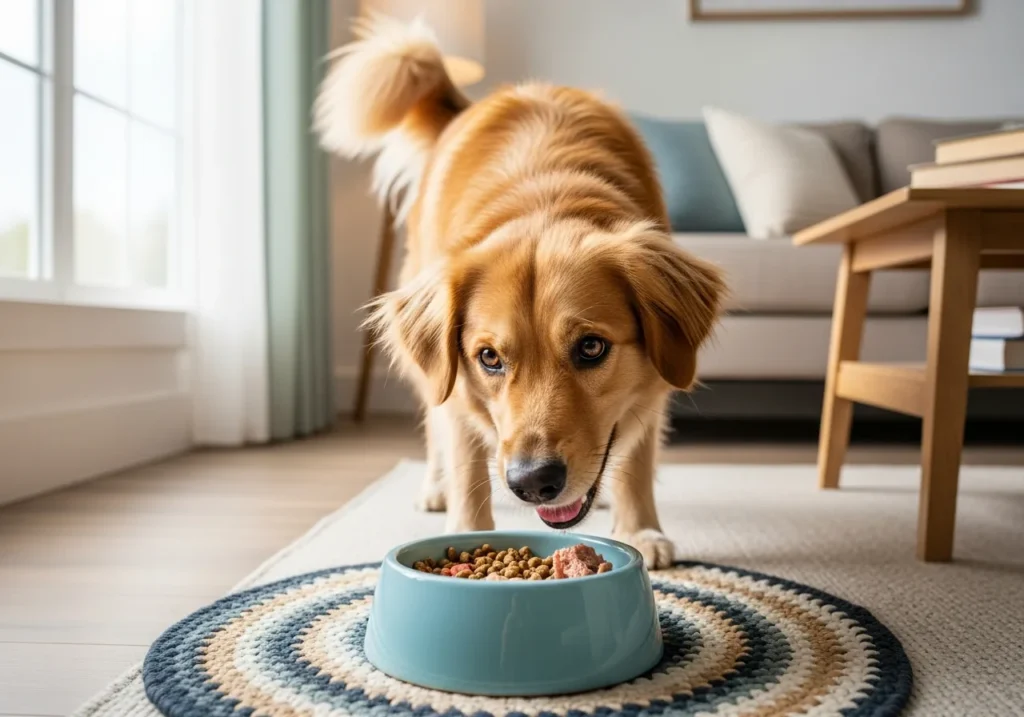
Dog nutrition confuses even experienced owners because pet food marketing is louder than pet food science. Here’s what actually matters: your dog’s food should be labeled “complete and balanced” for their life stage, portioned to their body condition (not just the bag’s chart), and switched gradually when you do change it.
How Much Should You Actually Feed?
Bag feeding charts are a starting point, not a rule. They’re based on average dogs of an average activity level — your dog is not average. The better method: feed the chart amount for two weeks, then check your dog’s body condition. You should be able to feel their ribs easily without pressing hard, and see a visible waist from above. Adjust up or down by 10% and recheck in another two weeks.
Puppies need more frequent, smaller meals — typically three to four times a day until around six months, then twice daily for life. Adult dogs generally do best on two meals a day rather than free-feeding, which makes weight management and house-training far easier to track.
Reading a Dog Food Label
Look for an AAFCO statement confirming the food is “complete and balanced” for a specific life stage (growth, adult maintenance, or all life stages). Ingredient lists are ordered by weight before cooking, so a named animal protein should appear first or near the top. Beyond that, ignore most marketing language — “premium,” “holistic,” and “natural” aren’t regulated terms and don’t guarantee quality.
Common Feeding Mistakes
- Treats exceeding 10% of daily calories — the fastest way to undo a well-balanced diet.
- Switching foods abruptly — causes upset stomach; transition over 7-10 days by mixing old and new food in increasing ratios.
- Feeding by “one scoop” instead of weight — scoop sizes vary wildly between foods with different calorie densities; a kitchen scale is more reliable than a cup.
- Assuming grain-free is automatically healthier — grain-free diets have been linked in FDA reports to potential heart issues (DCM) in some dogs; grain-free is only necessary for dogs with a diagnosed grain allergy.
Foods That Are Dangerous for Dogs
Chocolate, grapes and raisins, onions and garlic, xylitol (a sweetener in sugar-free gum and some peanut butters), and alcohol are all toxic to dogs even in small amounts. Keep these completely out of reach — “just a little bit” is not safe with any of them.
Related Reading
For specific product recommendations, see our Best Food for Your Dogs buying guide. For portion-specific guidance, see How Much Should You Feed a Dog?
