
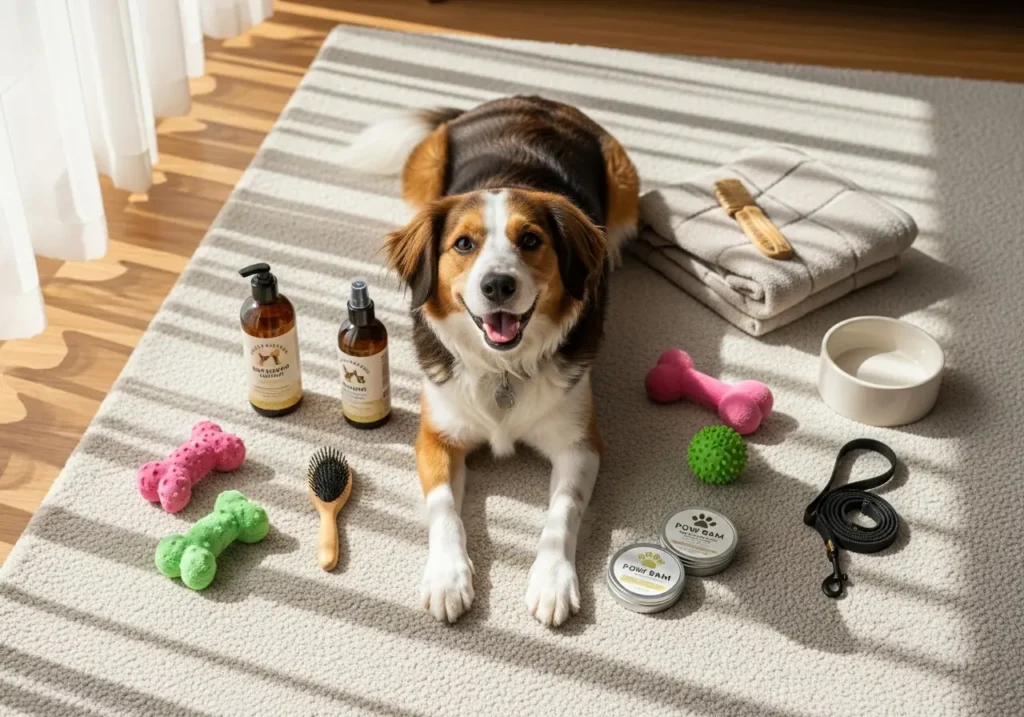
The pet aisle is enormous, and most of it is optional. Here’s what actually matters for a new dog, organized by priority, so you spend money on what your dog needs rather than what caught your eye at checkout.
Essential (Get These First)
- A properly sized crate — big enough to stand, turn around, and lie down comfortably, but not so large your dog can use one end as a bathroom. For puppies, a divider panel lets one crate grow with them.
- Food and water bowls — stainless steel or ceramic hold up better and are easier to sanitize than plastic, which can also cause chin acne in some dogs.
- A well-fitted collar or harness plus a standard 4-6 foot leash — retractable leashes offer poor control and are not recommended for training or busy areas.
- Quality food appropriate for life stage and size — see our Nutrition Guide for how to evaluate options.
Genuinely Useful (Worth the Money)
- A few durable chew toys matched to your dog’s chew strength — this prevents destroyed furniture more reliably than scolding does.
- Enzymatic cleaner for house-training accidents — regular cleaners don’t fully remove the scent markers that draw dogs back to the same spot.
- A dog bed sized appropriately, ideally with a washable cover.
Nice-to-Have, Not Essential
Clothing (aside from genuine cold-weather gear for short-haired or small breeds), most “smart” pet gadgets, and elaborate toy collections all fall into this category. Buy them if you want to, but they won’t make or break your dog’s wellbeing the way the essentials above do.
Choosing the Right Crate Size and Type
Wire crates offer better airflow and visibility, which some dogs find reassuring and others find overstimulating. Plastic/travel crates feel more den-like and enclosed, often preferred by anxious dogs, and are required for most airline travel. Whichever style you choose, the sizing rule stays the same: your dog should be able to stand fully upright, turn around, and lie down stretched out — not gymnasium-sized, just genuinely comfortable.
Collar vs. Harness: Which One and When
A harness distributes pulling pressure across the chest rather than the neck, making it the safer default for dogs still learning leash manners, brachycephalic (flat-faced) breeds prone to breathing issues, or any dog that pulls. A well-fitted flat collar still matters for holding ID tags and is fine for a dog with solid leash manners. Front-clip harnesses in particular help discourage pulling better than back-clip designs for dogs still in training.
Toys: Matching Durability to Your Dog’s Chew Strength
An aggressive chewer can destroy a “durable” toy sized for average chewers within minutes, which is both a wasted purchase and a choking hazard from swallowed pieces. Rubber toys rated for heavy chewers, rope toys supervised (not left unattended, since strands can be swallowed), and rotating a small toy collection rather than leaving everything out at once all extend both toy life and your dog’s interest.
Grooming Tools Worth Owning
A slicker brush handles most coat types for routine deshedding, a metal comb helps catch mats before they set in on longer coats, and dog-specific nail clippers or a grinder prevent the quick (blood vessel in the nail) injuries that come from using tools not designed for a dog’s nail shape. Basic grooming tools pay for themselves quickly compared to frequent professional grooming visits, even if you still use a groomer for harder tasks like expressing anal glands or a full haircut.
Safety Gear Often Overlooked
A properly fitted car safety harness or crash-tested crate matters more than many owners realize — an unrestrained dog becomes a projectile in a sudden stop, dangerous to itself and to human passengers. A basic pet first-aid kit (gauze, vet wrap, tweezers for splinters or ticks, your vet’s after-hours number) is worth assembling before you need it, not during an emergency.
ID and Microchipping
A collar tag with current contact information is the fastest way for someone to reunite you with a lost dog, but tags can fall off — a microchip is the permanent backup. Registering the chip with your current contact info (and updating it after any move or phone number change) is the step many owners forget, which renders an otherwise-working chip useless in an actual emergency.
Puppy-Specific Gear Worth Buying Early
Puppy-proofing supplies — cord protectors, baby gates to block off rooms, bitter-spray deterrent for furniture — save more frustration than almost any toy purchase. A properly sized puppy harness (not sized for the adult dog you’re planning for) prevents leash pressure on a still-developing trachea, and puppy pads can bridge the gap for house-training before a young puppy has full bladder control, typically improving significantly by 4-6 months.
Seasonal and Climate-Specific Gear
Booties protect paw pads from hot summer pavement and winter ice-melt chemicals alike, though most dogs need a training period to tolerate wearing them. A cooling mat or vest helps heat-sensitive breeds (including brachycephalic dogs and thick-coated northern breeds) manage hot climates, while a properly insulated coat matters for short-coated or very young/senior dogs in cold weather — not as a fashion accessory, but as genuine thermoregulation support.
Feeding Gear Beyond Basic Bowls
Slow-feeder bowls with raised ridges help dogs who eat too fast, reducing the risk of bloat and vomiting from rapid eating. Elevated feeders are sometimes recommended for large, deep-chested breeds, though the evidence on whether they help or worsen bloat risk is mixed enough that it’s worth asking your vet’s opinion for your specific dog rather than assuming they’re automatically beneficial.
Training Tools That Actually Help
A treat pouch that clips to your belt keeps rewards accessible during training walks, which matters more than it sounds — fumbling in a pocket breaks the timing that makes positive reinforcement effective. A long training lead (15-30 feet) is genuinely useful for practicing recall in a controlled, safe way before trusting a dog fully off-leash in an open space.
What to Skip When You’re on a Budget
If money is tight, skip novelty items first: costumes, elaborate multi-level furniture, and subscription toy boxes are all genuinely optional. Redirect that budget toward food quality and preventive vet care instead — these have a far bigger impact on a dog’s actual quality of life than any gear purchase, however appealing it looks in a store display.
Replacing Gear as Your Dog Grows or Ages
A puppy’s first collar, harness, and crate are sized for a dog that won’t stay that size — budgeting for at least one size-up round of gear in the first year (for growing breeds) avoids either an unsafe loose fit or a false economy of buying “one size fits all along the way,” which usually fits none of the stages well. Senior dogs often need a second wave of gear changes too: orthopedic bedding, ramps, and non-slip mats as mobility changes.
Where to Actually Spend More
If budget is limited, the items worth spending more on are the ones tied to safety and daily use: a genuinely well-fitted harness, a crash-tested car restraint, and food quality. Items worth spending less on: toys (durability matters more than price), bedding covers (replaceable and washable beats expensive and precious), and seasonal accessories used only a few weeks a year.
Subscription and Auto-Ship Options
Auto-ship food and litter-style subscriptions can save real money and prevent the stress of running out unexpectedly, but they work best once you’ve settled on a food your dog tolerates well — committing to a subscription before you know a food agrees with your dog risks a cancellation hassle or wasted product if you need to switch.
Secondhand and Hand-Me-Down Gear
Crates, carriers, and hard-sided gear are generally fine to buy secondhand once cleaned, since durability matters more than novelty. Soft items with real hygiene concerns — beds, collars from a dog with a known skin condition, harnesses with worn stitching — are better bought new, where the cost savings don’t outweigh the risk of introducing parasites or structural failure at the wrong moment.
A Simple First-Year Shopping Checklist
Crate, collar and leash or harness, food and water bowls, quality food, a few durable toys, a bed, basic grooming tools, and an enzymatic cleaner cover the genuine essentials for a dog’s first year — everything else on this page is worth adding only once you understand your specific dog’s needs, not before.
Storage for Food and Treats
An airtight container extends kibble freshness well beyond the original bag, which loses freshness once opened to air. Keep food in its original bag inside the container when possible, since the bag itself often has the lot number and nutritional info you’d want in case of a recall or a question about the formula.
Matching Gear to Coat and Skin Sensitivities
Dogs with sensitive skin often do better with hypoallergenic bedding covers and fragrance-free grooming products, since scented shampoos and fabric softener residue on bedding are common, overlooked irritants. If you notice recurring skin issues, ruling out a gear-related contact irritant is worth doing before assuming it’s a food allergy, since the two are easy to confuse from symptoms alone.
Related Reading
Detailed picks: Best Dog Food and Best Dog Crate.
