
The best dog crate is sized so your dog can stand, turn around, and lie down comfortably — not much bigger — with a wire crate best for home use and a hard-sided crate best for travel.
The best dog crate is sized so your dog can stand, turn around, and lie down comfortably — not much bigger — with a wire crate best for home use and a hard-sided crate best for travel.
Sizing Guide
| Dog Size (Adult Weight) | Crate Length |
|---|---|
| Under 25 lbs | 24 inches |
| 25-40 lbs | 30 inches |
| 40-70 lbs | 36 inches |
| 70-100+ lbs | 42-48 inches |
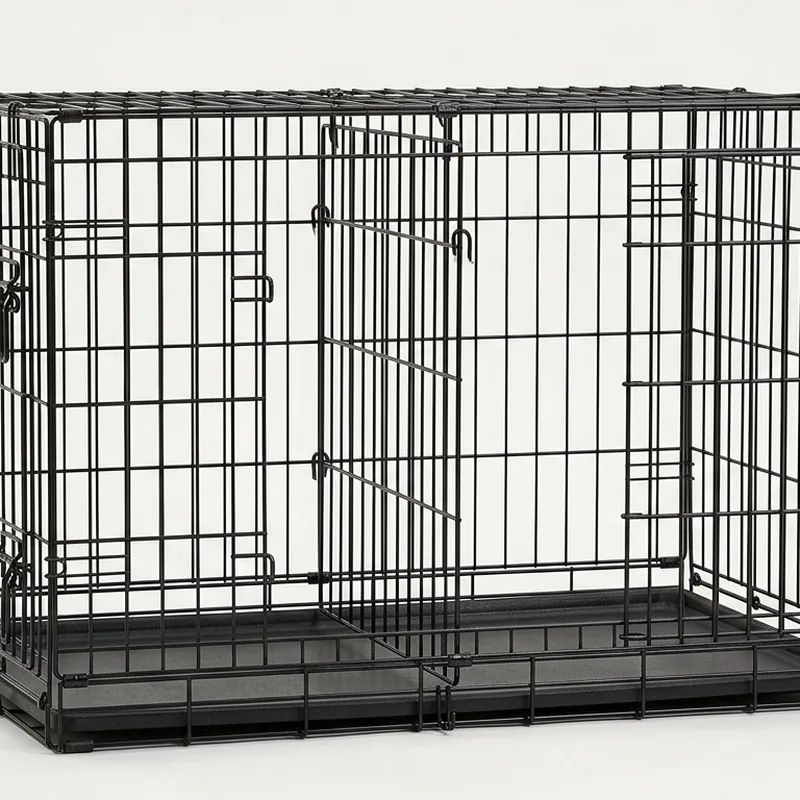
Wire Crate with Divider Panel
Good airflow and visibility, and the divider panel lets one crate grow with a puppy instead of buying multiple sizes.
Check Price on Amazon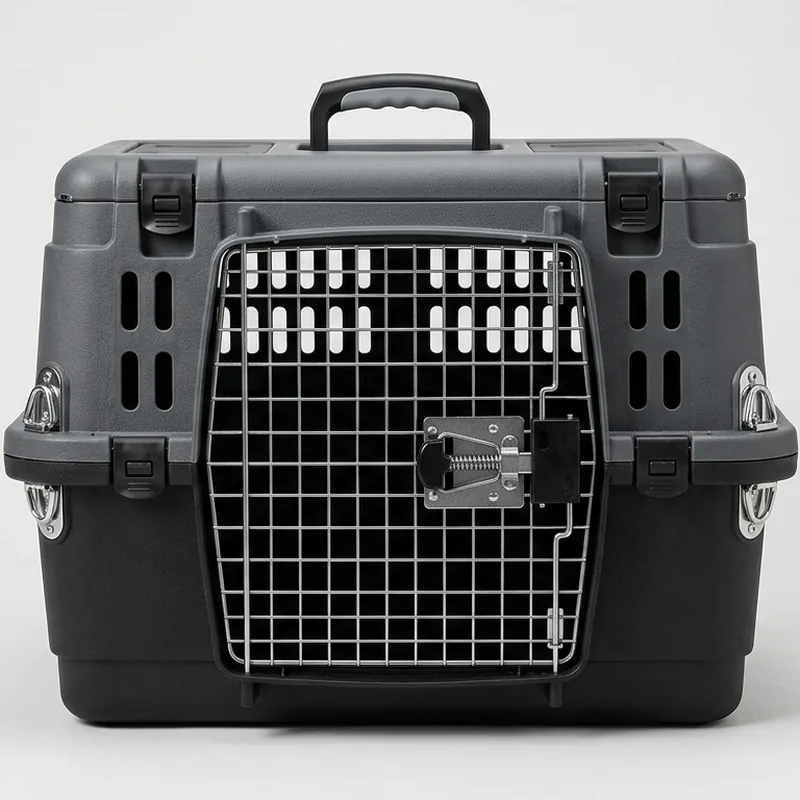
Hard-Sided Travel Crate
More secure for car travel and required by most airlines for flying with a dog.
Check Price on Amazon
Soft-Sided Crate with Cover
Lighter and more den-like when covered, though not suitable for dogs that scratch or chew at fabric.
Check Price on AmazonWire vs. Hard-Sided vs. Soft-Sided: Full Comparison
Wire crates offer the best airflow and visibility, which most dogs adjust to quickly, and they typically fold flat for storage. Hard-sided (plastic) crates feel more den-like and enclosed — often preferred by anxious dogs — and are required for most airline travel. Soft-sided crates are the lightest and most portable option but aren’t suitable for dogs that scratch, chew, or could escape through fabric.
Crate Training Basics
A crate should always be introduced as a positive space, never as punishment — feeding meals inside it, tossing treats in during free exploration, and starting with very short closed-door periods build a genuine positive association. Rushing this process is the most common reason crate training fails or a dog develops anxiety around the crate instead of comfort.
How Long Can a Dog Stay in a Crate?
As a general guideline, adult dogs shouldn’t be crated more than 6-8 hours at a stretch (except overnight, when they’re sleeping anyway), and puppies need much shorter windows — roughly their age in months plus one hour, up to about 4-5 hours maximum. Crating a dog for excessive hours daily isn’t a substitute for adequate exercise and attention.
Choosing the Right Size — Common Mistakes
Bigger isn’t automatically better: a crate that’s too large gives a puppy room to use one end as a bathroom, which undermines house-training. This is exactly why divider panels exist — they let a single crate shrink to the appropriate size for a growing puppy, then expand as they grow into their adult size.
Placement Matters
A crate placed in a quiet but not isolated area — a corner of a living room rather than a closed-off room — helps a dog feel included rather than banished, which supports faster, calmer crate acceptance than complete isolation.
Understanding Crate Materials in More Depth
Beyond the wire/hard-sided/soft-sided distinction, material quality varies within each category — thicker gauge wire resists bending from a determined chewer or an anxious dog pawing at the door, and higher-quality plastic crates have sturdier door latches that won’t pop open under pressure. For dogs with any history of escape attempts, investing in a heavier-duty option in whichever style you choose is worth the extra cost.
Crate Training Timeline: What to Expect
Most dogs take one to three weeks of consistent, positive practice to become genuinely comfortable in a crate, though this varies by individual temperament and prior experience. Rushing the process — going straight to long closed-door periods before a dog is ready — is the most common reason crate training stalls or backfires into anxiety instead of comfort.
Using the Crate for Travel Safely
A crate secured properly in a vehicle (strapped down, not just placed loose) protects both your dog and other passengers in the event of a sudden stop or accident. For air travel specifically, airline-approved crates have specific size and ventilation requirements that differ from a standard home crate, so check your airline’s exact specifications well before a trip rather than assuming any hard-sided crate qualifies.
When a Dog Outgrows the Need for a Crate
Many well-trained adult dogs eventually graduate to having supervised or even full house freedom, but this transition should happen gradually — start with short periods of freedom in a dog-proofed room while you’re home, extending duration and space over weeks based on how your dog handles it, rather than removing the crate abruptly.
Common Crate Training Mistakes
Using the crate as punishment (undermines the entire positive association), leaving a dog crated for excessively long stretches regularly, removing the crate too early before house-training is solid, and inconsistent rules between household members about crate use are the most common ways crate training goes sideways even with a well-chosen crate.
Cost Considerations Across Crate Types
Wire crates generally offer the best value for home use, hard-sided crates cost more but double as travel gear, and soft-sided crates sit in between but have narrower use cases. Buying appropriately for your primary use case, rather than the most feature-loaded option available, avoids overspending on capabilities you won’t actually use.
Signs Your Dog Has Outgrown Their Crate
Difficulty turning around fully, curled or cramped posture while lying down, or visible reluctance to enter a previously comfortable crate can all signal it’s time to size up — this applies to adult dogs that have gained weight or muscle, not just growing puppies.
Final Thought
A crate is a tool, not a solution on its own — paired with patient, positive training, it becomes a genuinely comfortable space your dog chooses to use. Rushed or forced crate use undermines the entire purpose, regardless of how well-chosen the crate itself is.
Matching the Crate to Your Dog’s Personality, Not Just Size
Beyond physical dimensions, a nervous, easily startled dog often does better in a more enclosed, den-like hard-sided crate, while a confident, curious dog may prefer the visibility a wire crate offers. Watching how your specific dog responds during initial introduction, rather than assuming one style suits all dogs equally, leads to a better long-term fit.
Crate Alternatives Worth Knowing About
Exercise pens (larger enclosed play areas) and baby-gated single rooms serve a similar containment purpose for dogs that don’t adapt well to a traditional crate, though they don’t offer quite the same portable, den-like security a properly sized crate provides for travel or a dog genuinely prone to anxiety in open spaces.
A Note on Patience
Every dog adapts to a crate at their own pace, and comparing your dog’s timeline to another dog’s rarely helps — consistent, patient exposure works for the overwhelming majority of dogs eventually, even ones that seem resistant at first.
A Note on Patience
Every dog adapts to a crate at their own pace, and comparing your dog’s timeline to another dog’s rarely helps — consistent, patient exposure works for the overwhelming majority of dogs eventually, even ones that seem resistant at first.
One More Practical Tip
Keep the crate in the same location once your dog is settled — moving it frequently can undermine the sense of a stable, predictable safe space that makes crate training work in the first place.
A Closing Thought
The right crate, introduced patiently, becomes one of the most genuinely useful tools in your dog’s daily life — for house-training, travel, and simply giving them a space that’s entirely their own.
Some dogs do better with a crate cover even outside sleep hours, especially in a busy household — the reduced visual stimulation can help an easily overstimulated dog settle faster during the day too.
A crate that fits your dog well and is introduced with patience becomes a lasting, positive part of their daily routine rather than a temporary training tool you eventually phase out entirely.
That’s the full picture on choosing and using a crate well.
Done well, this small setup decision supports years of easier travel, safer car rides, and a calmer home.
More Dogs Resources
FAQ
No — a properly introduced crate functions as a safe den, not a punishment. Dogs are naturally drawn to enclosed, secure spaces when the crate is introduced positively with treats and short, gradual sessions.
As a general rule, no longer than an adult dog's bladder can comfortably hold — typically 4-6 hours for adults, less for puppies (roughly one hour per month of age, up to about 6 hours).
Buy the crate sized for their expected adult weight and use a divider panel to reduce the usable space while they're small, expanding it as they grow.
Not when done correctly. A properly introduced crate functions as a safe den a dog chooses to use, not a punishment — most crate-trained dogs voluntarily rest in their crate even with the door open.
Size for their expected adult weight and use a divider panel to shrink the usable space while they're small, adjusting it as they grow rather than buying multiple crates.
Generally no — each dog should have their own appropriately sized crate, both for comfort and to avoid resource-guarding issues in a confined space.
Whining often signals the training progressed too fast. Go back to shorter durations with the door open, then closed briefly, rebuilding positive association gradually rather than waiting out the whining.
A crate is still useful for travel, vet visits, or situations requiring temporary confinement, even if it's not used for regular nighttime sleeping.
