

The best bird cage is the largest one your space and budget allow, with bar spacing matched to your bird's species to prevent escape or head entrapment — cage size is the most commonly under-bought item in bird care.
The best bird cage is the largest one your space and budget allow, with bar spacing matched to your bird’s species to prevent escape or head entrapment — cage size is the most commonly under-bought item in bird care.
Sizing and Bar Spacing Guide
| Bird Size | Min. Cage Size | Bar Spacing |
|---|---|---|
| Budgie | 18″x18″x18″ | 1/2 inch |
| Cockatiel | 20″x20″x24″ | 1/2-5/8 inch |
| Conure | 24″x24″x24″ | 5/8-3/4 inch |
| Macaw/Cockatoo | 36″x24″x48″+ | 1-1.5 inch |
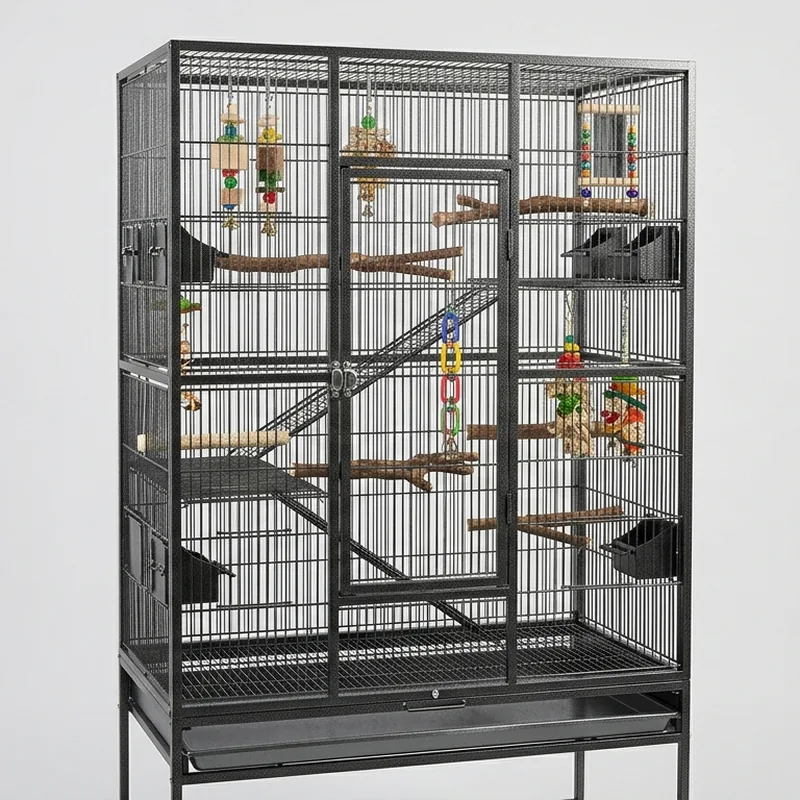
Oversized Cage With Multiple Perch Heights
Bigger than the stated minimum for your species reduces stress and gives room for real movement and toy rotation.
Check Price on Amazon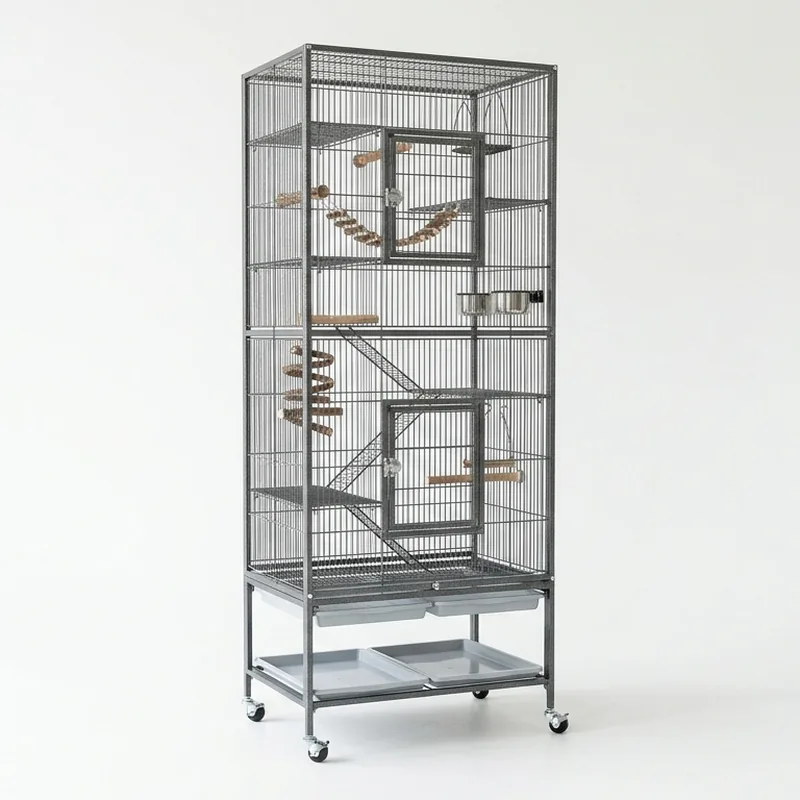
Tall, Narrow-Footprint Cage
Maximizes vertical space when floor footprint is limited — still meets minimum size guidance for smaller species.
Check Price on AmazonCage Material: What’s Actually Safe
Not all cage metal is created equal, and this matters more for birds than almost any other pet because of how sensitive their respiratory systems are. Powder-coated steel is the standard for most pet-store cages and is safe as long as the coating stays intact — chipped or peeling coating can expose birds to zinc or lead in cheaper cages, which is toxic if chewed on (and most parrots will chew on cage bars eventually).
Stainless steel costs more but never chips, never rusts, and is the safer long-term choice for heavy chewers like conures, cockatoos, and macaws. If you’re buying a powder-coated cage, stick to reputable brands and inspect the coating every few months for any chips, especially around bar joints where beaks tend to focus.
Where to Put the Cage
Placement affects a bird’s stress levels as much as cage size does. A good spot is against a wall (birds feel exposed with open space behind them), in a room the family actually spends time in (birds are social and do poorly isolated in a spare room), and away from kitchen fumes — non-stick cookware releases fumes that are lethal to birds in enclosed spaces, so cages should never be near or in the kitchen.
Avoid direct blasting from air conditioning or heating vents, and keep the cage out of direct window sun for hours at a time, which can overheat a bird that has no way to move away from the glass. A spot with natural light but some shade, at roughly eye level or slightly above, tends to work best.
Cage Cleaning Schedule
- Daily: Remove and replace paper liner, wash food and water dishes, spot-clean visible droppings on perches or bars.
- Weekly: Wipe down bars and any plastic components with a bird-safe cleaner (diluted white vinegar works well and avoids harsh chemical fumes near your bird’s lungs).
- Monthly: Full deep clean — remove all accessories, scrub the tray and grate, and check for any rust spots or coating damage that need addressing.
Skipping the cleaning schedule isn’t just about smell — droppings and food debris left too long become a real source of bacterial and fungal growth, and birds are far more sensitive to airborne pathogens than most mammals.
Perches: More Than One Type Matters
A cage with only the round dowel perches it ships with is missing something important. Birds’ feet need variety in diameter and texture to stay healthy — constant use of one uniform perch size can lead to pressure sores (bumblefoot) over time. A mix of natural wood branches (varying thickness), a rope perch, and a concrete or mineral perch (which also helps naturally file nails) covers the bases.
Perch placement matters too: don’t place perches directly over food or water dishes, since droppings will contaminate both, and leave enough vertical space for the bird’s tail to clear the perch without hitting cage bars or the floor.
Signs Your Cage Setup Needs Adjusting
- Feather damage on the tail or wings from repeatedly brushing cage bars — usually means the cage is too small for the bird’s wingspan and tail length.
- Persistent bar-biting or cage aggression — sometimes boredom, sometimes a sign the bird feels cramped or under-stimulated.
- Reluctance to move around the cage — could mean perch placement is awkward or the bird has a foot issue from perch uniformity.
- Excess droppings buildup between cleanings — may mean the tray design is inadequate for the bird’s mess level, worth reconsidering the cage style.
Multi-Bird Households: Bigger Isn’t Always Simpler
If you’re housing more than one bird per cage, the size math changes — it’s not just “add a bit more room,” since birds need enough space to retreat from each other if there’s ever tension, plus separate feeding stations so a dominant bird doesn’t control all the food access. Species compatibility matters here too: budgies and cockatiels can sometimes cohabit peacefully, but mixing very different sizes (a budgie with a conure, for instance) risks injury even without real aggression, just from size mismatch during normal interactions.
When in doubt, separate cages placed near each other (so the birds can see and interact) is almost always safer than one shared cage for mismatched species or a newly introduced pair.
Cage Shape: Why Round Cages Are a Bad Idea
Round cages look appealing in home decor photos, but avian vets generally advise against them for a couple of practical reasons. Birds are territorial and like having defined corners to retreat to — a round cage gives them nowhere to feel truly “cornered off” and secure, which can raise baseline stress. Round cages also tend to have bars that converge toward a central point at the top, which can be genuinely dangerous for climbing birds that get a foot or head wedged in the narrowing gap. Rectangular or square cages with consistent bar spacing throughout are the safer, vet-recommended shape.
Cage Accessories Worth Budgeting For
Beyond the cage itself, a handful of accessories make a real difference in day-to-day welfare:
- Foraging toys: Wild birds spend most of their waking hours searching for food. A cage with food simply sitting in an open dish removes that entire natural behavior — foraging toys that hide treats or seeds inside puzzles help replace it and reduce boredom-driven feather plucking.
- A cage cover: Most pet birds benefit from 10-12 hours of true darkness for sleep, and a breathable cotton cover helps block household light and activity at night without restricting airflow.
- A play stand outside the cage: Even a well-sized cage shouldn’t be the only place a bird spends time. A separate play stand gives supervised out-of-cage time a dedicated spot, which helps with training and bonding too.
- Cuttlebone or mineral block: A simple, inexpensive calcium source that also gives beak-conditioning activity, especially useful for egg-laying females.
Budgeting for a Bird Cage: What It Actually Costs
Cage prices vary enormously by species size. A basic budgie-sized cage from a reputable brand typically runs $50-$120, while a cockatiel-appropriate cage runs $80-$200. Conure-sized cages climb to $150-$350, and cages built for macaws or large cockatoos routinely run $400-$800 or more given the steel gauge and size required to safely contain a powerful beak. It’s worth treating cage cost as a one-time investment rather than the place to cut corners — a too-small or poor-quality cage often gets replaced within a year anyway once size or safety issues show up, making the cheaper option the more expensive one in the long run.
Cage Setup Mistakes First-Time Owners Make
A few patterns show up again and again with new bird owners:
- Buying for the bird’s current size, not its adult size — this matters a lot for species like cockatiels and conures that are sold young and grow into needing significantly more room.
- Placing all perches at the same height — birds naturally like to have a range of heights to choose from throughout the day, similar to how they’d move through branches in the wild.
- Overcrowding the cage with toys — enrichment matters, but too many toys can restrict flight and movement space inside the cage itself; rotate toys in and out instead of leaving everything in at once.
- Skipping a quarantine cage for a second bird — any new bird should be kept in a completely separate cage and room for at least 30 days before introduction, to catch any illness before it spreads to an existing bird.
Travel and Backup Cages
It’s worth having a smaller secondary carrier cage even if it’s rarely used — for vet visits, emergencies, or evacuation situations. A lightweight travel carrier with secure latching and good ventilation should be sized for short-term use only, not as a full-time home, but having one ready means you’re not scrambling to find safe transport during an actual emergency. Practice a few short trips in it occasionally so it doesn’t become a source of stress the one time you actually need it.
Label the travel cage clearly with your contact information and your bird’s species, and keep a small emergency kit nearby — a spare dish, a bag of regular food, and a copy of recent vet records — so grabbing the carrier is a genuinely fast process if you ever need it in a hurry.
More Birds Resources
FAQ
Practically no — bigger is almost always better for a bird's physical and mental wellbeing, as long as bar spacing is still correct for the species to prevent escape or injury.
Very — spacing too wide for the species risks head entrapment or escape, especially dangerous for smaller birds.
A spot with natural light but out of direct, unshaded sun for extended periods, away from kitchen fumes (some cookware coatings are toxic to birds) and drafts, ideally at a height where the bird feels secure rather than constantly looked down on.
