

The best cat food is a complete-and-balanced formula with a named animal protein first on the label, ideally including wet food for hydration — cats are obligate carnivores and have real nutritional requirements dry kibble alone doesn't always meet.
The best cat food is a complete-and-balanced formula with a named animal protein first on the label, ideally including wet food for hydration — cats are obligate carnivores and have real nutritional requirements dry kibble alone doesn’t always meet.
Wet vs. Dry — Why It Matters More for Cats
Cats evolved to get most of their moisture from prey, not from drinking water directly, and many cats under-drink when fed only dry food. This makes wet food a genuinely meaningful choice for urinary and kidney health, not just a texture preference.
| Type | Best For | Note |
|---|---|---|
| Wet food (canned/pouch) | Hydration, urinary health | Higher moisture, often higher protein |
| Dry food (kibble) | Convenience, dental wear | Should not be the only water source |
| Mixed feeding | Most owners | Combines convenience of dry with hydration of wet |
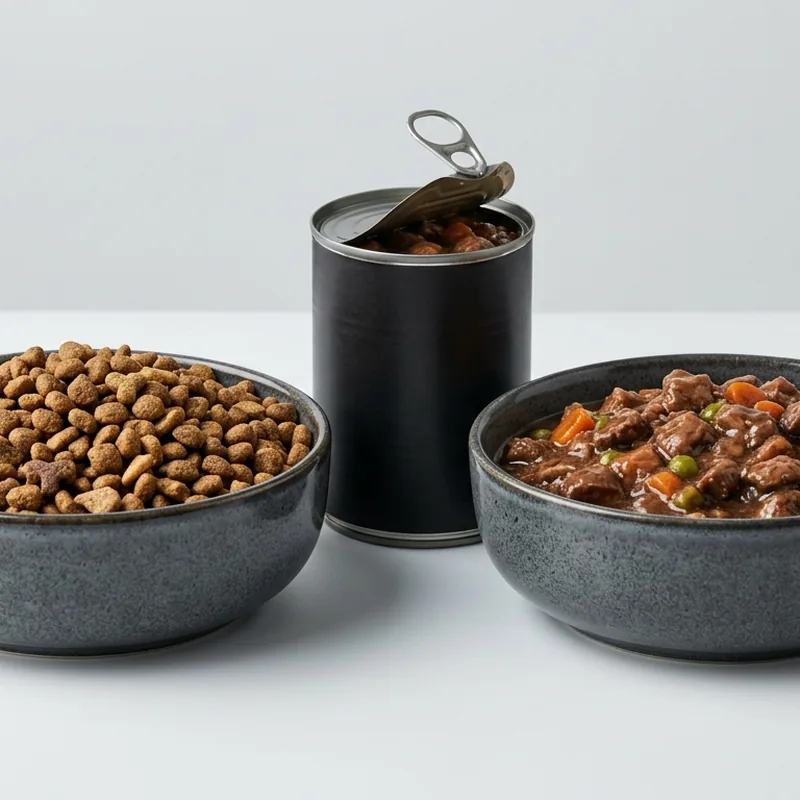
Complete & Balanced Wet/Dry Combo
An AAFCO-complete wet food for at least one meal a day, paired with a quality dry food, covers both hydration and convenience.
Check Price on Amazon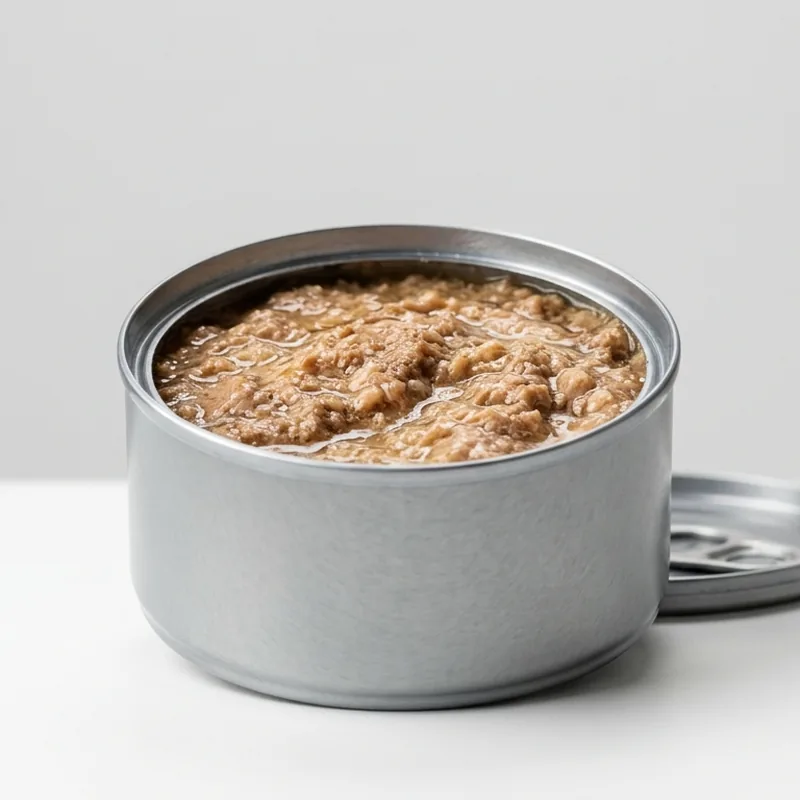
High-Moisture Wet Formula
Prioritizes moisture content, which supports urinary tract health — especially relevant for male cats prone to blockages.
Check Price on AmazonUnderstanding “Complete and Balanced” Labeling
This phrase carries real regulatory weight and isn’t just marketing language — a food labeled “complete and balanced” following AAFCO (Association of American Feed Control Officials) standards has either been formulated to meet established nutrient profiles or tested through feeding trials to confirm it supports a cat’s health as a sole diet. This matters because plenty of treats, toppers, and “supplemental” foods on the market don’t carry this designation and shouldn’t be fed as a cat’s primary or sole diet, even if they look similar to complete foods on the shelf. Always check the label specifically for a complete-and-balanced statement tied to the appropriate life stage (kitten, adult, or all life stages) rather than assuming any cat food qualifies.
Why Cats Need Animal Protein Specifically
Cats are obligate carnivores, a nutritional category distinct from dogs (who are more nutritionally flexible omnivores). This means cats have specific requirements — taurine, arachidonic acid, vitamin A in its active form, and certain B vitamins — that are only reliably available from animal-based sources, not plant-based substitutes. A taurine deficiency in particular is a serious concern, historically linked to heart disease (dilated cardiomyopathy) and vision loss in cats before commercial foods were reliably supplemented for it. This is exactly why a named animal protein (chicken, salmon, turkey) appearing first on the ingredient list matters more for cats than it might for a more dietarily flexible species.
Reading Past the First Ingredient
While a named protein first is a good starting filter, it’s not the whole picture. Look at the first 5-6 ingredients collectively, since a food can technically list meat first while relying heavily on plant-based fillers immediately after. Named meat meals (chicken meal, salmon meal) are actually a concentrated protein source and shouldn’t be viewed negatively compared to fresh meat, despite some marketing suggesting otherwise — meal ingredients have had moisture removed, so they appear lower on a by-weight ingredient list than their actual protein contribution would suggest. Vague terms like “meat by-products” or “animal digest” without a named species are worth more scrutiny than a clearly named ingredient.
Grain-Free: Necessary or Marketing?
Grain-free cat food became popular partly by association with dog food trends, but the actual nutritional case is different for cats. Cats don’t have documented grain allergies at rates that would justify blanket grain avoidance, and grain-free formulas often substitute higher amounts of legumes or potatoes to replace the missing carbohydrate source — not necessarily a nutritional improvement. Unless a specific, vet-diagnosed grain sensitivity exists, grain-free isn’t inherently better for most cats, and choosing based on protein quality and moisture content matters more than grain-free status alone.
Prescription and Therapeutic Diets
Some cats need diets beyond standard “best food” recommendations — urinary formulas for cats with a history of crystals or blockages, kidney-support diets for cats with kidney disease, or weight-management formulas for overweight cats needing controlled calorie intake with satiety support. These prescription diets are formulated with specific therapeutic goals and shouldn’t be substituted with a similar-sounding over-the-counter product without vet guidance, since the actual nutrient profiles (protein levels, phosphorus content, specific ingredients) can differ significantly even when packaging looks comparable.
Transitioning to a New Food Safely
Cats are notoriously prone to refusing new food outright, sometimes more stubbornly than any other common pet. A gradual transition over 7-10 days — mixing increasing ratios of new food into the old — reduces both digestive upset and the risk of a cat simply refusing to eat the new formula. This matters more for cats than it might seem: a cat that stops eating entirely for more than 24-48 hours is at real risk of developing hepatic lipidosis, a serious liver condition, making a slow transition a genuine health safeguard, not just a matter of picky-eater convenience.
Cost Considerations Across Food Types
Wet food generally costs more per calorie than dry food, which is a real budgeting factor for multi-cat households. A reasonable middle ground many owners land on is feeding wet food for at least one meal daily (getting the hydration and often higher-protein benefits) while using a quality dry food to fill remaining calories more economically. Regardless of the wet-dry ratio chosen, prioritizing protein quality and AAFCO completeness over the cheapest available option tends to pay off in fewer diet-related health issues over a cat’s lifetime.
Life-Stage Formulas: Why They Matter
Kittens have meaningfully higher protein, fat, and calorie needs relative to body size than adult cats to support rapid growth, which is why a kitten-specific or all-life-stages formula matters during this period — adult maintenance food can genuinely under-supply a growing kitten’s needs. Senior cats sometimes benefit from adjusted formulas too, though “senior” cat food isn’t as strictly defined or universally necessary as kitten food — some senior cats do better staying on a standard adult formula, particularly if they’re prone to weight loss, since some senior formulas are calorie-reduced in a way that doesn’t suit every aging cat. Discussing life-stage formula choices with a vet, especially for kittens and cats with existing health conditions, is more reliable than assuming a generic life-stage label fits every individual cat.
Common Cat Food Myths Worth Correcting
- “Cats need milk” — most adult cats are lactose intolerant to some degree, and dairy commonly causes digestive upset; water is the appropriate default beverage.
- “Byproducts are always low quality” — organ meats (a common byproduct component) are actually nutrient-dense and part of a natural feline diet; the concern is more about unnamed or vague byproduct sourcing than the category itself.
- “Grain-free is healthier” — as covered above, this isn’t well-supported for cats specifically and can sometimes mean more plant-based filler, not less.
- “More expensive always means better” — price correlates loosely with quality but isn’t a reliable standalone indicator; reading the actual ingredient and guaranteed analysis panels matters more than the price tag.
Multi-Cat Households: Individualized Feeding
Cats in the same household don’t necessarily need identical food, especially if they differ in age, weight goals, or health conditions. Feeding stations should ideally be separated enough that you can monitor each cat’s actual intake, since shared bowls make it hard to know whether one cat is eating more than its share or another is being crowded out. Microchip-activated feeders are worth the investment for households where cats need genuinely different diets (a senior cat on kidney support food alongside a younger cat on standard adult food, for instance), since they physically prevent cross-eating between cats.
Reading Guaranteed Analysis Correctly
The guaranteed analysis panel lists minimum protein and fat, and maximum fiber and moisture, but comparing these numbers directly between wet and dry food is misleading without adjustment, since wet food’s high moisture content dilutes the percentages shown. To compare fairly, convert both to a “dry matter basis” (a straightforward calculation dividing by the non-moisture percentage) — many pet nutrition resources and some vet clinics offer simple calculators for this, and it’s worth doing before assuming a dry food’s higher listed protein percentage actually means more protein than a wet food per calorie.
The Bottom Line on Choosing Cat Food
The strongest signals for a good cat food are a genuine AAFCO complete-and-balanced statement for the right life stage, named animal protein sources dominating the ingredient list, and enough moisture in the overall diet (through wet food or a wet-dry combination) to support hydration and urinary health. Beyond these fundamentals, the “best” food is ultimately the one your specific cat eats consistently, tolerates well digestively, and that fits sustainably into your household budget — chasing trend-driven labels (grain-free, boutique brands, exotic proteins) without checking these fundamentals first often costs more without a corresponding health benefit.
If you’re ever unsure whether a specific food is genuinely meeting your cat’s needs, bringing the label to your next vet visit for a quick review is a simple, free way to get a professional read rather than relying solely on marketing claims or online reviews.
More Cats Resources
FAQ
No — cats are obligate carnivores and require nutrients (like taurine) found only in animal tissue. A vegetarian diet can cause serious, even fatal, health problems in cats.
Not for most cats. It's only needed for a diagnosed grain allergy — otherwise, a complete-and-balanced formula with or without grain is fine.
This depends on the specific product's calorie density and your cat's target daily calories (roughly 200-300 for an average indoor adult) — check the label's feeding guide as a starting point.
