
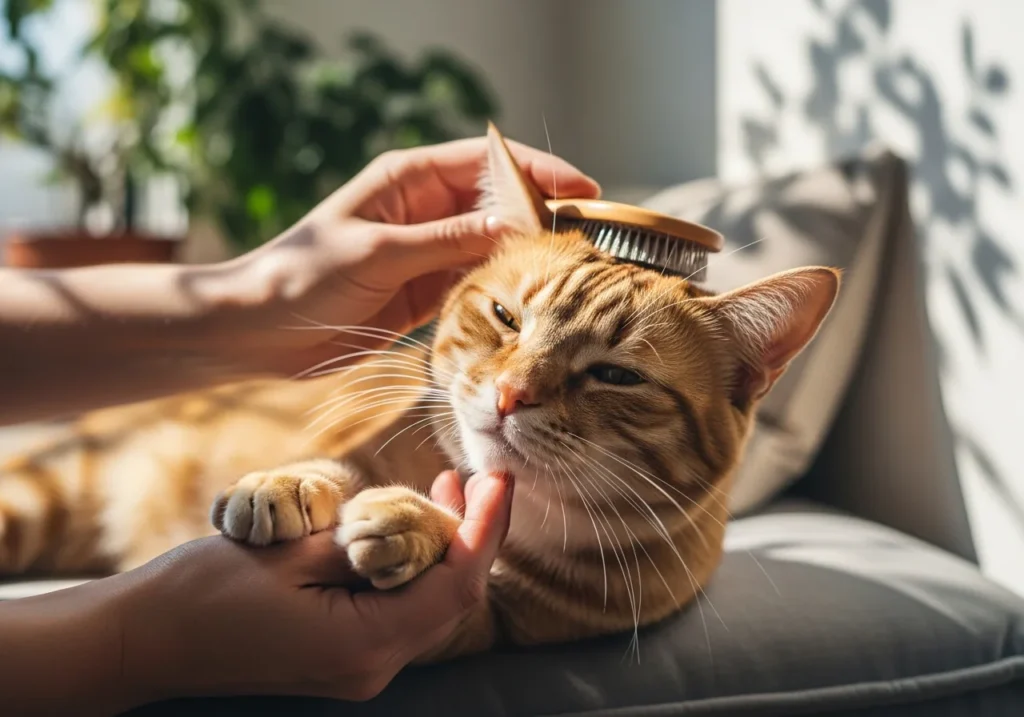
A weekly at-home check — weight, coat, eyes, ears, and litter box habits — takes about two minutes and helps catch the subtle changes cats are prone to hiding.
A weekly at-home check — weight, coat, eyes, ears, and litter box habits — takes about two minutes and helps catch the subtle changes cats are prone to hiding.
The Weekly Check
- Feel body condition — ribs easy to feel, visible waist.
- Check eyes for clarity and discharge.
- Check ears for odor or debris.
- Note litter box output — any change in frequency or straining.
- Note energy, appetite, and grooming habits (a cat that stops self-grooming is often unwell).
First-Year Vet Schedule for a New Cat
Kittens typically need a vaccine series every 3-4 weeks starting around 6-8 weeks old, spay/neuter discussion around 4-6 months, and a full wellness exam within the first week home.
Why Cats Hide Illness (And Why This Checklist Matters)
Cats are prey animals by instinct, even the pampered indoor kind. In the wild, showing weakness invites predators, so cats evolved to mask pain and sickness until they genuinely can’t anymore. That’s why a cat can seem “fine” right up until an emergency vet visit — the signs were there, just subtle.
This is exactly why a quick weekly check matters more for cats than for most pets. You’re not waiting for your cat to tell you something’s wrong. You’re looking for the small stuff before it becomes big stuff: a slightly less enthusiastic greeting at the door, one extra day of skipped grooming, a water bowl that’s suddenly emptier or fuller than usual.
Body Condition Scoring, Explained
Vets use a 9-point body condition score (BCS) to judge weight more accurately than a bathroom scale ever could. Here’s the simplified home version:
- Too thin (1-3): Ribs, spine, and hip bones are visible from across the room, with little to no fat cover.
- Ideal (4-5): Ribs are easy to feel with light pressure but not visible; your cat has a visible waist when viewed from above and a slight tummy tuck from the side.
- Overweight (6-7): Ribs are hard to feel under a layer of fat; the waist is barely noticeable.
- Obese (8-9): Ribs can’t be felt at all; there’s an obvious belly sag and no waist definition.
Run your hands along your cat’s sides once a week. It takes ten seconds and catches slow weight changes that a scale at the vet’s office (visited once a year) will always miss.
Signs That Need a Same-Day Vet Call
Most of this checklist is about slow, subtle changes. But a few signs mean don’t wait for the next scheduled check — call your vet or an emergency clinic the same day:
- Straining in the litter box with little or no urine output — this can signal a blocked urethra, which is life-threatening in male cats within 24-48 hours.
- Not eating for more than 24 hours — cats can develop a dangerous liver condition (hepatic lipidosis) from even a couple of days without food.
- Open-mouth breathing or labored breathing — cats rarely pant like dogs; this is almost always a red flag.
- Repeated vomiting (more than 2-3 times in a day) or vomiting combined with lethargy.
- Sudden hiding combined with any of the above — a cat that suddenly won’t come out from under the bed and also isn’t eating is telling you something.
What a Normal Annual Exam Actually Covers
A routine wellness visit isn’t just a five-minute look-over. Here’s what a thorough vet typically checks:
- Weight and body condition score — tracked year over year to catch trends.
- Teeth and gums — dental disease is extremely common in cats over 3 and often causes silent pain.
- Heart and lung auscultation — listening for murmurs or irregular rhythms, which can be early signs of feline heart disease.
- Abdominal palpation — feeling for organ size, bladder fullness, or discomfort.
- Coat and skin check — looking for fleas, mats, bald patches, or skin lesions.
- Bloodwork (usually annually after age 7) — kidney and thyroid values especially, since both conditions are common in older cats and highly treatable when caught early.
If your vet skips most of this and it’s over in two minutes, it’s worth asking questions or considering a second opinion clinic for the next visit.
Senior Cats: What Changes After Age 10
Cats are considered senior around age 10-11, and the health-check priorities shift a bit. Kidney disease affects a large share of cats by their late teens, and the earliest sign is often something as ordinary-looking as drinking more water and producing more urine — easy to miss unless you’re already in the habit of watching litter box output.
Arthritis is also underdiagnosed in older cats because they hide stiffness well. Watch for a cat that starts hesitating before jumping onto furniture, or that stops using a litter box with high sides. Both can be pain, not preference.
What Routine Cat Health Care Costs
Budgeting matters as much as knowing what to check. A typical annual wellness exam runs $50-$250 depending on your area and clinic, with core vaccines adding another $20-$60 per shot. Senior bloodwork panels usually run $100-$250. These routine costs are predictable — the bigger financial risk is an unplanned emergency, which is why many owners look into pet insurance while their cat is still young and healthy (premiums are lower and pre-existing condition exclusions are less of an issue).
Grooming Habits as a Health Signal
Cats spend a big chunk of their day grooming, and changes in that behavior are one of the most reliable early warning signs owners tend to overlook. A cat that suddenly stops grooming — leaving a dull, matted, or greasy-looking coat — is very often in pain or feeling unwell somewhere, even if nothing else looks obviously wrong.
The opposite problem is worth watching too: overgrooming, especially bald patches on the belly or inner legs, can point to allergies, stress, or a painful area the cat is trying to soothe. Either extreme is worth mentioning at the next vet visit, even if it seems minor.
Reading Litter Box Habits Correctly
The litter box tells you more about your cat’s health than almost anything else in the house, but only if you’re paying attention to specifics, not just “did they use it.”
- Frequency: Most adult cats urinate 2-4 times a day. A sudden jump can point to diabetes or kidney issues; a drop (especially with visible straining) is a possible emergency.
- Clump size: Consistently small, dry clumps over several days can be an early sign of a urinary problem before straining even starts.
- Stool consistency: Occasional soft stool from a diet change is normal; diarrhea lasting more than a day or two, or stool with blood or mucus, warrants a call to the vet.
- Box avoidance: A cat that starts going outside the box isn’t necessarily “being bad” — it’s one of the most common behavioral signs of a painful urinary issue, and always worth ruling out medically before assuming it’s a behavior problem.
Dental Health: The Most Overlooked Item on This List
By age three, most cats already have some degree of dental disease, and it’s almost always silent — cats rarely stop eating just because their teeth hurt, so owners assume everything’s fine. Bad breath isn’t just unpleasant; it’s usually the first visible sign of gum disease or a developing abscess.
At home, you can lift your cat’s lip gently once a week and glance at the gum line for redness, swelling, or a brownish tartar buildup along the base of the teeth. You don’t need to brush daily to make a difference — even 2-3 times a week with a cat-safe enzymatic toothpaste measurably slows plaque buildup, and dental treats can help between brushings even if they’re not a full substitute for it.
Building the Habit: Making the Weekly Check Actually Stick
The biggest reason home health checks fail isn’t that owners don’t care — it’s that a “check” without a routine attached to it quietly disappears after a few weeks. Tying it to something that already happens weekly works better than trying to remember on its own: right before a weekly grooming session, right after topping off the food supply, or right before cleaning the litter box are all natural moments that already involve handling your cat.
Keeping a simple running note — even just a phone note with a date and a line or two — makes slow changes (a pound of weight loss over three months, say) far easier to catch than relying on memory alone. Vets consistently say the owners who catch problems earliest are the ones with some kind of informal tracking habit, not the ones who simply “know their cat well.”
Multi-Cat Households: Checking Each Cat Individually
If you have more than one cat, it’s tempting to do a general “everyone looks fine” scan instead of checking each cat individually — but this is exactly how subtle problems get missed for months. Cats in multi-cat homes are also more likely to hide symptoms specifically because they don’t want to appear vulnerable in front of other cats, which can mask illness even longer than in a single-cat home.
A practical fix is separating litter boxes when possible (one per cat, plus one extra, is the standard rule of thumb) so you can actually tell whose output looks off. Feeding cats separately for a few minutes each day also gives you a reliable read on each cat’s individual appetite, rather than guessing from a shared bowl.
More Cats Guides
FAQ
Feel along the ribs — they should be easy to find without pressing hard — and look for a visible waist from above. A kitchen scale (weigh yourself holding the cat, then subtract your weight) works if you want a number.
Yes, reduced self-grooming is a common early sign of illness or pain in cats and is worth watching closely or mentioning at a vet visit.
Yes — indoor cats are still prone to dental disease, kidney issues, and weight problems, so the weekly check applies regardless of lifestyle.
