

The best pet travel carrier depends on how you're traveling: a soft-sided under-seat carrier for in-cabin flying, a hard-sided airline-approved crate for cargo, or a crash-tested harness or carrier for driving.
The best pet travel carrier depends on how you’re traveling — in-cabin flying, cargo flying, or driving all call for different features.
| Carrier Type | Best For | Notes |
|---|---|---|
| Soft-sided under-seat carrier | In-cabin flying | Must meet the specific airline’s size limits — check before buying |
| Hard-sided airline-approved crate | Cargo flying | Needs proper ventilation and secure latching per airline pet policy |
| Crash-tested car carrier/harness | Driving | Safer than letting a pet roam the car loose |
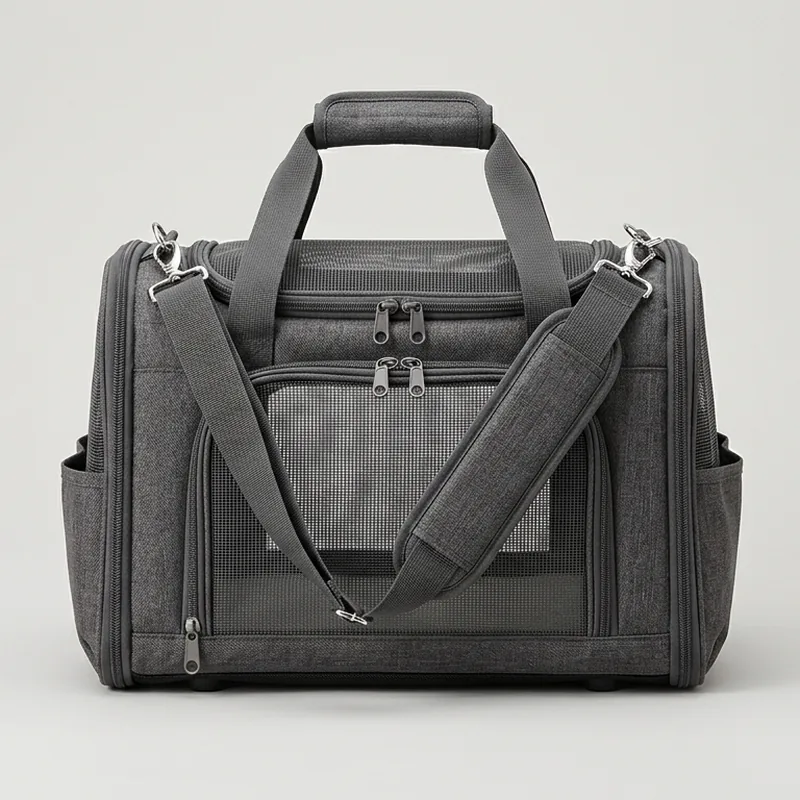
Airline-Approved Soft-Sided Carrier
Fits under most airline seats and offers good ventilation, but always confirm exact dimensions against your specific airline’s limits first.
Check Price
Crash-Tested Car Harness
Keeps a pet secured and reduces injury risk in the car far more than letting them ride loose.
Check PriceSizing a Carrier Correctly
The general rule for in-cabin carriers is that your pet should be able to stand, turn around, and lie down comfortably inside — not sized for maximum legroom, since airlines specifically require the carrier to fit under the seat, and an oversized carrier gets rejected at check-in regardless of how comfortable it would be. Measure your pet directly rather than relying on breed averages, since individual size varies meaningfully even within a breed or species.
Ventilation and Material Considerations
Mesh panels on multiple sides matter more than overall carrier size for your pet’s actual comfort during travel — a carrier with ventilation only on one panel can get uncomfortably warm during a long flight or car ride. Soft-sided carriers pack down for storage between trips; hard-sided carriers protect better against impacts but take up permanent storage space at home.
Getting Your Pet Comfortable With the Carrier Before Travel
Introduce the carrier at home well before your trip — feeding meals inside it, leaving it out as a normal part of the environment rather than something that only appears right before a stressful car ride or flight. A pet’s first experience with an unfamiliar carrier shouldn’t also be their first experience with travel stress; separating those two firsts meaningfully reduces overall travel anxiety.
Airline-Specific Approval Lists
Many airlines publish a list of specifically approved carrier brands and models, separate from just stating dimensions — checking this list before buying, rather than after, avoids purchasing a carrier that technically meets the size requirement but isn’t on the airline’s approved list and gets questioned at the gate anyway.
Carriers for Larger Pets Traveling as Cargo
Hard-sided cargo crates need to meet specific IATA (International Air Transport Association) standards for most airlines — solid construction, proper ventilation on at least two sides, and secure but quick-release latching. These requirements exist because cargo-hold pets are handled by baggage staff rather than carried by the owner, so the crate itself needs to hold up to more handling than an in-cabin carrier does.
Carrier Maintenance Between Trips
Cleaning a carrier fully after each trip — not just visible mess, but a genuine wipe-down of interior surfaces — matters more than owners often realize, since a carrier that smells like a previous stressful trip can carry that association into the next one for a scent-sensitive pet.
Backup Carrier Considerations for Frequent Travelers
Owners who travel with pets regularly often benefit from a backup carrier, since a damaged zipper or latch discovered the morning of a trip leaves no time to source a replacement that meets airline requirements. This is a small extra cost that avoids a genuinely disruptive last-minute scramble.
Weight Limits Beyond the Pet Itself
Some airlines set combined weight limits covering the pet and carrier together, not just the pet alone — a heavier hard-sided carrier can push a borderline-sized pet over the limit even when the pet alone would qualify, which is worth checking specifically rather than assuming pet weight is the only figure that matters.
International Carrier Requirements Beyond Airlines
Some countries impose their own carrier standards for pets entering by air, separate from airline rules — a carrier that satisfies your departure airline may not automatically satisfy destination-country import requirements. Checking both sets of rules for international trips, not just the airline’s, avoids a compliant-for-departure carrier becoming a problem on arrival.
Carrier Comfort Additions Worth Considering
Absorbent pads for accidents, a small collapsible water dish that attaches to the carrier door, and a familiar-smelling piece of bedding all add meaningful comfort without adding much bulk or weight — small additions that make a real difference in a pet’s experience during longer travel days.
Testing a New Carrier Before a Real Trip
A short local outing — a quick car ride or a walk around the block in the carrier — before an actual travel day reveals fit and comfort issues (a zipper that catches, a shoulder strap that’s uncomfortable to carry for long) while there’s still time to exchange or adjust the carrier.
Carrier Choice for Pets With Anxiety or Motion Sickness
Pets prone to motion sickness sometimes do better in carriers with limited visual stimulation (a partially covered or opaque design) versus full mesh visibility, since watching the environment move past can worsen queasiness in sensitive animals — this is worth testing with short practice trips, since individual pets vary in which style they tolerate better.
Comparing Carrier Warranties and Return Policies
Given that a carrier is often used only a handful of times a year for most owners, a solid warranty matters more than it might for daily-use gear — check the specific warranty terms before buying, particularly for hard-sided cargo crates, which represent a larger investment than a basic soft-sided option.
Carrier Considerations for Pets Traveling With Medical Equipment
Pets on medication or requiring specific medical monitoring during travel may need a carrier with extra interior space for supplies or slightly different ventilation to accommodate any required equipment — discussing travel-specific carrier needs with your vet ahead of a trip is worthwhile if your pet has any ongoing medical considerations.
A Final Checklist Before You Buy
Confirm your travel mode (in-cabin, cargo, or car), check the specific size and material requirements for that mode, and get your pet comfortable with the carrier well before departure — in that order. Skipping straight to a purchase without confirming your specific airline or trip’s exact requirements first is the most common source of last-minute carrier problems.
Carrier Choice for Pets With Prior Negative Travel Experiences
A pet with a stressful past travel experience associated with a specific carrier may benefit from starting fresh with a new carrier rather than reusing the one linked to that negative memory — rebuilding a positive association from scratch is sometimes faster than trying to overwrite an existing negative one with the same physical object.
Understanding Carrier Requirements for Service Animals
Service animals often have different, typically more flexible, carrier and seating accommodations under applicable regulations compared to standard pet travel — if this applies to your situation, review the specific current requirements directly rather than assuming standard pet carrier rules apply in the same way.
Final Word: Match the Carrier to the Whole Trip, Not Just the Flight
The right carrier accounts for the full journey — home to airport, security, the flight itself, and arrival — not just the airline’s minimum requirement. A carrier that’s technically compliant but genuinely uncomfortable for the surrounding hours of travel undermines the goal of a low-stress trip even if it clears every official checkbox.
A Practical Pre-Trip Verification Step
A week before travel, physically test that your pet fits comfortably in the carrier with the door fully closed and latched — not just an approximate fit — since pets can grow or gain weight between purchase and an actual trip, and this final check catches a fit problem while there’s still time to size up.
Getting a Pet Comfortable With Its Carrier Before Travel
A pet’s first experience inside a travel carrier shouldn’t be the actual day of travel — acclimating gradually in the weeks beforehand makes a measurable difference in how calm the animal is once real travel stress (motion, unfamiliar sounds, a busy airport or car ride) is added on top. Start by leaving the carrier out in a normal living space with the door open, letting your pet investigate and enter voluntarily on their own schedule, ideally with treats or a favorite blanket placed inside to build a positive association well before any actual trip is planned.
Once your pet enters the carrier calmly and voluntarily, begin closing the door for short periods while staying nearby, gradually extending the duration and eventually adding brief carries around the house or a short car ride to nowhere in particular. This staged approach — investigate, enter voluntarily, tolerate a closed door, tolerate movement — spread across several weeks rather than crammed into the day before travel, is the single most effective way to reduce in-transit stress, and it costs nothing beyond a bit of patience and a few strategically placed treats.
More Pet Care & Gear
FAQ
Generally yes — flying requires an airline-approved carrier meeting that specific airline's size and ventilation rules, while driving is better served by a crash-tested carrier or harness designed for vehicle safety rather than airline compliance.
Soft-sided carriers are lighter and fit better under airline seats, while hard-sided carriers offer more structural protection for car travel or checked transport.
Leave the carrier out at home for a few weeks beforehand with treats or bedding inside, so it becomes a familiar space rather than something only associated with travel.
