
A good tarantula enclosure has appropriate size for the species and age (often smaller than expected), real cross-ventilation on at least two sides, and a secure, escape-proof lid. Front-opening designs are easier and safer to maintain than top-opening ones.
A good tarantula enclosure comes down to three things: appropriate size for the species and age, secure ventilation, and an escape-proof lid. Here’s what to look for.
| Enclosure Type | Best For | Notes |
|---|---|---|
| Front-opening terrestrial enclosure | Ground-dwelling species | Easier and safer to access for feeding/maintenance than top-opening designs |
| Tall, ventilated arboreal enclosure | Tree-dwelling species | More vertical space, needs secure latching — arboreal tarantulas are fast |
| Small deli-cup style enclosure | Slings (juveniles) | Sized up gradually as the animal grows; oversized enclosures stress young tarantulas |
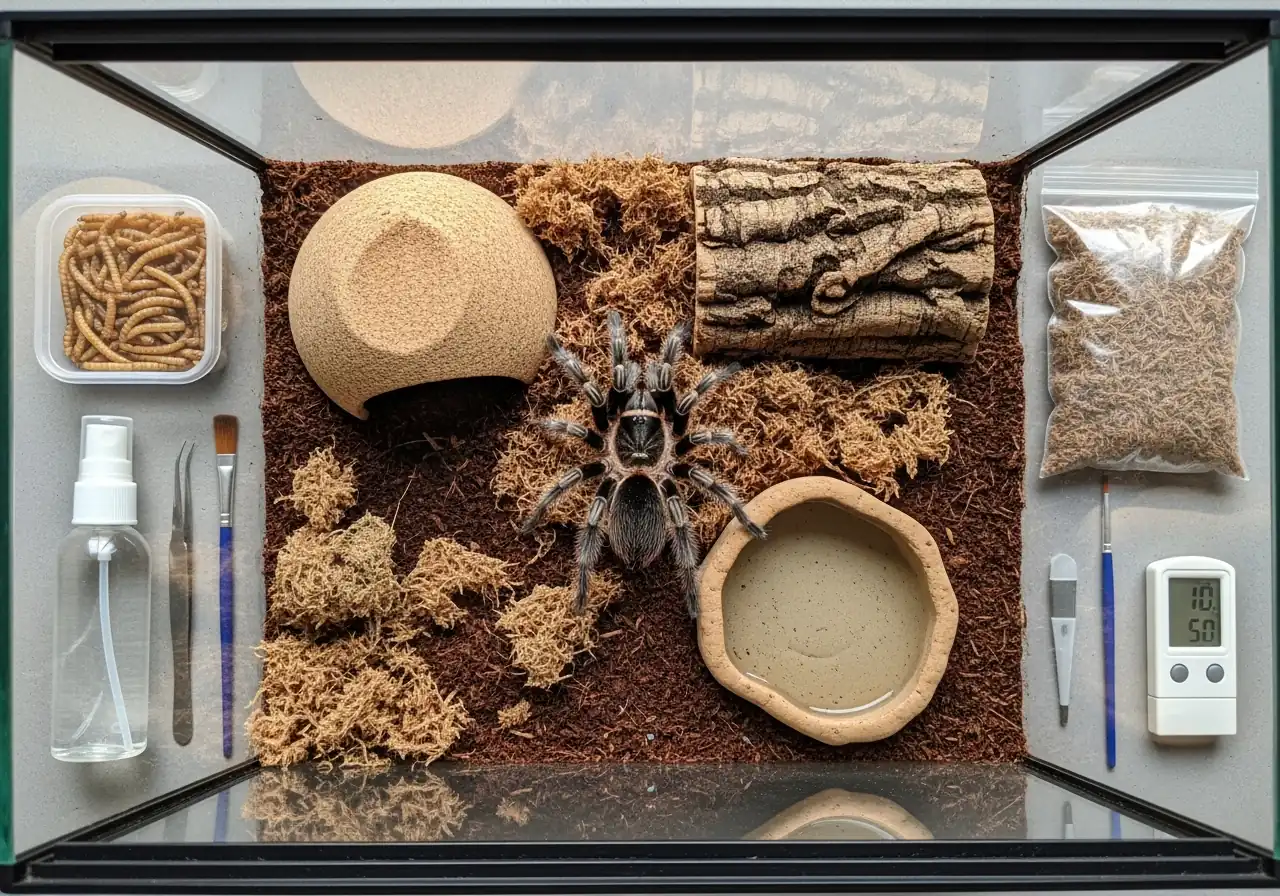
Front-Opening Terrestrial Enclosure
Cross-ventilation on two sides prevents the stagnant air that leads to mold, and front access makes maintenance far easier than reaching in from the top.
Small Ventilated Sling Enclosure
Right-sized for a young tarantula, with room to size up as it grows through several molts.
Skip anything without real cross-ventilation — mesh only on the top isn’t enough for most species and leads to stagnant, overly humid air.
FAQ
Smaller than most people expect — many terrestrial species do best in an enclosure only slightly larger than their leg span, since oversized enclosures make food harder to find and can add stress.
Yes — cross-ventilation on at least two sides (not just the top) is important to prevent the stagnant, overly humid air that leads to mold and mite problems.
