
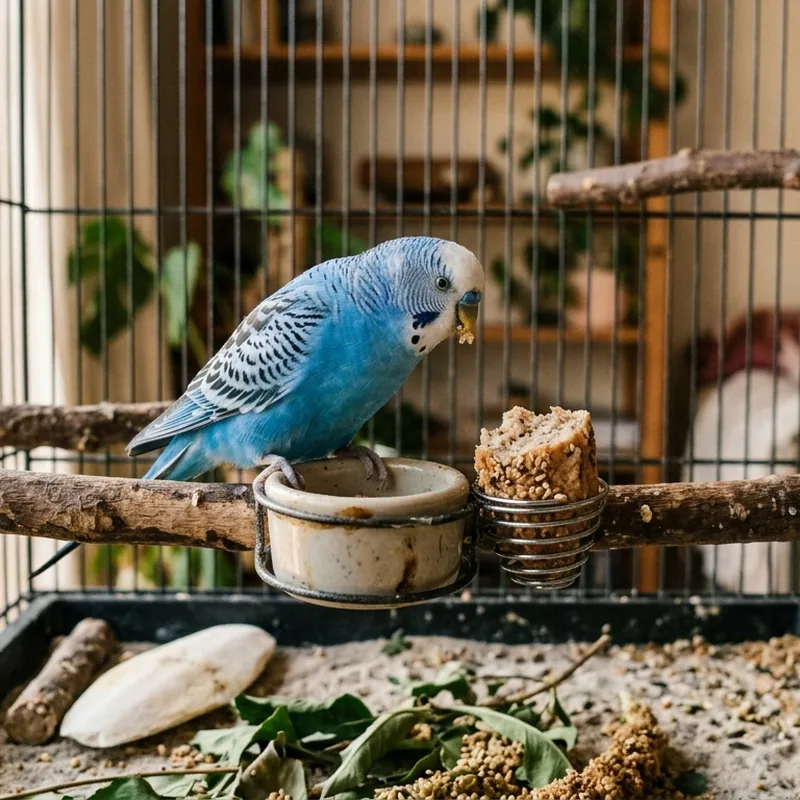
Why Bread Isn’t a Good Choice for Birds
Bread is mostly refined carbohydrate with very little of the protein, vitamins, and minerals a pet bird actually needs. A bird that fills up on bread has less appetite left for the seeds, pellets, and fresh vegetables that make up an actually balanced diet, which is the main practical concern rather than acute toxicity.
The Mold Risk Is the Real Danger
Bread molds quickly, and some molds produce toxins that are genuinely dangerous to birds, affecting the liver and nervous system in serious cases. Any bread offered must be fresh, and any bread left sitting in a cage or outdoor feeder for more than a few hours should be removed and discarded rather than left for later.
Is a Tiny Amount Ever Okay?
A very small, occasional piece of plain bread is unlikely to cause acute harm to most pet birds, but there’s no upside to making it a habit given how little it actually offers nutritionally. Whole grain bread is marginally better than white bread, but neither is a food worth building into a regular diet.
Better Treat Alternatives
Small pieces of fresh vegetables, a bit of fruit appropriate to the species, or bird-safe seed treats provide actual nutritional value instead of empty carbohydrates. If you’re looking for a bonding treat moment, these alternatives do the same job with real benefit attached.
FAQ
It's widely discouraged by bird conservation groups for the same low-nutrition, mold-risk reasons — bird seed or suet is a much better choice for a backyard feeder.
Yes, potentially seriously so — mold toxins can affect the liver and nervous system. Never offer bread that shows any sign of mold.
Plain whole grain bread in a very small, occasional amount is marginally better than white bread or anything with added sugar, butter, or spread.
Not from an occasional piece, but if bread regularly displaces proper bird food in the diet, it can contribute to nutritional gaps over time.
