
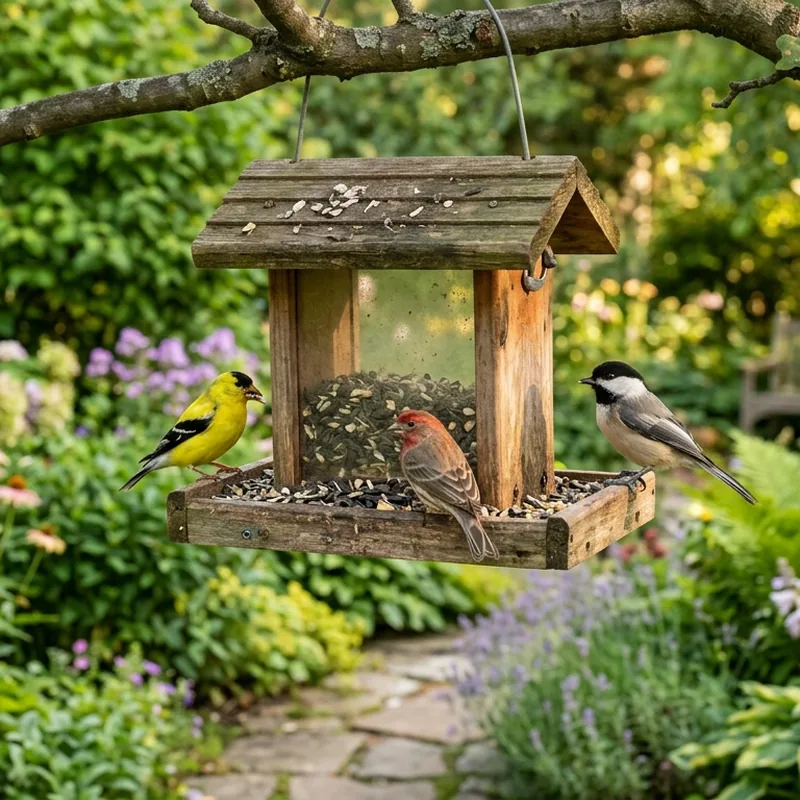
Placement Matters More Than People Expect
Birds want easy visual access to the feeder along with nearby cover — a bush or tree within a short flight distance — where they can retreat quickly if a predator appears. A feeder placed in the open middle of a yard with no nearby cover often gets ignored simply because birds don’t feel safe using it.
Choosing the Right Seed
Black oil sunflower seed is close to a universal favorite across many common backyard species and is the single best starting point if you’re not sure what else to offer. Tube feeders work well for finches and smaller songbirds, platform feeders attract a wider variety including larger birds, and suet feeders specifically draw woodpeckers and nuthatches.
Add Water
A shallow bird bath or water dish near the feeder often increases visits noticeably — birds need water for drinking and bathing, and a reliable water source nearby can be just as strong a draw as the food itself.
Be Patient and Consistent
It genuinely can take anywhere from a few days to a few weeks for birds in your area to discover a new feeder, especially if it’s in a spot with no established feeding history. Keeping it consistently filled during this period, rather than giving up after a slow first week, is usually what makes the difference.
Keep It Clean
A dirty feeder with moldy or wet seed can actually discourage birds and, worse, spread disease within a local bird population. Cleaning the feeder every couple of weeks with a diluted bleach solution and letting it dry fully before refilling keeps it both effective and safe.
FAQ
Black oil sunflower seed appeals to the widest range of common backyard birds and is the easiest starting choice if you can only offer one type.
Anywhere from a few days to a few weeks, depending on your area and how many birds are already used to feeders nearby. Consistency matters more than speed.
Not necessary in most areas — many species benefit from supplemental feeding year-round, though natural food is more abundant in summer so activity may look lower.
Common reasons include a nearby predator, spoiled or wet seed, or simply a shift in local food availability. Checking seed freshness and feeder cleanliness is a good first step.
