
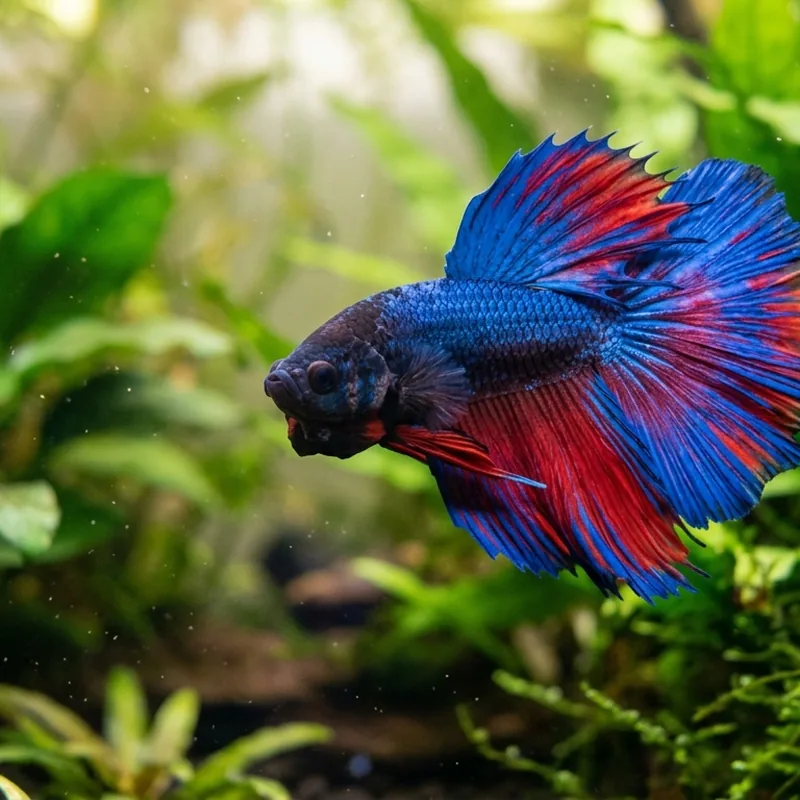
Betta fish flare — spreading their gill covers and fins wide — as a natural territorial display, usually triggered by seeing another fish, their own reflection, or a perceived threat. It’s a normal, instinctive behavior in a healthy betta, not a sign of distress on its own, though flaring too often can become genuinely stressful over time.
If you’ve ever seen your betta suddenly puff out into that dramatic, full-fanned display — gills spread wide, fins fully extended, colors looking even more vivid than usual — you’ve watched flaring in action. It’s one of the most striking things a betta does, and it’s exactly why bettas earned the nickname “Siamese fighting fish” in the first place.
Flaring looks intense, and it’s easy to assume something’s wrong the first time you see it. In most cases, though, it’s simply your betta being a betta. Here’s what’s actually driving it, and the situations where it’s worth paying closer attention.
What Flaring Actually Is
Flaring is an instinctive territorial and aggression display, hardwired into betta behavior through generations of selective breeding for fighting and display. When a betta flares, it spreads its gill covers (called opercula) outward, extends its fins to their fullest, and often intensifies its color, all to appear larger and more intimidating to a perceived rival.
In the wild, and among the species bettas were bred from, this display often works as a bluff — many confrontations between male bettas are resolved through flaring and posturing alone, without an actual physical fight, since the display itself signals strength.
What Triggers a Betta to Flare?
A handful of common triggers show up again and again:
- Seeing another betta. This is the single most common trigger — even a betta in a separate tank or bowl nearby can set off flaring through the glass.
- Seeing their own reflection. A shiny tank wall, a mirror, or even a reflective decoration can trick a betta into flaring at what looks like a rival fish.
- New tankmates. Introducing new fish, even non-betta species, can occasionally trigger a flaring response while the betta assesses the newcomer.
- Changes to their environment. Rearranging decorations or introducing something new into the tank can sometimes prompt a defensive flare while the betta investigates.
- General excitement or stimulation. Some bettas flare during feeding time or when their owner approaches the tank, seemingly out of general arousal rather than a specific threat.
Is Flaring Bad for My Betta’s Health?
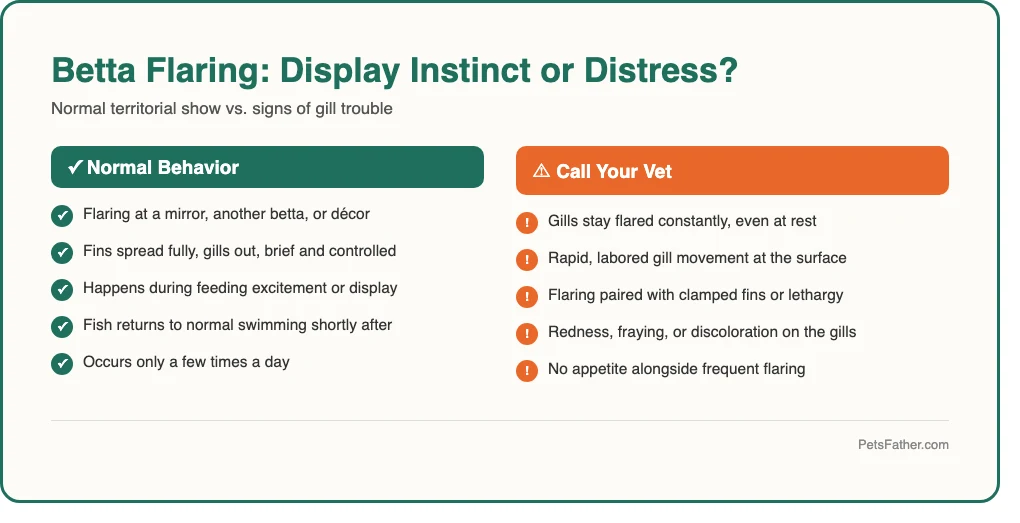
Occasional flaring, even daily, is not inherently harmful to a healthy betta — it’s a natural behavior their body is well-adapted to perform. The concern is frequency and duration, not the act itself. A betta that flares briefly a few times a day, then returns to normal swimming and resting, is behaving within a completely normal range.
The real risk comes from prolonged or constant flaring, which can genuinely elevate stress hormones over time, potentially weakening the immune system and making a betta more susceptible to illness. This is mainly a concern for bettas kept in visual contact with another betta long-term, or those who can constantly see their own reflection, rather than one triggered occasionally by a passing moment.
Should I Ever Deliberately Make My Betta Flare?
Some owners do this intentionally, briefly holding a small mirror up to their betta’s tank to encourage a flare, either out of curiosity or to admire their fish’s full display. Done rarely and briefly (a few seconds to a minute, at most a couple of times a week), most bettas tolerate this without issue, since it mimics a natural, brief territorial encounter.
Doing this frequently or leaving a mirror in place for extended periods is genuinely not recommended, since it creates the kind of prolonged stress-triggering situation that can actually harm a betta’s wellbeing over time. If you want to see your betta flare, a brief mirror session now and then is a reasonable, low-risk way to do it — a permanent mirror is not.
How Can I Tell Flaring Apart From Normal Fin Display?
Bettas naturally have flowing fins that move and flare a little during normal swimming, especially active breeds like halfmoons with especially large fin spreads. True flaring is more distinctive: it’s a sudden, deliberate full spread, gills included, that looks different from casual fin movement during swimming. The gill flare specifically — those covers spreading out beside the head — is the clearest tell, since that part doesn’t happen during ordinary swimming at all.
Color intensification is another giveaway. Many bettas visibly deepen or brighten in color during a genuine flare, appearing more saturated than their resting-state color, which is part of what makes the display so visually striking to owners.
Is This Behavior Unique to Bettas, or Do Other Fish Flare Too?
Gill-flaring as a territorial display shows up in a number of fish species, particularly other members of the gourami family that bettas belong to, but bettas are by far the most well-known and dramatic example, largely because of centuries of selective breeding specifically for this display and for fighting ability. Cichlids also show related territorial and aggressive displays, though the specific gill-flaring mechanics differ somewhat by species.
What makes bettas stand out is the combination of the dramatic fin spread most betta varieties have been bred for, alongside the gill flare — together, the display is more visually intense than in most other flaring fish species.
Can Two Bettas Live Together Without Constant Flaring?
Two male bettas should never be housed together — the flaring in that scenario escalates quickly to genuine, often fatal aggression, which is exactly why they’re called fighting fish. This isn’t a case of “they’ll work it out”; male bettas kept together will fight.
Female bettas can sometimes be kept in carefully managed groups called sororities, but even then, some flaring and hierarchy-establishing behavior is normal and needs to be monitored closely, with an exit plan (a separate tank ready) if aggression escalates beyond posturing. This is considered an advanced betta-keeping setup, not a beginner one, and isn’t something to attempt without research into proper sorority tank sizing and setup first.
Does Flaring Mean My Betta Is Unhappy in General?
Not on its own. A betta can flare occasionally and still be a generally content, healthy fish overall — the two aren’t contradictory. What matters more for overall wellbeing is the full picture: appetite, activity level, fin condition, color vibrancy, and whether the fish rests normally between bursts of activity.
A betta who flares occasionally but otherwise eats well, explores their tank, and shows bright, healthy coloring most of the time is a healthy betta. A betta who seems constantly agitated, refuses food, or shows faded color alongside frequent flaring is a different picture, and worth investigating further — usually starting with checking whether they have ongoing visual contact with another betta or their own reflection that needs to be addressed.
One more practical note: water quality can indirectly influence flaring frequency too. A betta in a poorly maintained tank with elevated ammonia or nitrite is under baseline physiological stress, which can make them more reactive and prone to flaring at minor triggers than a betta in a clean, stable, properly cycled tank. If flaring seems to be increasing over time with no new visual trigger, a water test is a reasonable thing to check alongside everything else.
How Can I Reduce Unnecessary Flaring in My Tank?
If your betta seems to be flaring more than the occasional brief burst, a few practical checks help:
- Check for reflective surfaces — tank walls in certain lighting, reflective backgrounds, or shiny decorations can all trigger repeated flaring.
- Make sure no other betta is visible from the tank, even in a separate container nearby.
- Add tank decorations or plants that give your betta places to rest out of direct sightlines if flaring seems tied to a specific visual trigger.
- Keep a consistent tank setup — bettas that flare in response to frequent rearranging often settle once the environment stabilizes.
More Fish & Aquarium Guides
FAQ
Yes — this is one of the most common flaring triggers. A shiny tank wall or reflective decoration can look like a rival fish to a betta.
No — male bettas should never be housed together. Flaring between two males escalates to genuine, often serious aggression, which is why they're known as fighting fish.
Occasional, brief flaring is normal and not a sign of illness. Frequent or prolonged flaring, especially paired with reduced appetite or faded color, can signal ongoing stress worth addressing.
A brief, occasional mirror session (a few seconds, once or twice a week at most) is generally tolerated well. A permanent mirror or frequent flaring sessions can create harmful, ongoing stress.
Yes, female bettas can flare, particularly around other bettas or in sorority tank setups, though generally with less intensity than males.
A normal flare usually lasts a few seconds to a couple of minutes before the betta returns to regular swimming — it's meant to be a brief display, not a sustained state.
