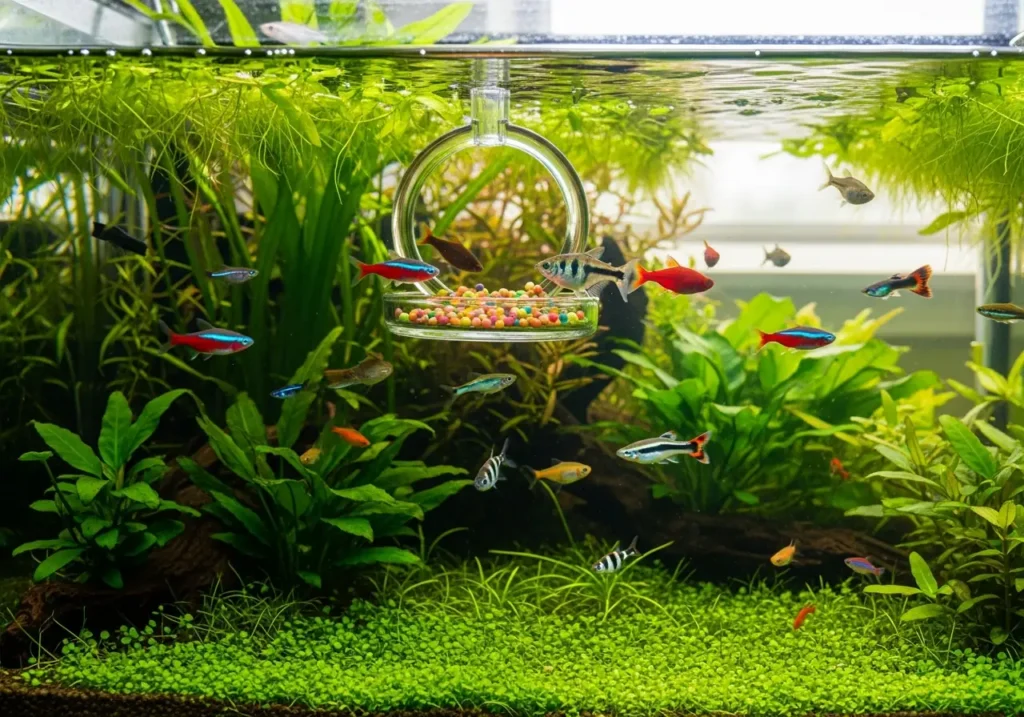
Most fish deaths that get blamed on disease actually trace back to feeding mistakes. Too much food doesn’t just overfeed the fish — it fouls the water, spikes ammonia, and creates the exact conditions that make fish sick in the first place.
Types of Fish Food
Flake food works well for most community fish and is the most common starting point. Pellets (sinking or floating) suit bottom feeders and larger fish better since they hold shape longer. Frozen and live foods — bloodworms, brine shrimp, daphnia — add variety and are especially useful for fish that are picky eaters or need extra protein to breed or recover from illness.
How Much and How Often
Feed only what your fish can eat in about two minutes, once or twice a day. If food is still sitting on the substrate five minutes later, you’re overfeeding. Many experienced keepers skip feeding entirely one day a week — fish handle this far better than most new owners expect, and it gives the digestive system a break.
Matching Food to Species
Herbivorous fish like many plecos and mollies need algae-based wafers or blanched vegetables in their diet. Carnivorous species like bettas do best with protein-heavy pellets or live/frozen food. Omnivores — the majority of common community fish — do fine on a good-quality flake as a base, supplemented occasionally with frozen food.
Common Feeding Mistakes
- Feeding multiple times a day “just to be safe” — this is the top cause of water quality crashes in new tanks.
- Buying food based on price alone — cheap flakes are often mostly filler and cause more waste per feeding.
- Not accounting for bottom feeders — sinking food specifically for catfish and loaches prevents them from going hungry while surface fish eat everything first.
