
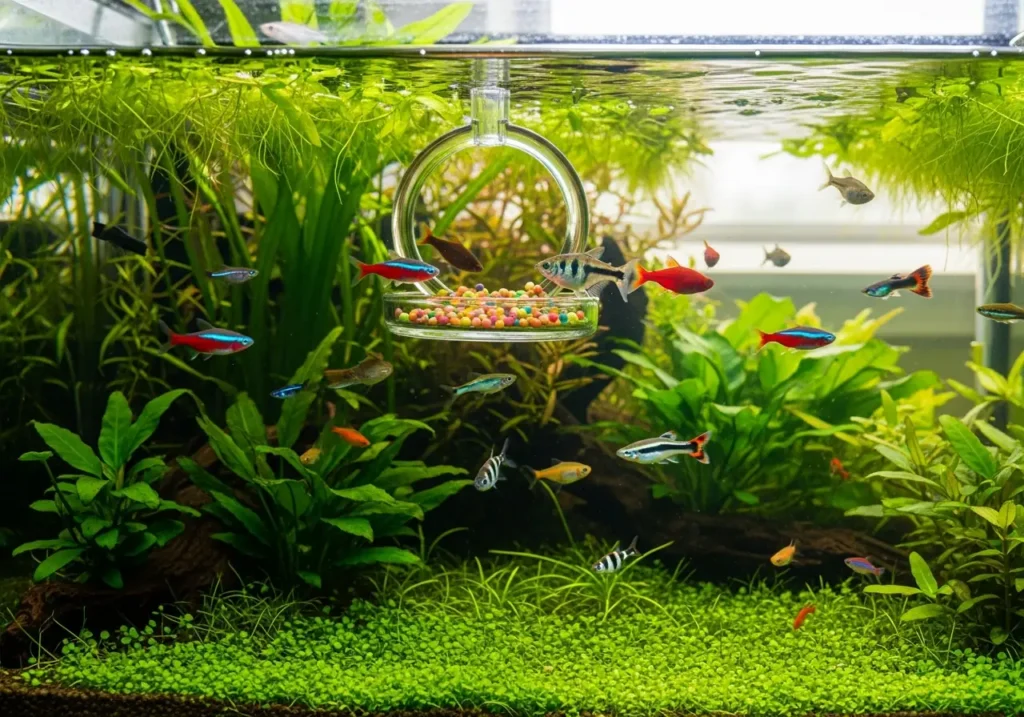
A quality flake or pellet food should be the everyday base for most community fish, with frozen or live food added a few times a week for variety and extra protein.
| Food Type | Best For | Notes |
|---|---|---|
| Flake | Most community fish | Everyday base diet, easy to portion |
| Sinking Pellet | Bottom feeders (corydoras, loaches) | Reaches the substrate before surface fish eat it all |
| Frozen (bloodworms, brine shrimp) | Variety, breeding, picky eaters | Thaw before feeding, feed a few times a week |
| Algae Wafers | Herbivorous species, plecos | Sinks, softens over time |

Tropical Flake Food
A solid protein-forward flake works as the base diet for most community tanks.
Check Price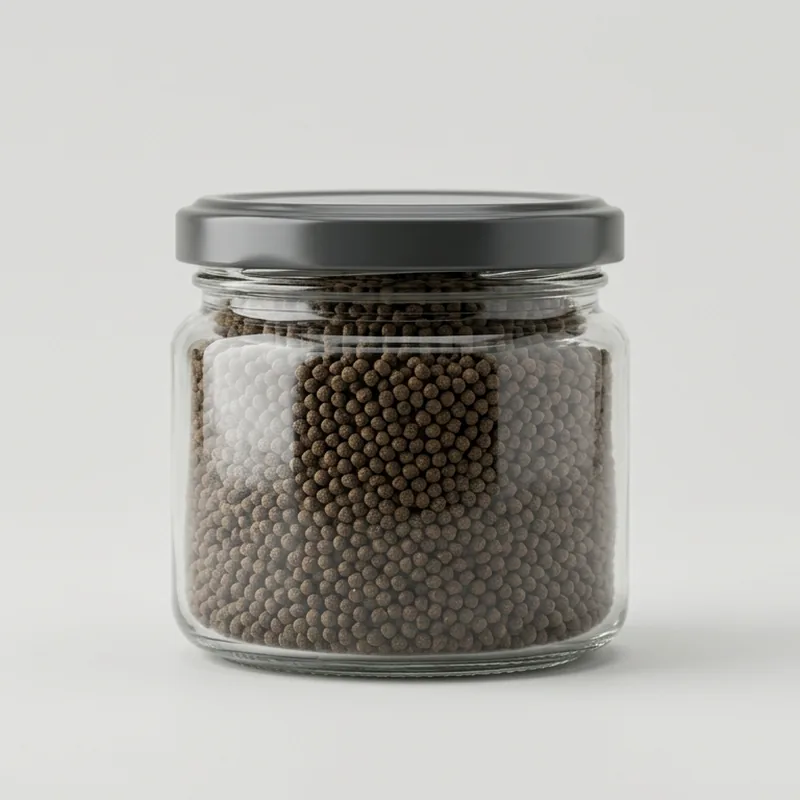
Sinking Pellets
Ensures corydoras and other bottom dwellers actually get fed instead of losing out to faster surface fish.
Check PriceFlake, Pellet, or Freeze-Dried: Matching Food Form to Species
Flakes suit most surface and mid-water community fish and are the most widely available staple. Pellets (sinking or floating) offer more nutritional density per bite and less water-fouling waste than flakes, making them a good choice for larger fish or bottom-dwellers that need sinking food to reach them before it disintegrates. Freeze-dried and frozen foods (bloodworms, brine shrimp, daphnia) add valuable variety and are especially useful for conditioning fish before breeding or for picky eaters.
Reading Nutritional Labels for Fish Food
Look for a named protein source near the top of the ingredient list rather than generic “fish meal” fillers, and check that the formula matches your fish’s actual dietary needs — herbivorous species (many plecos, some cichlids) need higher plant content, while carnivorous species need higher protein. A one-size-fits-all staple food is rarely optimal for a genuinely mixed community tank with different dietary needs.
Bottom-Feeder and Sinking Food Needs
Corydoras, loaches, and many plecos need food that actually reaches the substrate before competitive mid-water fish consume it all — sinking pellets or wafers designed for bottom feeders solve this, and feeding them separately (or after the more active mid-water fish have had their fill) helps ensure bottom-dwellers get adequate nutrition in a mixed community tank.
Live and Frozen Food as Dietary Variety
Occasional live or frozen foods (brine shrimp, bloodworms, daphnia) add nutritional variety and can stimulate natural hunting behavior, particularly valuable for more predatory or specialized species. Live food carries some disease-introduction risk if sourced from unreliable suppliers, making frozen (which is typically irradiated or otherwise treated) a safer regular choice for most home aquarists.
Feeding Frequency and Portion Control
Most community fish do well on 1-2 feedings daily, with only what’s consumed in 2-3 minutes offered each time. Overfeeding is one of the most common aquarium mistakes — excess food decomposes, degrading water quality and contributing to algae growth, well beyond the direct health impact of fish simply eating more than they need.
Storage and Shelf Life
Fish food loses nutritional value over time, especially once opened and exposed to air and moisture — buy quantities you’ll use within a few months rather than bulk sizes that will sit half-used for a year, and store in a cool, dry place away from direct sunlight to slow nutrient degradation.
The Bottom Line
Match food form and nutritional profile to your specific fish’s needs, prioritize named protein sources, ensure bottom-dwellers actually get their share, and add variety through occasional frozen foods. Getting nutrition right is a foundational part of fish health that pays off in coloration, activity level, and long-term resilience to disease.
Storing Live and Frozen Foods Properly
Frozen foods need consistent freezer storage and should be thawed only in the amount needed for a single feeding, never refrozen once thawed. Live foods like brine shrimp or daphnia have their own care needs to stay viable until feeding — usually cool storage and, for some live foods, their own small aerated container rather than simply sitting in a refrigerator bag.
Automatic Feeders for Consistency and Travel
Automatic feeders help maintain consistent feeding timing and portions, useful both for busy schedules and short absences. Test any automatic feeder’s portion output over a few days while you’re still home to confirm it’s dispensing the right amount before relying on it during travel — a miscalibrated feeder can just as easily overfeed as underfeed.
Comparing Price Per Feeding, Not Just Price Per Container
A more expensive food that lasts considerably longer per container, due to smaller effective portions or higher density, can work out cheaper per actual feeding than a larger but less concentrated budget option — comparing cost this way, rather than by sticker price alone, often changes which option looks like the better long-term value.
Conditioning Diets for Breeding
Fish being conditioned for breeding often benefit from a temporarily richer, more varied diet — increased live or frozen protein sources in the weeks leading up to an intended spawning attempt mirror the nutritional abundance many species associate with breeding conditions in the wild. Return to standard maintenance feeding once breeding behavior concludes, since sustained rich feeding beyond conditioning periods can contribute to obesity.
Transitioning Fish to a New Food Brand or Type
Mix new food with familiar food gradually over one to two weeks when switching brands or types, rather than an abrupt full swap — this reduces the chance of fish rejecting unfamiliar food outright and gives you time to notice if the new food doesn’t suit your fish well before fully committing to it.
Special Dietary Needs for Specific Groups
Fry need much smaller particle sizes than adult food, often requiring crushed flakes or specialized fry food. Some specialized species (certain pufferfish, for example) have highly specific dietary needs — like foods that help wear down continuously growing teeth — that a generic community food doesn’t address at all.
Budgeting for Food as an Ongoing Cost
While individual food purchases are inexpensive, factor recurring food costs (especially if using multiple food types for a varied, mixed-species diet) into your overall aquarium budget planning, alongside the more commonly discussed upfront equipment costs.
Evaluating Food Quality Beyond the Label
Beyond reading labels, observing how your fish actually respond to a food over time — coloration, activity level, growth rate, and waste output — provides real-world feedback that complements label information. A food that looks good on paper but produces excessive waste or dull coloration in practice may not be the best fit for your specific fish despite decent ingredients.
Adjusting Food Choices for Multi-Tank Households
Keepers with multiple tanks housing different species often find it more practical to maintain two or three core food types suited to their most common species groups, rather than a wide, hard-to-manage inventory of highly specialized foods for every individual tank’s specific needs.
How Food Quality Connects to Long-Term Water Quality
Higher-quality foods, formulated for better digestibility, generally produce less waste output relative to the nutrition they deliver than cheaper, filler-heavy alternatives — this means that food choice has a genuine downstream effect on your tank’s bioload and water quality, not just on your fish’s individual nutrition. Keepers troubleshooting persistent water quality issues sometimes overlook food quality as a contributing factor, focusing exclusively on filtration or water-change frequency, when a food formula switch alongside those other adjustments can meaningfully reduce the underlying waste burden your system has to process.
Matching Feeding Approach to Your Actual Schedule
Be honest about your realistic daily schedule when planning a feeding routine — a twice-daily feeding plan that consistently gets skipped due to an unpredictable schedule serves your fish worse than a simpler, more consistently achievable once-daily routine that actually happens reliably. Automatic feeders can help bridge genuine schedule gaps, but even without one, designing a feeding plan around your realistic routine, rather than an idealized one you won’t consistently maintain, tends to produce healthier, more consistently fed fish over time.
Recognizing Signs a Food Isn’t Working Well for Your Fish
Beyond obvious rejection, subtler signs that a food choice isn’t well suited include excessive waste production, reduced activity after feeding, or gradually declining coloration despite otherwise stable water quality — these signs warrant reconsidering your food choice even when fish are technically eating it, since acceptance alone doesn’t guarantee a food is genuinely serving your fish’s nutritional needs well.
Building Food Purchasing Into Your Regular Maintenance Rhythm
Tracking roughly how long a container of food lasts helps you reorder before running out and switching to a substitute food out of necessity rather than genuine choice — planning food purchases proactively, alongside other routine aquarium supply needs, avoids the nutritional inconsistency that comes from reactive, last-minute substitutions.
Considering Multiple Food Types as Standard Practice, Not a Luxury
Rather than viewing a varied diet as an optional upgrade from a single staple food, increasingly the hobby’s general guidance treats reasonable dietary variety as a standard best practice for most community tanks — a primary staple supplemented by occasional frozen or live food isn’t excessive effort but rather a genuinely achievable baseline that meaningfully supports long-term fish health.
Viewing Feeding as an Investment in Long-Term Fish Health
Thoughtful attention to food quality and feeding practice pays dividends across your fish’s entire lifespan — better coloration, stronger disease resistance, and more successful breeding if that’s a goal, all trace back partly to consistent, well-considered nutrition. Viewing feeding choices as a genuine long-term investment, not just a routine chore, tends to produce noticeably better outcomes over years of keeping.
More Fish & Aquarium Resources
FAQ
Live and frozen foods add valuable variety and protein but shouldn't fully replace a quality flake or pellet as the everyday base diet for most community fish.
Check that a named protein source (like fish meal) appears early in the ingredient list, rather than mostly fillers.
Most freshwater fish do well with 1-2 small feedings per day — overfeeding is a far more common problem than underfeeding and directly affects water quality.
