
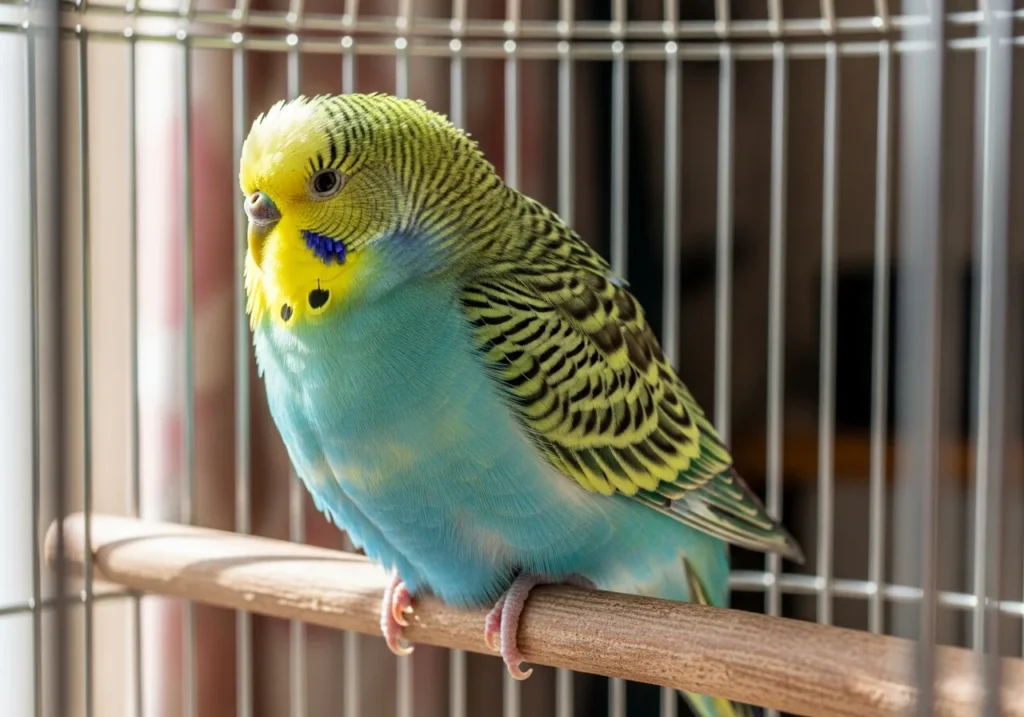
Birds puff up their feathers mainly to trap warm air for insulation, to relax while resting, or during normal preening — it’s usually a comfortable, contented posture, not a sign of illness. The exception is a bird that stays puffed up constantly throughout the day, which is worth paying closer attention to.
Puffed-up feathers make a bird look almost twice its normal size, which is exactly why it catches an owner’s eye. Sometimes it’s the most relaxed, content posture a bird can be in. Sometimes it’s the first visible sign that something’s off. Telling the two apart mostly comes down to timing and what else is going on.
Why Birds Puff Up Their Feathers
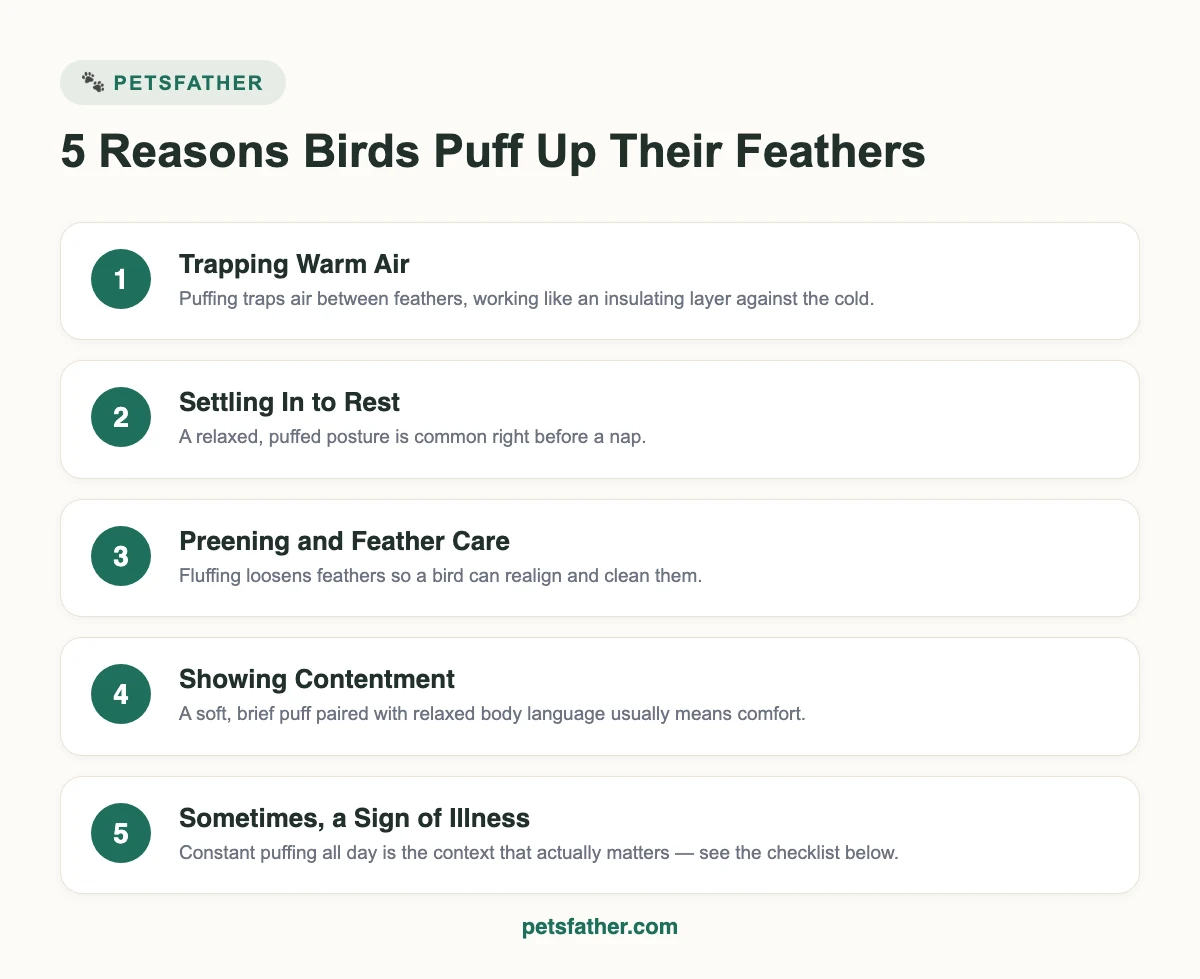
A handful of everyday reasons cover most puffing you’ll see:
- Trapping warm air. Fluffed feathers create pockets of air close to the body, working like a built-in insulating layer. Birds do this more in cooler rooms or during cold weather.
- Settling in to rest. A soft, relaxed puff right before or during a nap is completely normal — think of it as the bird equivalent of pulling up a blanket.
- Preening and feather maintenance. Fluffing loosens feathers, making it easier for a bird to realign them or work in preen oil while grooming.
- General contentment. A brief puff paired with relaxed body language, soft chirping, or one leg tucked up usually just means a comfortable bird.
The Difference Between Normal Puffing and a Warning Sign
This is where owners tend to get anxious, and reasonably so — birds are prey animals in the wild, which means they instinctively hide signs of illness until they can’t anymore. A puffed-up bird resting for a few minutes between activity is normal. A bird that stays puffed up all day, every time you check on it, is a different situation.
The context matters as much as the puffing itself. A relaxed puff during a nap, followed by normal activity, eating, and alertness the rest of the day, is nothing to worry about. Constant puffing paired with quiet, withdrawn behavior is the pattern that actually signals a problem.
When Puffed Feathers Mean Something’s Wrong
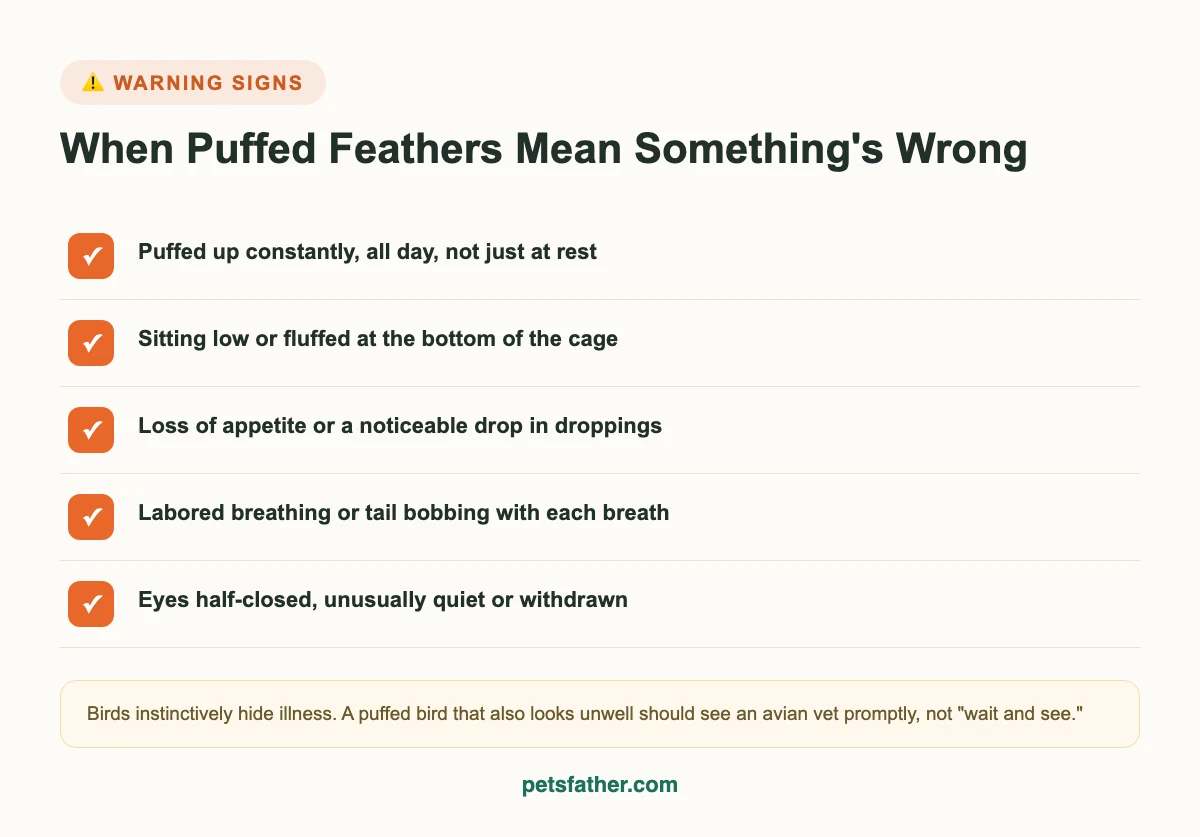
A few signs shift this from “resting” to “possible illness”:
- Puffed up constantly, not just during rest periods
- Sitting low or fluffed at the bottom of the cage
- Loss of appetite, or a noticeable drop in droppings
- Labored breathing, or the tail bobbing with each breath
- Eyes half-closed, unusually quiet, or withdrawn from normal activity
Because birds mask illness so effectively, any combination of these is worth treating seriously rather than waiting a few days to see if it passes. A prompt visit to an avian vet is the safer call.
What to Do If You’re Not Sure
If your bird puffs up during a nap and returns to normal, alert behavior afterward — eating, moving around, vocalizing as usual — that’s a healthy pattern and doesn’t need any intervention. Keeping the room at a stable, appropriate temperature for your species can also cut down on cold-related puffing if that seems to be the trigger.
If the puffing sticks around most of the day, or shows up alongside any of the signs above, don’t wait it out. Birds can decline quickly once a health issue becomes visible, so earlier attention genuinely makes a difference.
Does Puffing Look Different Across Bird Species?
The general behavior is common across most pet birds — parakeets, cockatiels, conures, and larger parrots all puff up for warmth, rest, and contentment. What varies is how dramatic it looks. Smaller birds like budgies and parakeets often appear almost perfectly round when fully puffed, while larger species show a more subtle fluffing of specific feather groups.
Learning what your own bird’s normal resting posture looks like is more useful than comparing to species-wide generalizations. Once you know their baseline, it becomes much easier to notice when something’s actually different.
What to Do If You Suspect Your Bird Is Unwell
If a puffed-up bird is also showing other warning signs, a few steps help while you arrange a vet visit:
- Keep the room at a stable, warm temperature — sick birds lose the ability to regulate body heat as effectively
- Reduce stress: dim lighting, minimal handling, and a quiet environment
- Note what you’re seeing and when it started, since specific timing helps a vet narrow things down faster
- Don’t wait to “see if it passes” once multiple warning signs show up together — birds can decline quickly once illness becomes visible
Because birds are so good at masking illness, catching it early genuinely changes outcomes. Trusting your instinct that something looks different from normal is usually worth acting on.
Puffing and the Molting Process
Birds also puff up more during molting, when old feathers are being replaced with new ones. The process can be mildly uncomfortable, and fluffing helps loosen and manage feathers as they shed and regrow. Molting-related puffing is usually accompanied by visible feather loss around the cage and a slightly more irritable temperament, which is normal and temporary.
It’s worth distinguishing molting puffiness — which comes with an obvious, visible cause — from unexplained puffing with no feather loss, which leans more toward the illness category discussed above.
Setting Up a Comfortable Environment
A consistently comfortable environment cuts down on cold-related puffing and generally supports better feather health overall. A stable room temperature suited to your species, a consistent day-night light cycle, and a draft-free cage placement all help reduce the kind of puffing that comes purely from being too cold rather than anything behavioral.
One More Thing Worth Knowing
New bird owners sometimes assume any puffing at all is cause for concern, which can lead to unnecessary stress over completely normal behavior. The goal isn’t to eliminate puffing — it’s a natural, frequent part of a bird’s day — but to know your own bird’s baseline well enough to notice a genuine shift when it happens.
Puffing After a Bath or Misting
Many birds puff up right after bathing or being misted with water, which is a normal part of drying off and rearranging feathers back into place. This kind of puffing is brief, followed by active preening, and has nothing to do with illness — it’s simply part of the grooming routine most pet birds go through regularly.
If your bird enjoys baths, you’ll likely notice this pattern often: a good soak, a puff-and-shake to redistribute water, then a stretch of quiet preening as feathers dry and settle back into place.
Puffing in Response to a New Environment
A newly adopted bird, or one adjusting to a new cage placement, sometimes puffs up more often during the settling-in period. This is a stress response tied to unfamiliar surroundings rather than illness, and it typically eases as the bird becomes more comfortable with its new routine, cage location, and household sounds over the following days and weeks.
Giving a new bird a predictable schedule and a quiet, low-traffic spot for the cage during this adjustment period usually helps the excess puffing settle down faster.
A Quick Word on Nighttime Puffing
It’s normal for birds to appear more puffed overnight or right at wake-up, since sleep itself involves a relaxed, fluffed posture. A bird that looks puffed first thing in the morning but shakes it off, stretches, and becomes active within a few minutes of waking is showing a completely normal start to the day, not a health concern.
One More Thing to Watch
Context matters as much as the puffing itself. A relaxed puff during a nap on a cool morning and a sudden puff paired with fluffed feathers, closed eyes, and reluctance to move are two completely different signals — the first is comfort, the second is your bird telling you something is wrong and worth a same-day vet call.
More Birds Guides
FAQ
Yes. A relaxed, puffed posture during rest or sleep is normal and usually means the bird feels safe and comfortable, especially if it returns to a normal shape once active again.
Fluffed feathers trap warm air close to the body, acting as natural insulation. It's a normal response to a cooler room and usually resolves once the temperature is more comfortable.
The biggest clue is duration and context. Puffing that lasts all day, paired with low energy, appetite loss, or labored breathing, points toward illness rather than normal resting behavior.
A gentle feather shake right after puffing or preening is usually just resettling their feathers, similar to a dog shaking off water. Persistent shaking or trembling alongside puffing is worth mentioning to an avian vet.
The general behavior is common across most pet bird species, though the intensity and frequency can vary. Knowing your specific bird's normal resting posture makes it much easier to spot when something's different.
Occasional puffing during rest doesn't need a vet visit on its own. Constant puffing throughout the day, especially with reduced appetite or activity, is a good reason to schedule one.
