
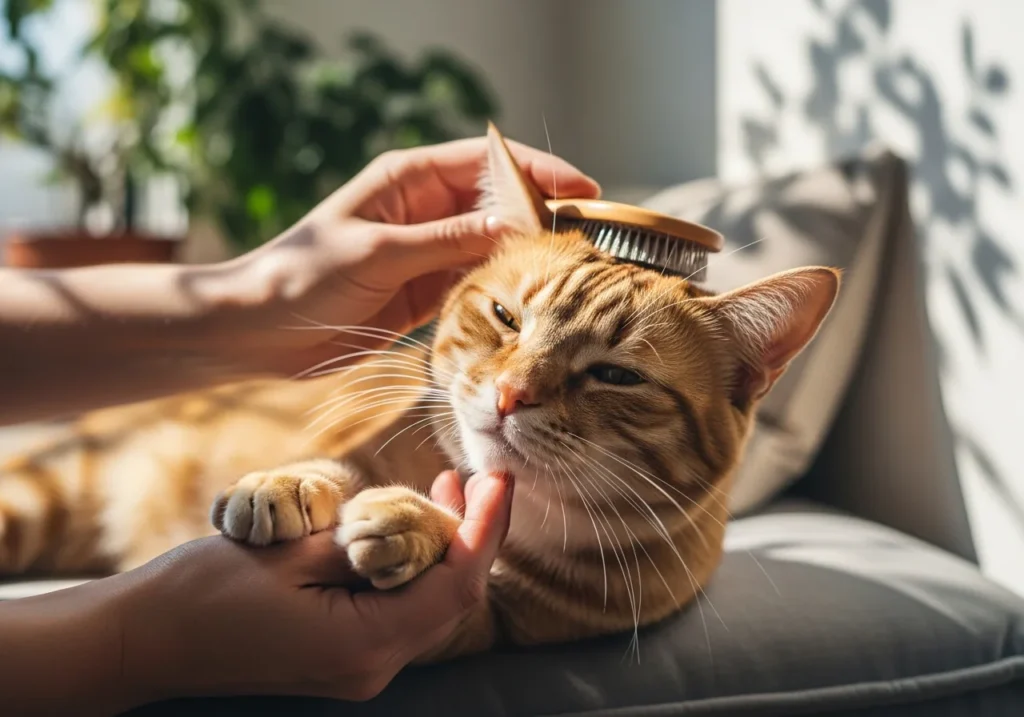
Cats knead — pressing their paws rhythmically into a soft surface — mostly out of leftover instinct from kittenhood and because it feels good and comforting to them. It’s one of the most normal cat behaviors there is, and it’s rarely a cause for concern on its own.
If you’ve ever had a cat rhythmically pressing its paws into your lap, a blanket, or a cushion — sometimes with claws out, sometimes purring the whole time — you’ve seen kneading in action. Some owners call it “making biscuits,” and it’s one of the most talked-about cat quirks out there, mostly because it’s genuinely endearing and a little mysterious if you’ve never looked into why it happens.
Why Cats Knead
A few overlapping explanations cover most of what’s going on:
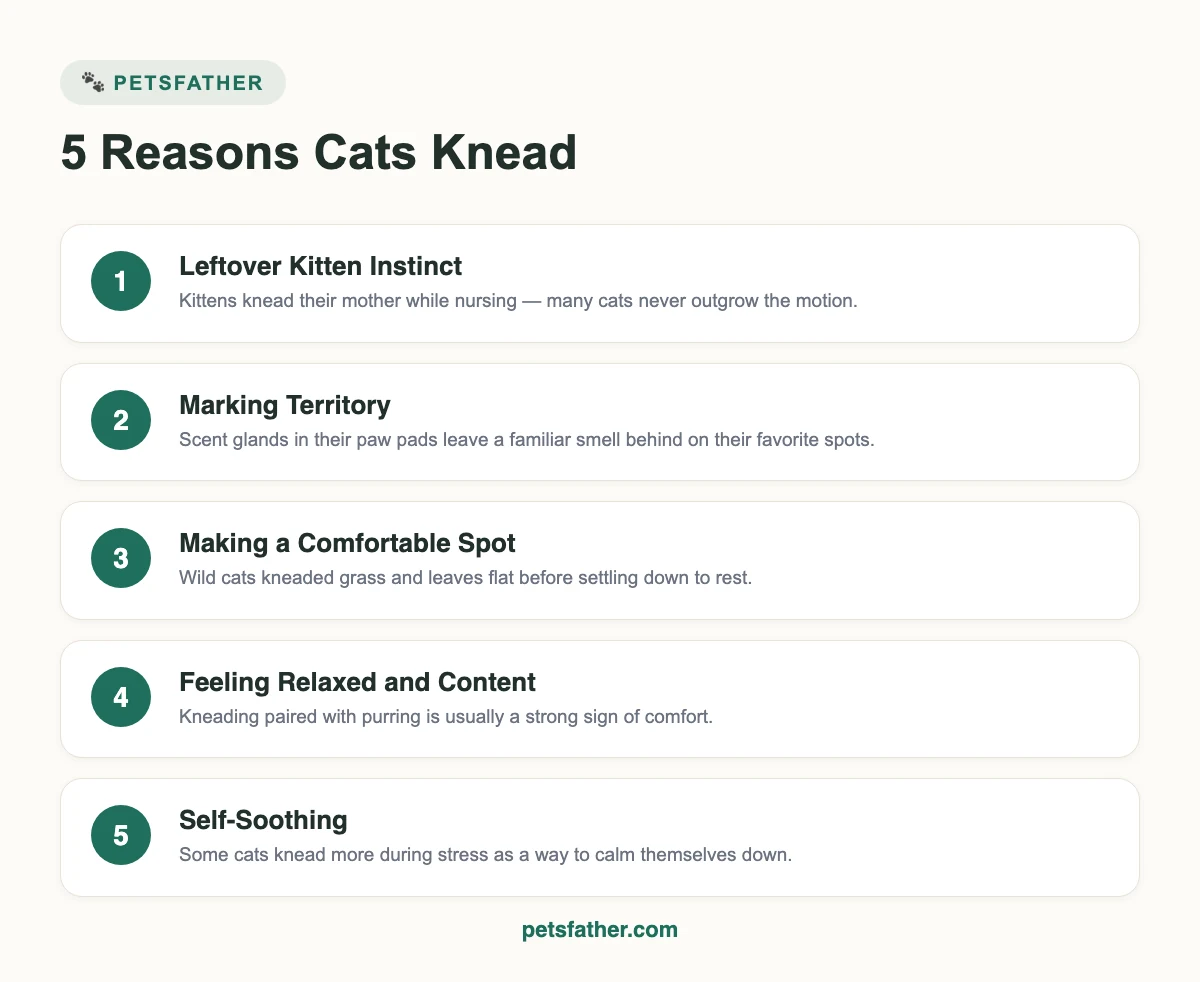
- Leftover nursing instinct. Kittens knead their mother’s belly to stimulate milk flow while nursing. Many cats never fully outgrow the motion, and it resurfaces in adulthood during moments of comfort.
- Scent marking. Cats have scent glands in their paw pads. Kneading leaves a faint trace of their scent behind, a subtle way of marking a favorite spot — or person — as familiar and safe.
- Nest-making instinct. Wild cat ancestors kneaded grass and leaves flat before settling down, an instinct that shows up today as kneading a blanket before curling up on it.
- Simple comfort and relaxation. Kneading paired with purring, slow blinking, or drooling is a strong signal your cat feels safe and content.
Why Do Some Cats Knead More Than Others?
It varies a lot by individual cat. Cats that were weaned early, or separated from their mother sooner than usual, sometimes knead more as adults — the theory being the behavior didn’t get the chance to naturally fade the way it might otherwise. Personality plays a role too; especially affectionate or particularly food-motivated cats (nursing and feeding are closely linked in early development) often knead more visibly and more often.
Some cats knead exclusively on soft blankets or their owner’s lap. Others do it on nearly any soft surface, including their own bed or a stuffed toy. Both patterns are considered normal.
Is Kneading With Claws Out a Problem?
Not inherently — plenty of cats knead with claws extended simply because that’s part of the natural motion. It only becomes something to manage if it’s genuinely painful for you (a trim or a soft blanket barrier usually solves that) or if the intensity itself changes noticeably, which is more about the cat’s state of mind than the claws themselves.

When Kneading Behavior Is Worth a Closer Look
Kneading itself is almost always harmless, but a few shifts are worth paying attention to:
- Kneading turns aggressive, or claws are breaking skin more than lightly
- It’s paired with excessive vocalizing, restlessness, or pacing
- A sudden increase in kneading frequency alongside other stress signs (hiding, appetite changes)
- Kneading directed at themselves obsessively, especially near areas of hair loss
- Limping or reluctance to use a paw normally afterward
On their own, none of these are common, which is exactly why they stand out. Typical kneading is gentle, rhythmic, and clearly tied to a relaxed moment — a blanket, a lap, settling in for a nap.

Should You Try to Stop It?
Most of the time, no — kneading is a normal, healthy behavior and trying to stop it outright can be more frustrating than helpful. If claws are the actual issue, regular nail trims or keeping a thick blanket over your lap solves it without discouraging the behavior itself. Redirecting onto a cat bed or blanket instead of your legs works well too, especially if you offer it consistently as an alternative spot.
If kneading has changed in a way that concerns you — more intense, more frequent, or paired with other odd behavior — that’s a conversation for your vet, not something to just wait out.
Kneading vs. Other Similar Cat Behaviors
Kneading sometimes gets lumped in with other cat quirks, but they’re each their own thing. Scratching is about claw maintenance and marking with a different set of scent glands. Circling before lying down is more about settling into a comfortable position. Kneading is specifically the rhythmic, alternating paw motion, usually against something soft, and it’s the one most tied to comfort and nursing instinct rather than practical upkeep.
Cats sometimes combine behaviors — kneading, then circling, then finally settling down to sleep — which is a completely normal bedtime routine, not three separate concerns.
Making Kneading More Comfortable for Everyone
If you enjoy the behavior but the claws are the sticking point, a few small adjustments go a long way:
- Keep nails trimmed on a regular schedule, especially if your cat kneads directly on skin
- Keep a thick blanket nearby specifically for lap time
- Offer a soft cat bed as an alternative kneading spot if you’d rather redirect the habit somewhere else
- Avoid pulling your cat’s paws away mid-knead — it can startle them and isn’t necessary if you simply reposition a blanket instead
None of this is about stopping a normal behavior — it’s just about making it work better for your setup, which most cats adjust to easily.
Kneading and Bonding
Kneading tends to show up most with the people and spots a cat feels safest around, which is part of why owners often take it as a compliment. It’s not unusual for a cat to knead almost exclusively on one particular person in a household, or refuse to knead anywhere except their own established favorite blanket.
This selectivity is actually a useful signal in its own right — a cat that starts kneading somewhere new, or with someone new, is often showing a shift toward feeling more comfortable in that relationship or space.
A Brief Note on Rescue and Shelter Cats
Cats adopted from shelters sometimes take longer to start kneading regularly, simply because the behavior is tied to feeling secure. It’s common for a newly adopted cat to begin kneading weeks or months into settling in, once they’ve built enough trust in their new environment. It’s a small but genuinely encouraging sign that a cat is starting to feel at home.
Kneading on Unusual Surfaces
Occasionally a cat kneads somewhere unexpected — a pile of laundry, a stuffed animal, or even a person’s arm rather than a lap. This is still within normal range; cats generally choose whatever soft surface is available and appealing at the moment, and the specific object matters far less than the comfort and security behind the behavior itself.
Multi-Cat Households and Kneading
In homes with more than one cat, kneading habits can look completely different between individuals — one cat might knead constantly while another rarely does it at all, and that’s simply a personality difference rather than one cat being more affectionate than the other. Some cats even knead a housemate cat during grooming or bonding moments, which is a normal extension of the same comfort-driven instinct, not something specific to humans.
If you’re comparing cats and wondering why one kneads so much more, it usually comes down to individual temperament and early-life experience rather than anything you’re doing differently with one over the other.
A Note on Senior Cats
Older cats sometimes knead less as arthritis or general stiffness makes the motion less comfortable. A senior cat that suddenly kneads far less than they used to isn’t necessarily showing an emotional change — it can simply be a physical one, and worth mentioning at a wellness checkup so joint comfort can be addressed if needed.
More Cats Guides
FAQ
It's usually a mix of instinct and comfort — kneading a soft, warm lap taps into the same nesting behavior cats show with blankets, and it often means they feel relaxed and safe with you.
It's a strong sign of trust and comfort, though 'love' is a human framing. Cats generally only knead somewhere or someone they feel safe and relaxed around.
Drooling during kneading is common and usually tied to the same relaxed, nursing-like state — it's typically nothing to worry about unless it's excessive or paired with other symptoms.
Not inherently. Many cats naturally knead with claws extended. If it's uncomfortable for you, a blanket between your lap and their paws or regular nail trims usually solves it.
A gradual increase is often just a personality shift or comfort growing over time. A sudden, sharp increase alongside other behavior changes is worth mentioning at your next vet visit.
Often yes, since the behavior starts as a nursing instinct. Some cats naturally knead less as they mature, while others carry the habit into adulthood without it meaning anything is wrong.
