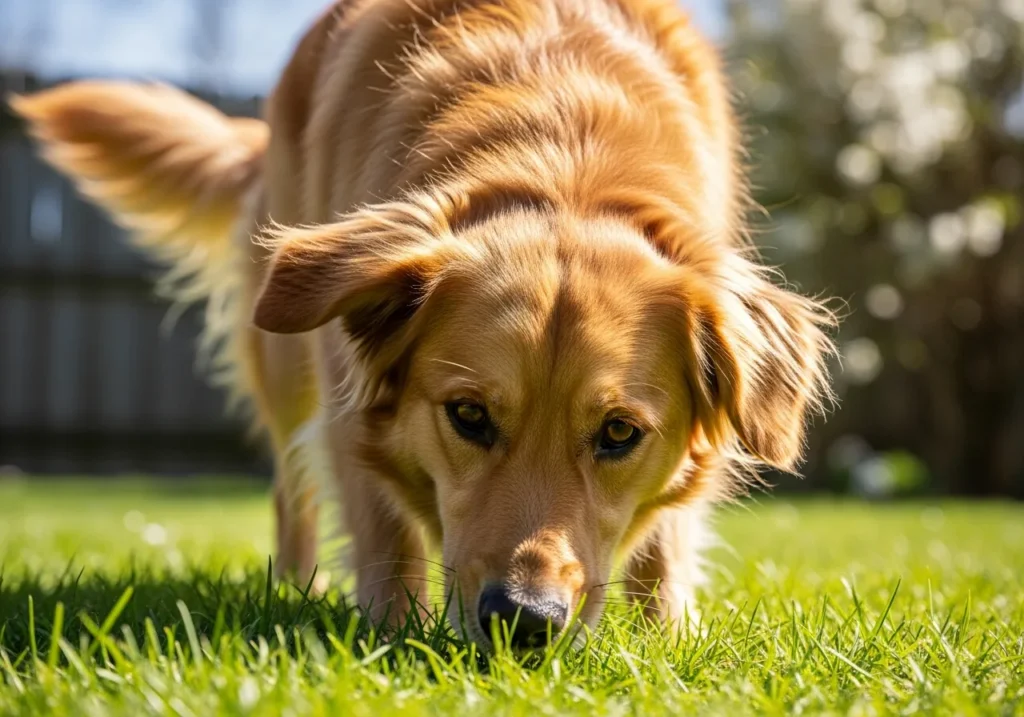
Most dogs eat grass simply because it’s instinctive or interesting to them, not because something’s wrong. Occasional grass-eating in an otherwise healthy dog is normal — it only becomes a concern if it’s constant, paired with vomiting, or your dog suddenly can’t leave the lawn alone.
If you’ve ever caught your dog grazing on the lawn like a tiny, four-legged cow, you’ve probably typed some version of “is this normal” into your phone mid-walk. It’s one of the most common weird-but-harmless dog behaviors out there, and also one of the most Googled. Here’s what’s actually going on, and the specific situations where it’s worth a second look.
The short version is that dogs have been doing this for as long as they’ve been dogs, and it rarely means what people assume. Most of the alarm around grass-eating comes from one outdated idea — that it’s always a sign of sickness — which just hasn’t held up well against more recent behavior research.
The Most Common Reasons Dogs Eat Grass
Vets and animal behaviorists have looked into this one a lot, mostly because it’s such a common question. A few things tend to come up over and over:
- It’s leftover instinct. Wild canine ancestors ate the stomach contents of prey animals, which included plant matter. Some researchers think modern dogs are just running an old program.
- They’re bored. A dog with nothing to do in a yard will find something to do — and grass is right there.
- They like the texture. Some dogs genuinely seem to enjoy the crunch, the same way some dogs love ice cubes.
- It’s a small habit that snowballed. One nibble becomes a routine part of the daily walk.
- Mild stomach discomfort. A small number of dogs do it right before vomiting, though most dogs who eat grass never throw up at all.
Here’s the part that surprises a lot of owners: a well-known study on the subject found that only about 1 in 4 dogs who eat grass show any signs of illness beforehand, and fewer than 1 in 10 actually vomit afterward. In other words, grass-eating is usually just a habit, not a symptom.

Is It a Sign My Dog Is Missing Something in Their Diet?
This is the theory most people have heard — that a dog eating grass is trying to fill a nutritional gap, usually fiber. It’s a reasonable guess, and it’s true in a small number of cases. But if your dog is eating a complete, balanced commercial food (check the label for an AAFCO statement) and is otherwise healthy, a nutrient deficiency is unlikely to be the reason.
If you’re genuinely unsure whether your dog’s food is doing its job, that’s worth a quick chat with your vet rather than guessing based on grass habits alone. Diet gaps usually show up as more than just grass-eating — think dull coat, low energy, or digestive issues.
Does Eating Grass Mean My Dog Has an Upset Stomach?
Sometimes, yes — but it’s not the rule. The idea that dogs “self-medicate” by eating grass to induce vomiting is popular, but the research doesn’t fully back it up. Most dogs who eat grass show zero signs of nausea first, and most don’t vomit after. If your dog does occasionally bring up a little grass along with some foam, that’s usually just mild irritation clearing itself out, not a red flag on its own.
What actually matters here is the pattern. A dog who eats grass once during a walk and moves on is different from a dog who paces, drools, or looks uncomfortable before diving into the lawn.

When Grass-Eating Actually Becomes a Problem
Occasional grazing isn’t something to lose sleep over. A few situations do call for more attention:
- Your dog is eating grass constantly, not just once in a while
- It’s followed by repeated vomiting, not a one-off
- They seem uncomfortable, restless, or off their food afterward
- The lawn has been treated with pesticide, herbicide, or fertilizer recently
- They’re eating other non-food items too, not just grass (a behavior called pica, which is worth mentioning to your vet on its own)
Treated grass is the one that catches people off guard. Lawn chemicals can be genuinely harmful if swallowed, so if you know a lawn’s been sprayed recently — yours or a neighbor’s — it’s worth steering your dog away entirely, not just monitoring afterward.

Grass vs. Something More Dangerous
Plain lawn grass is one thing. Mulch, garden plants, and random yard debris are a different story, and it’s easy to lump them together when you’re watching your dog’s nose go straight for the flower bed. Some common garden plants — like lilies, azaleas, and sago palms — are genuinely toxic to dogs, while grass itself generally isn’t.
If your dog is nibbling specifically in a planted garden bed rather than open lawn, it’s worth checking exactly what’s growing there. The ASPCA keeps an updated list of plants that are toxic to dogs, and it’s a good one to bookmark if you’ve got a yard with more than just grass in it.
How to Manage It If It’s Becoming a Habit
If your dog is healthy but you’d rather they weren’t treating the backyard like a salad bar, a few things tend to help:
- Rule out boredom first. More walks, more sniffing time, and a couple of extra minutes of play before yard time can cut down on idle grazing.
- Check their fiber intake. A small amount of plain canned pumpkin or a vet-approved fiber supplement can help if low fiber seems to be part of it.
- Supervise treated areas. Keep your dog off any lawn you know has been sprayed, and ask neighbors if you’re not sure.
- Redirect, don’t punish. A firm “leave it” paired with a toy or a treat works better long-term than scolding — grass-eating usually isn’t defiance, it’s just a habit.
- Grow a dog-safe patch. Some owners plant a small tray of wheatgrass or cat grass just for their dog to graze on — it satisfies the habit without the pesticide risk of an untreated lawn.
- Keep an eye on timing. If grazing tends to happen right before or after meals, that timing pattern is useful information to bring up with your vet.
If none of that changes anything and the habit is intense or paired with other odd eating behavior, that’s a conversation for your vet rather than another late-night search session.
What to Tell Your Vet If You’re Still Worried
Most vets will tell you occasional grass-eating isn’t worth a special appointment on its own. But if you’re going in anyway — for a regular checkup or because something else seems off — a few details make the visit more useful:
- How often it happens (daily, a few times a week, only occasionally)
- Whether it’s followed by vomiting, and how often
- Any recent diet changes, new treats, or food brand switches
- Whether the grass or garden area has been treated with anything
- Any other changes — appetite, energy, weight, bathroom habits
That kind of pattern is far more useful to a vet than “my dog eats grass sometimes,” and it’ll help rule things in or out a lot faster.
FAQ — Dogs Eating Grass
Occasional daily grazing is common and usually harmless in healthy dogs. If it starts looking obsessive, or replaces interest in their regular food, that shift is worth mentioning to your vet.
Plain, untreated grass is generally not toxic, but grass treated with pesticides, herbicides, or fertilizer can genuinely make a dog sick if swallowed. Keep your dog off any lawn you know has been recently sprayed.
You don’t need to stop occasional grazing on untreated grass. If it’s frequent enough to bother you, redirecting with a walk, toy, or training cue works better than trying to fully eliminate the habit.
Some dogs do bring up a little grass along with foam, usually from mild stomach irritation. It’s typically not a cause for alarm unless it happens repeatedly or your dog seems unwell afterward.
Puppies often eat grass simply out of curiosity as they explore textures and tastes during teething and general development, more than for any nutritional reason. It usually settles down as they mature.
There’s no strong evidence that any one breed eats grass more than another — it shows up across breeds and sizes, and seems to come down to individual habit more than genetics.
As long as the grass is untreated and your dog isn’t showing any of the warning signs above, there’s generally no need to stop them. Just watch for pesticide-treated areas and other plants mixed into the same patch.
It can be a factor in a small number of cases, but most grass-eating happens in dogs on perfectly adequate diets. If you’re concerned about fiber specifically, ask your vet before changing food or adding supplements on your own.
FAQ
Occasional daily grazing is common and usually harmless in healthy dogs. If it starts looking obsessive, or replaces interest in their regular food, that shift is worth mentioning to your vet.
Plain, untreated grass is generally not toxic, but grass treated with pesticides, herbicides, or fertilizer can genuinely make a dog sick if swallowed. Keep your dog off any lawn you know has been recently sprayed.
You don't need to stop occasional grazing on untreated grass. If it's frequent enough to bother you, redirecting with a walk, toy, or training cue works better than trying to fully eliminate the habit.
Some dogs do bring up a little grass along with foam, usually from mild stomach irritation. It's typically not a cause for alarm unless it happens repeatedly or your dog seems unwell afterward.
Puppies often eat grass simply out of curiosity as they explore textures and tastes during teething and general development, more than for any nutritional reason. It usually settles down as they mature.
There's no strong evidence that any one breed eats grass more than another — it shows up across breeds and sizes, and seems to come down to individual habit more than genetics.
As long as the grass is untreated and your dog isn't showing any of the warning signs above, there's generally no need to stop them. Just watch for pesticide-treated areas and other plants mixed into the same patch.
It can be a factor in a small number of cases, but most grass-eating happens in dogs on perfectly adequate diets. If you're concerned about fiber specifically, ask your vet before changing food or adding supplements on your own.
