
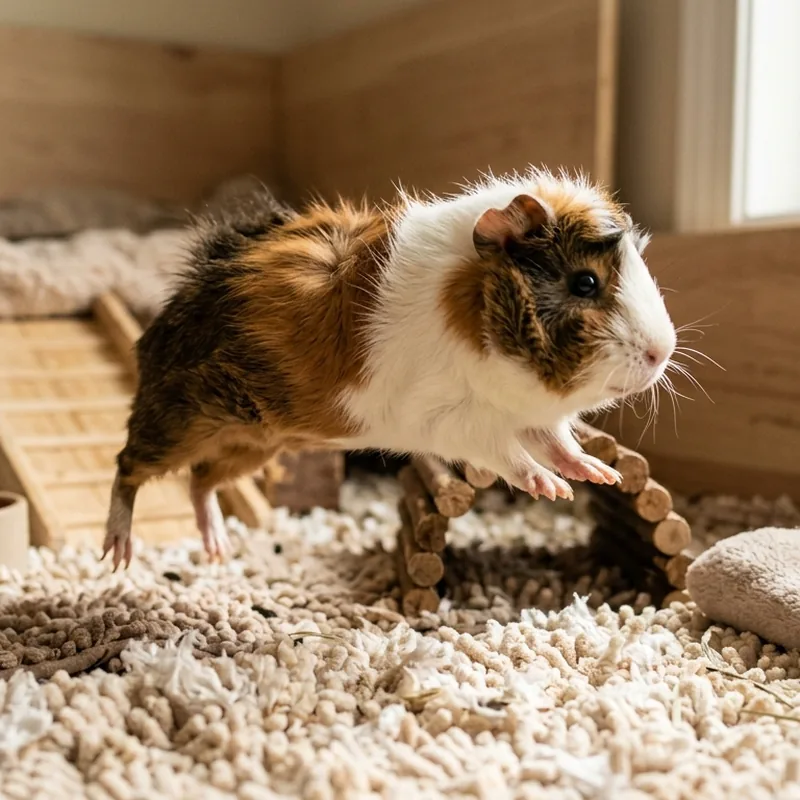
Guinea pigs “popcorn” — sudden little jumps and twists in the air — as a spontaneous expression of excitement and happiness, most often triggered by feeding time, playtime, or simple joy. It’s one of the clearest signs of a content, well-adjusted guinea pig and isn’t something to worry about.
If you’ve ever watched your guinea pig suddenly leap straight up, twist mid-air, and land running like nothing happened, you’ve witnessed popcorning — named because the motion genuinely looks like a kernel popping. It’s one of the most delightful things guinea pig owners get to see, and it usually shows up when you least expect it.
Unlike some pet behaviors that need decoding, popcorning is refreshingly simple: it’s almost always a good thing. Here’s what’s actually happening, when it shows up most, and the rare situations where jumping can mean something different.
What Popcorning Actually Looks Like
Popcorning ranges from a small hop with a little twitch to a full, dramatic leap with a mid-air twist, sometimes accompanied by a few quick, gleeful chirps or squeaks. Some guinea pigs do a subtle version — a little head-toss and half-hop — while others go all-in with repeated jumps around the enclosure, especially younger, more energetic pigs.
It’s a spontaneous, uncontrolled-looking burst of movement, distinct from a guinea pig calmly walking or exploring. That burst of unfiltered enthusiasm is exactly what makes it recognizable, even the first time you see it.
What Triggers Popcorning?
A few common triggers show up again and again in guinea pig behavior:
- Feeding time. The sound of a bag of hay, a fresh vegetable, or a favorite treat is one of the most reliable popcorn triggers there is.
- Being let out to play. Many guinea pigs popcorn the moment they’re released into a larger play area or floor time space after being in their regular enclosure.
- Social excitement. Reuniting with a bonded cage-mate, or even just getting excited attention from their owner, can set off a popcorn session.
- General zoomies energy. Sometimes there’s no obvious external trigger at all — young, healthy guinea pigs will occasionally just burst into popcorning out of what looks like pure surplus energy.
Do Some Guinea Pigs Popcorn More Than Others?
Age and personality both play a role. Younger guinea pigs, particularly pups under a year old, tend to popcorn more frequently and dramatically than older, calmer adults. That doesn’t mean older guinea pigs stop entirely — many continue popcorning happily into their senior years, just usually with a bit less intensity.
Individual personality matters too. Some guinea pigs are naturally more expressive and vocal, popcorning and chirping often, while others show contentment in quieter ways, like calmly munching hay or approaching you for pets. A guinea pig who rarely popcorns isn’t necessarily less happy — it’s simply not their preferred way of showing it.
Is Popcorning the Same in Every Guinea Pig Breed?
The behavior itself isn’t breed-specific — American, Abyssinian, Peruvian, and other common guinea pig breeds all popcorn the same way, since it’s a species-wide behavior rather than a breed trait. What can vary slightly is general energy level; some lines and individuals are simply more high-energy than others, which can translate to more frequent popcorning, but this comes down to the individual pig more than the breed as a rule.
What Sounds Come With Popcorning?
Popcorning is often paired with a specific set of happy vocalizations: quick, high-pitched wheeks (the same excited squeak many guinea pigs make at the sound of a fridge or bag rustling), chirping, or soft purring-like sounds made while being petted afterward. Some guinea pigs stay silent while popcorning and vocalize more at other times, but the combination of jumping and excited squeaking together is one of the clearest “this guinea pig is thrilled” signals you’ll see.
Occasionally, guinea pigs make a low, rumbling “rumble-strut” sound that’s different from popcorn-related chirping — that one is more associated with dominance displays or mating behavior between guinea pigs, not happiness, and it’s usually accompanied by a slow, swaying walk rather than jumping.
How Is Popcorning Different From Other Happy Guinea Pig Behaviors?
Guinea pigs show contentment in several distinct ways, and popcorning is just the most physically dramatic one. Purring while being petted (a low, steady vibration, different from a cat’s purr) usually signals calm relaxation rather than excitement. Wheeking is an anticipation sound, most associated with food. Popcorning specifically signals a burst of active, physical joy — it’s the “I have so much energy and I’m thrilled right now” behavior, distinct from the calmer signals of a guinea pig who’s simply comfortable and relaxed.
Recognizing the difference helps you read your guinea pig’s overall mood more accurately — a pig that purrs calmly during cuddle time but rarely popcorns isn’t less happy, they’re just expressing contentment differently than a pig who popcorns across the cage the moment you walk in.
Can Popcorning Ever Be a Bad Sign?
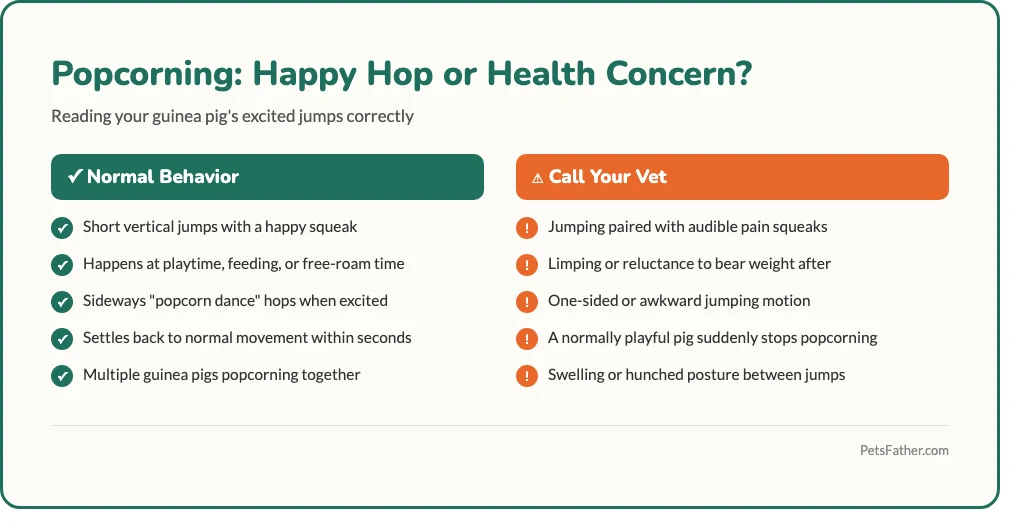
Genuine popcorning almost never indicates a problem — it’s an unambiguous positive behavior. That said, there’s an important distinction worth knowing: sudden, repeated jumping or flinching that looks tense, defensive, or paired with squealing in apparent pain is not popcorning, and shouldn’t be mistaken for it.
True popcorning looks loose, bouncy, and enthusiastic, often with the guinea pig immediately continuing normal happy behavior afterward, like running around or eating. Pain-related jumping tends to look stiffer, is often a single sharp reaction to touch or movement, and is usually followed by hiding, reduced appetite, or reluctance to move normally. If you’re ever unsure which one you’re seeing, a guinea pig who eats normally, moves normally, and seems generally bright-eyed afterward is very unlikely to be in pain.
Do Guinea Pigs Popcorn Alone, or Only in Groups?
Both. Guinea pigs are highly social animals and often popcorn together when housed with a bonded companion, sometimes seeming to feed off each other’s excitement in a genuinely contagious way. But solo guinea pigs popcorn plenty too — it’s an individual expression of excitement that doesn’t require another guinea pig present to happen.
If you have a bonded pair or group, watching them popcorn together, especially right after floor-time release or at feeding, is one of the more reliably entertaining parts of guinea pig ownership.
Does Diet Affect How Often a Guinea Pig Popcorns?
Indirectly, yes. A guinea pig on a well-balanced diet — quality hay available at all times, fresh vegetables daily, a vitamin-C-fortified pellet, and a stable supply of vitamin C specifically, since guinea pigs can’t produce it themselves — tends to have more consistent energy and better overall health, both of which support natural, spontaneous behaviors like popcorning. A guinea pig lacking adequate vitamin C can develop scurvy, which causes joint pain and lethargy, and a pig in that state will understandably popcorn far less, if at all.
If a previously playful, popcorning guinea pig becomes noticeably less active over a period of days or weeks, a diet and vitamin C check, along with a vet visit if it doesn’t improve, is a reasonable first step before assuming it’s just a personality shift.
How Can I Encourage Happy, Healthy Popcorning?
You can’t really “make” a guinea pig popcorn on command, but you can build an environment where it happens more naturally: regular floor time in a safe, guinea-pig-proofed space, a predictable feeding routine, fresh vegetables and hay, and social time with a bonded companion if you have more than one. Guinea pigs who feel secure, well-fed, and mentally stimulated tend to show more of this kind of spontaneous joyful behavior overall.
A stressed, under-stimulated, or recently-rehomed guinea pig may popcorn less at first, simply because they’re still adjusting. Patience and a consistent, calm routine usually bring it back within a few weeks as trust builds.
More Small Pets Guides
FAQ
Yes — genuine popcorning is an unambiguous sign of excitement and happiness. It's different from tense, defensive jumping tied to pain, which looks stiffer and is usually followed by hiding or reduced appetite.
Feeding time is one of the most common and reliable popcorn triggers, but plenty of guinea pigs popcorn during floor time, social moments, or seemingly at random too — it varies by individual.
Yes, younger guinea pigs under a year old tend to popcorn more frequently and dramatically, though many guinea pigs continue the behavior, just less intensely, well into adulthood.
Not necessarily — some guinea pigs show contentment in quieter ways, like calm eating or approaching you for attention, rather than through jumping. Individual personality plays a big role.
Yes, bonded guinea pigs often popcorn together, especially during floor time or feeding, and seem to feed off each other's excitement.
Popcorning looks loose and bouncy, followed by normal happy behavior like eating or running. Pain-related jumping tends to be stiffer, a sharp single reaction, and is often followed by hiding or reduced appetite.
