
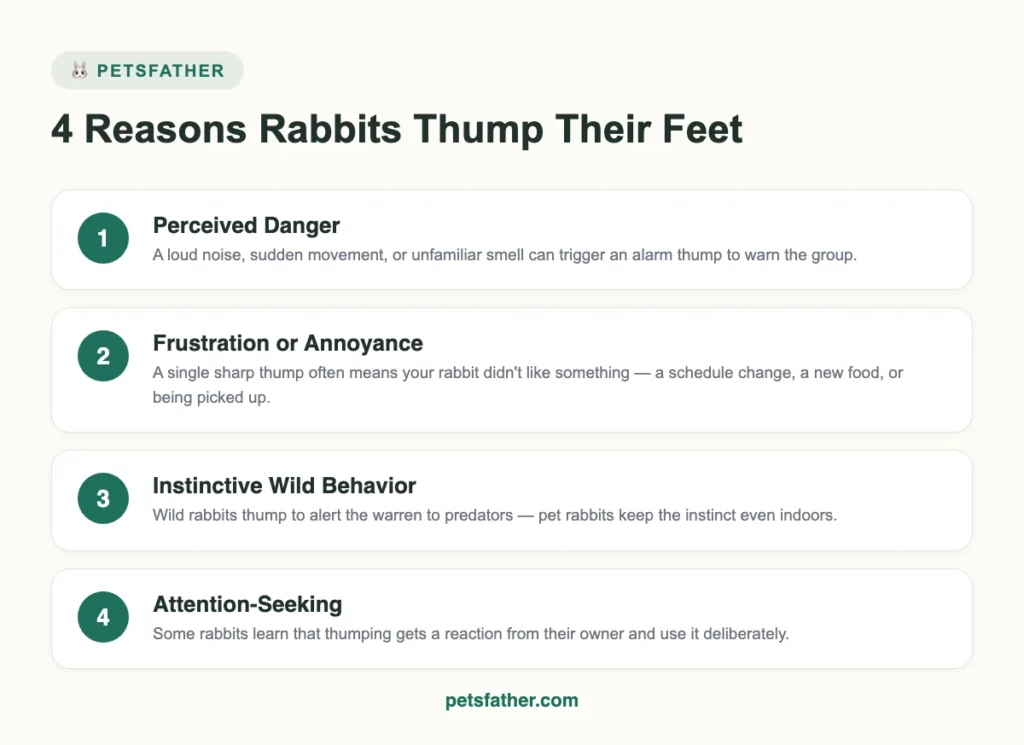
Rabbits thump their feet as an alarm signal, most often triggered by a perceived threat, a loud noise, or general annoyance. It’s an instinctive warning behavior passed down from wild rabbits, who thump to alert the rest of the warren that something might be wrong.
If your rabbit has ever startled you by suddenly stomping a back foot against the floor, you’re not imagining the drama — it really is a deliberate signal, not a random twitch. Understanding what’s behind it makes it a lot easier to tell the difference between a rabbit that’s mildly annoyed and one that’s genuinely stressed.
Where the Behavior Comes From
Wild rabbits live in large underground warrens, and a thump from any single rabbit near the entrance can alert the entire group to potential danger — a predator, an unfamiliar sound, anything out of place. It’s a survival mechanism built for group living, and domestic rabbits keep the instinct fully intact even though they’re not living in a warren anymore.
That’s why even a rabbit that’s never seen a predator in its life will still thump at a slammed door, a dropped pan, or an unfamiliar dog barking outside.
The Most Common Triggers
A few situations account for most thumping:
- Sudden loud noises — vacuum cleaners, thunder, dropped objects, or a door slamming
- Unfamiliar smells or sounds — a new pet, a visitor, or an unfamiliar animal outside
- Being startled while resting — rabbits are prey animals and stay alert even while relaxed
- Frustration — being picked up when they didn’t want to be, a food or schedule change, or a cage cleaning they weren’t in the mood for
- Copying another rabbit — in multi-rabbit households, one thump often triggers a chain reaction
A single sharp thump followed by the rabbit going back to normal behavior is almost always just a quick reaction to something startling or annoying — not a sign that anything is actually wrong.
Thumping as Communication With You
Some rabbits figure out that thumping gets a reaction from their owner — you come check on them, you stop what you’re doing, or you give them attention. Once a rabbit makes that connection, thumping can become a deliberate way of getting your attention, separate from any actual alarm or annoyance.
This is more common in rabbits that are closely bonded with their owners and spend a lot of time around them. It’s not a behavior problem exactly, but if it’s happening constantly for attention, it helps to figure out what the rabbit actually wants (more playtime, a diet change, more space) rather than just responding every single time.
Body Language That Goes With It
Thumping rarely happens in isolation. Watching what the rest of the body is doing tells you a lot more than the thump alone:
- Ears up, alert posture, brief thump — normal startle response to a noise or movement
- Flattened ears, tense body, repeated thumping — more likely genuine fear or stress
- Thump followed by running to a hiding spot — the rabbit perceived real danger, even if nothing was actually there
- Thump followed by resuming normal activity within seconds — usually low-stakes annoyance, not lasting stress
When Thumping Signals a Bigger Problem
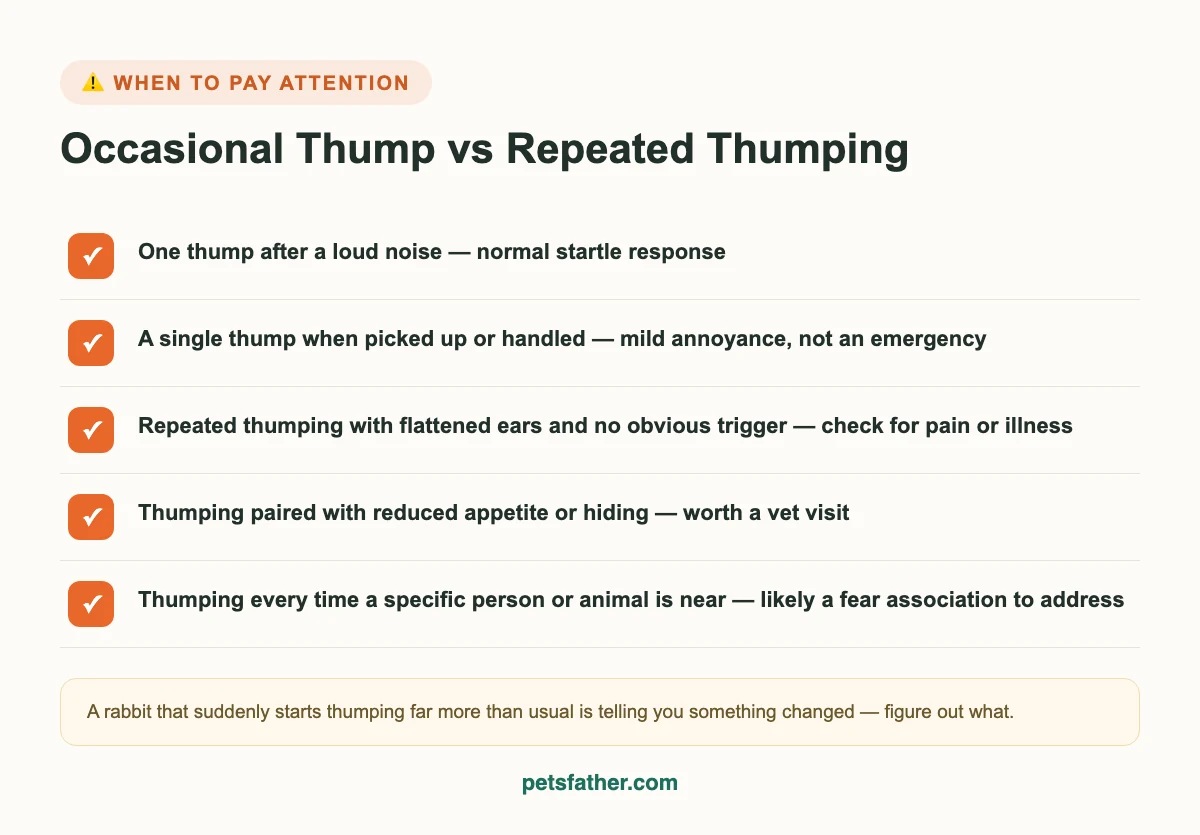
Occasional thumping is completely normal rabbit behavior and doesn’t need any intervention. It’s worth paying closer attention when:
- Thumping happens repeatedly throughout the day with no clear trigger
- It’s paired with reduced appetite, hiding, or unusual lethargy
- It only happens around one specific person or animal, suggesting a fear association
- The rabbit seems tense or on edge even outside of the thumping episodes
Rabbits are prey animals that instinctively hide signs of pain or illness, so a noticeable behavior change — more thumping than usual, paired with anything else off — is worth a vet visit rather than waiting it out.
Should You Try to Stop the Thumping?
You generally don’t need to. It’s a normal, instinctive behavior, and trying to suppress it doesn’t address whatever triggered it in the first place. If thumping is happening because of a specific recurring trigger — a noisy appliance, a schedule change, handling the rabbit a certain way — addressing that root cause works far better than trying to train the behavior away directly.
How to Respond When Your Rabbit Thumps
Your response depends on what caused it:
- If it was a startling noise or event — give your rabbit a minute to settle on its own. Rushing over and fussing can sometimes reinforce the idea that something really was wrong.
- If it happened during handling — set the rabbit down and let it decompress. Repeated thumping during handling is worth noting as a preference, not something to push through.
- If it’s becoming a pattern around a specific trigger — try to identify and reduce exposure to that trigger where realistic, whether that’s a vacuum schedule or introducing a new pet more gradually.
- If it seems to be for attention — check that your rabbit’s basic needs (space, enrichment, social time) are being met before assuming it’s “just being dramatic.” Attention-thumping often has a real unmet need behind it.
Thumping vs. Other Rabbit Warning Signs
Thumping is just one part of a rabbit’s body language toolkit. It helps to know how it fits alongside other signals:
- Grunting or growling — more immediate irritation, often paired with a lunge or nip, different from the alarm-style thump.
- Freezing in place — a quieter alarm response, often happening right before or instead of a thump.
- Running in a wide circle around you — usually excitement rather than alarm, easy to confuse with agitation at first glance.
- Flattening low to the ground, motionless — a stronger fear response than thumping, suggesting your rabbit feels more seriously threatened.
Reading thumping alongside these other behaviors gives a much clearer picture than looking at the thump in isolation.
Do Wild Rabbits Thump the Same Way?
Yes — this behavior comes directly from wild rabbit ancestry, and it hasn’t changed much through domestication. In the wild, a thump near a warren entrance can send every rabbit underground within seconds, which is exactly the kind of fast, unmistakable signal a prey species needs. Domestic rabbits kept this response fully intact even generations removed from needing it for actual survival, which is part of why it shows up so reliably even in rabbits that have never encountered a real predator.
Common Myths About Rabbit Thumping
A few ideas about thumping get repeated often enough that they’re worth addressing directly:
- “Thumping means my rabbit hates me.” Not accurate — most thumping is about a specific moment or trigger, not a lasting feeling toward you. A rabbit that thumps during nail trims can still be affectionate the rest of the day.
- “Only scared rabbits thump.” Fear is one trigger among several — frustration, instinct, and attention-seeking all produce the same behavior, so thumping alone doesn’t confirm fear specifically.
- “You should always ignore thumping completely.” Blanket ignoring isn’t quite right either — dismissing every thump means you might miss the rare case where it’s flagging real pain or distress. Context matters more than a one-size-rule.
- “Thumping is a sign of aggression.” Thumping itself isn’t aggressive — it’s a warning or communication signal. Actual aggression looks more like lunging, boxing with the front paws, or biting.
More Small Pets Guides
FAQ
Occasional thumping is normal. Frequent thumping with no clear trigger, especially alongside appetite loss or hiding, is worth mentioning to a vet since rabbits often hide illness until it's more advanced.
This is usually a sign of annoyance or mild stress about being handled, not fear of you specifically. Some rabbits simply prefer not to be picked up and will thump to express that.
Both sexes thump for the same reasons — it's not a sex-specific behavior. Individual personality plays a much bigger role than gender in how often a rabbit thumps.
Rabbits sleep lightly and stay alert to sound even while resting, so a thump from a seemingly sleeping rabbit is usually a reaction to a real noise or movement, not a true sleep behavior.
Rabbits are naturally most active at dawn and dusk, so nighttime thumping is often just a reaction to normal household sounds during a period when your rabbit is more alert.
You can offer a calm, quiet presence, but avoid excessive fussing every single time, since that can reinforce thumping as an attention-seeking behavior in rabbits that pick up on the pattern.
Often, yes. One rabbit's thump can trigger a bonded partner to thump too, since the alarm-warning instinct is meant to alert the rest of the group, not just communicate individually.
Thumping on typical flooring isn't harmful. On very hard surfaces with frequent, forceful thumping over a long period, it's worth keeping an eye on foot health, but it's not a common source of injury.
