
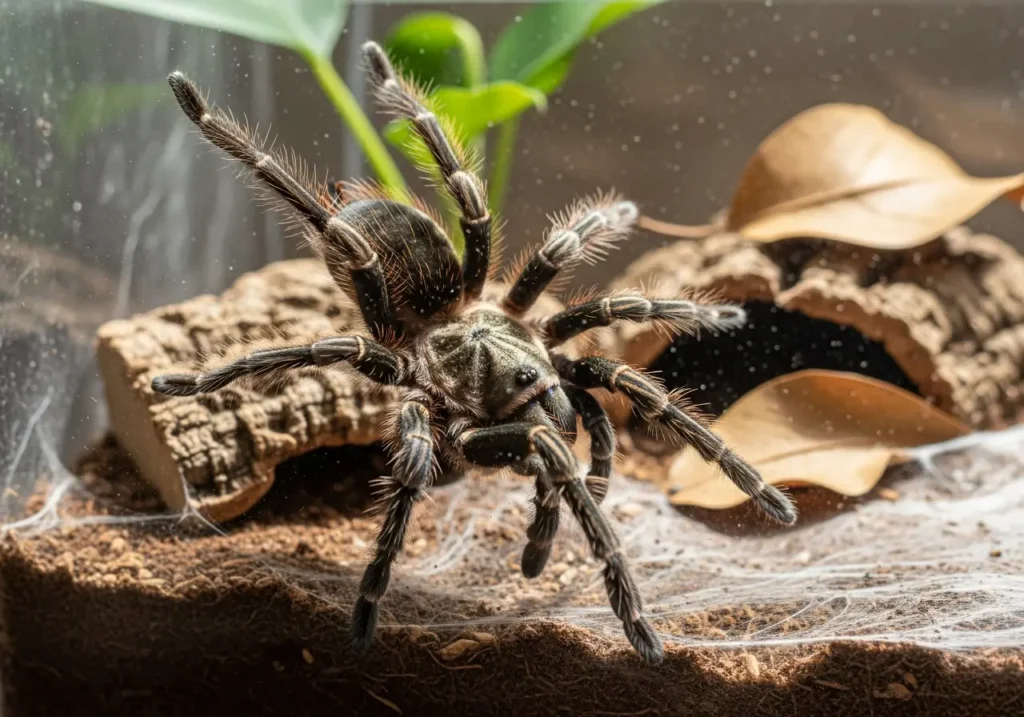
Isopods, stick insects, and calm terrestrial tarantula species are the best pet invertebrates for beginners because they're forgiving of small care mistakes and don't require managing live prey on a strict schedule.
Isopods, stick insects, and calm terrestrial tarantula species are widely considered the best pet invertebrates for beginners — they’re forgiving of small care mistakes and don’t require a feeding schedule of live prey.
Why These Are Beginner-Friendly
- Isopods — no live-prey feeding required, minimal daily management once the enclosure is set up correctly.
- Stick insects — herbivores that just need fresh browse; visually interesting and low-stress to care for.
- Calm terrestrial tarantulas — hardier and more forgiving of humidity swings than fast, defensive, or arboreal species.
What to Avoid as a First Invertebrate
Fast, defensive tarantula species, most scorpions with medically significant venom, and anything requiring very tight humidity or temperature control — these are better suited to keepers with a season or two of experience already.
Starting With Isopods: What to Expect
Isopod colonies are close to the lowest-maintenance pet invertebrate option available — once the enclosure has the right humidity and leaf litter, they largely manage themselves, reproducing steadily without any active feeding schedule beyond occasionally topping up food scraps. They’re not interactive in the way a tarantula can be, but they’re genuinely difficult to get wrong once the initial setup is correct, which makes them an excellent confidence-building first invertebrate.
Starting With Stick Insects: What to Expect
Stick insects require daily-ish attention to fresh browse (the specific plant leaves they eat), which is slightly more hands-on than isopods but still far simpler than feeding a predatory species live prey. They’re visually striking, safe to observe closely, and a genuinely good option for supervised kids learning responsible pet care for the first time.
Starting With a Calm Terrestrial Tarantula: What to Expect
A hardy, well-documented calm species is a reasonable first tarantula for someone ready for a slightly more involved pet than isopods or stick insects — infrequent feeding, straightforward enclosure needs, and generally forgiving of minor humidity fluctuations compared to more demanding species. The main adjustment for new keepers is getting comfortable with long stretches of inactivity being completely normal, not a sign something is wrong.
Setting Realistic Expectations From Day One
New keepers sometimes expect visible, dog-like interaction and are surprised by how much of invertebrate keeping is closer to a display hobby — observing, maintaining a healthy environment, and appreciating the animal on its own terms rather than an interactive pet in the traditional sense. Going in with accurate expectations prevents the disappointment that leads some first-time keepers to give up early.
Where to Get Reliable Beginner Guidance
Established invertebrate-keeping forums and communities, rather than general pet-store advice, tend to give more accurate, current, species-specific guidance — pet-store staff are often knowledgeable about common pets broadly but not always deeply informed about invertebrate-specific husbandry, especially for less mainstream species.
Cost Comparison Across Beginner Species
Isopod colonies and stick insects are typically the least expensive beginner invertebrates to start and maintain, with low ongoing costs beyond occasional substrate or browse refreshing. A calm terrestrial tarantula costs somewhat more upfront for a proper enclosure but has genuinely low ongoing costs given infrequent feeding — all three options remain far cheaper over time than most traditional pets.
Time Investment Comparison
Isopods require the least ongoing time investment of the three beginner categories, stick insects require slightly more due to frequent browse changes, and tarantulas fall in between — infrequent but more involved feeding sessions. None require daily walks or constant supervision, which is part of the broader appeal of the hobby.
Building Confidence Before Advancing to More Demanding Species
Successfully keeping a beginner species for at least a full year, including observing it through the enclosure-maintenance routine across different seasons, builds genuinely useful experience before taking on a more demanding species — rushing this timeline is one of the more common reasons new keepers struggle with their second, more advanced animal.
Common Regrets From First-Time Invertebrate Keepers
Looking back, many first-time keepers say they underestimated the enclosure setup research needed and overestimated how “hands-off” a beginner species would be day-to-day — not because beginner species are hard, but because getting the initial setup right takes more research than expected, even for a genuinely low-maintenance animal once established.
Building a Realistic First-Month Timeline
Expect the first month to include more observation and minor adjustment than a “set and forget” experience — fine-tuning humidity, confirming feeding response, and generally learning your specific animal’s patterns. This settling-in period is normal and doesn’t indicate you’ve done anything wrong, even with a genuinely easy beginner species.
Deciding When You’re Ready for a Second Animal
A reasonable marker for readiness to add a second invertebrate: your first animal has completed at least one full molt cycle successfully, and you feel confident reading its normal baseline behavior. Adding a second animal before reaching this comfort level often means learning two animals’ patterns simultaneously, which is more overwhelming than sequential learning.
How Beginner Species Compare on Total Lifetime Cost
Isopods and stick insects remain inexpensive across their full (shorter) lifespans, while a calm tarantula, despite low ongoing costs, represents a longer total commitment given its potentially decade-plus lifespan — total lifetime cost estimates should account for this duration difference, not just the comparable low weekly or monthly cost across all three options.
Beginner Species and Apartment or Shared Living Situations
All three common beginner categories are well suited to apartment living — minimal noise, no odor when correctly maintained, and small footprint — though it’s worth checking any lease restrictions specifically, since some rental agreements have broad “no exotic pets” clauses that technically include invertebrates even though most people wouldn’t think to ask about them.
Introducing a Beginner Invertebrate to Other Household Members
Household members unfamiliar with invertebrates sometimes need a bit of their own orientation — basic reassurance about safety, an explanation of what’s actually normal behavior versus concerning — especially if they’ll be involved in any care tasks during your absence.
A Final Word on Starting Small
Whatever beginner species you choose, resist the urge to start with more than one animal right away — mastering the care routine for a single animal first makes every subsequent addition to your collection easier and lowers the risk of an early mistake affecting multiple animals at once.
Understanding Long-Term Space Needs Before Committing
While initial enclosures for beginner species are compact, some — particularly growing isopod colonies or expanding stick insect populations if breeding occurs — can require more space over time than the initial setup suggests. Planning for potential growth, even for a “simple” beginner species, avoids a scramble to rehome or upgrade later.
Common Signs a Beginner Species Is Thriving
Beyond simple survival, look for active reproduction in isopod colonies, steady growth in stick insects across molts, and normal feeding response in a calm tarantula as clear signs your beginner setup is genuinely working well, not just technically adequate.
Final Word: There’s No Wrong Beginner Choice Among These Three
Isopods, stick insects, and calm terrestrial tarantulas are all genuinely reasonable starting points — the right pick comes down to how much daily interaction you want versus how much of a purely observational pet suits your lifestyle, not one option being objectively superior to the others.
Revisiting Your Choice After the First Few Months
After a few months of hands-on experience, some new keepers realize a different beginner species would have suited their actual lifestyle better than their initial pick — this is a normal part of learning your own preferences, and switching or adding a better-suited species later isn’t a failure of the original choice.
Handling Frequency and Temperament by Species
How much handling an invertebrate tolerates — and whether it should be handled at all — varies enormously by species, and treating all beginner-friendly invertebrates as equally handleable is a common mistake that leads to unnecessary stress for the animal or an unpleasant surprise for the owner. Some tarantula species are calm enough to tolerate occasional gentle handling, while others in the same general beginner category are known for being fast, defensive, or prone to kicking irritating urticating hairs when disturbed — a real risk to eyes and skin that has nothing to do with venom but still causes genuine discomfort.
As a general rule, New World tarantula species tend to be calmer and more tolerant of occasional handling than Old World species, which are typically faster, more defensive, and in some cases medically significant if they do bite. For species that aren’t well-suited to handling at all — many isopods, most true spiders kept for display, and several beginner tarantula species despite their beginner-friendly reputation — the correct approach is observation-only enjoyment rather than physical interaction, and this should be researched species-by-species before purchase rather than assumed from a general “beginner” label.
More Insects & Invertebrates Resources
FAQ
Isopods are often considered the most forgiving option since they need no live-prey feeding and very little daily management once set up. Stick insects and calm terrestrial tarantula species are also solid beginner choices.
Isopods and millipedes are often considered the easiest starting point — their care needs are minimal and they're forgiving of small husbandry mistakes.
Most don't require UVB like reptiles do, though ambient light cycles still matter for natural behavior patterns.
