
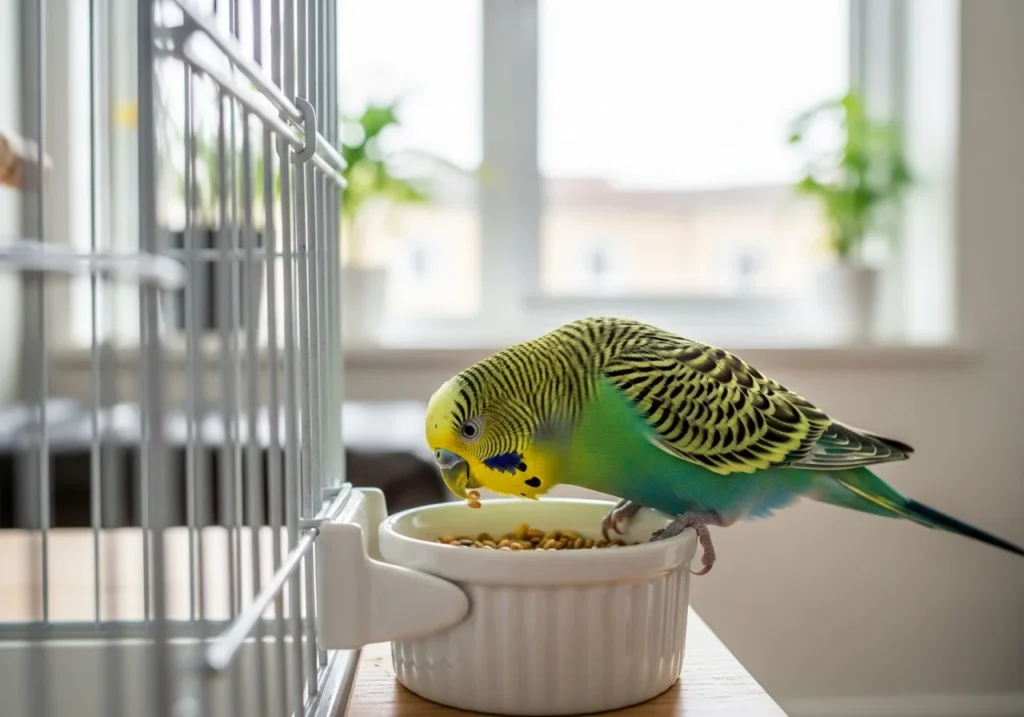
An all-seed diet is the single most common nutritional mistake in pet bird care. Seeds are high in fat and low in many essential nutrients — over years, a seed-only diet contributes to obesity, fatty liver disease, and vitamin deficiencies.
What a Balanced Diet Looks Like
Most avian vets recommend a base of formulated pellets (specifically designed to be nutritionally complete) making up 60-70% of the diet, supplemented with fresh vegetables and a smaller amount of fruit, with seeds treated as an occasional treat rather than a dietary staple.
Safe and Unsafe Foods
Leafy greens, carrots, broccoli, and most vegetables are safe and beneficial in moderation. Avocado, chocolate, caffeine, alcohol, and high-salt or high-fat human foods are toxic or harmful to birds — even small amounts of avocado can be fatal to some species.
Transitioning a Seed-Addicted Bird to Pellets
Birds can be surprisingly stubborn about diet changes, sometimes refusing new food entirely rather than starving — transitions need to be gradual and monitored, often over several weeks, mixing pellets with familiar seed and slowly shifting the ratio. An abrupt, forced switch can be dangerous; ask an avian vet for a specific transition plan for your species.
Water and Cleanliness
Fresh water daily is essential — birds can be sensitive to bacterial contamination, and food and water dishes should be cleaned daily, not just refilled.
Why Seed-Only Diets Are a Serious Problem
A seed-only diet is nutritionally incomplete and one of the most common, most damaging mistakes bird owners make — it’s high in fat and low in essential vitamins and minerals, and over years contributes to obesity, fatty liver disease, and vitamin A deficiency. Pellet-based diets, formulated to be nutritionally complete, are what most avian vets recommend as the dietary base, with seeds offered only as a smaller supplementary treat.
Transitioning a Seed-Addicted Bird to Pellets
Birds that have eaten only seeds for a long time can be genuinely resistant to trying pellets, since it’s an unfamiliar food. Gradual mixing, offering pellets when the bird is hungriest, and patience over weeks (not days) tend to work better than an abrupt switch, which some birds will simply refuse to eat through, risking real health decline.
Fresh Foods That Are Safe and Beneficial
Many fresh vegetables and some fruits are safe and beneficial in moderation — leafy greens, carrots, and berries are common safe choices for most species. Avocado, chocolate, caffeine, and alcohol are toxic to birds and should never be offered, and it’s worth researching species-specific safe food lists, since sensitivity can vary somewhat between bird species.
Water and Hygiene
Fresh water daily is essential, and water dishes need regular cleaning since birds often bathe in and contaminate the same water they drink from. Some species benefit from a separate shallow bathing dish to keep drinking water cleaner and support the regular bathing that’s part of healthy feather maintenance.
Portion Control and Obesity
Obesity is a real risk in captive birds, particularly in species prone to overeating fatty seeds, and it contributes to the same range of problems it does in mammals — joint stress, organ strain, and shortened lifespan. Measuring food rather than free-feeding unlimited amounts, especially of fattier treats, helps keep a bird at a healthy weight.
Species-Specific Dietary Differences
Nectar-feeding species like lorikeets have entirely different dietary needs than seed/pellet-eating parrots, and feeding a lorikeet a standard parrot diet can cause serious health problems. Researching your specific species’ natural diet, rather than assuming all pet birds eat the same way, is a genuinely important step before bringing a bird home.
Reading Pellet Food Labels
Look for pellets formulated for your bird’s specific size category and life stage, with a named ingredient list rather than vague “grain byproduct” fillers. Color-dyed pellets are a marketing choice, not a nutritional one — birds don’t need brightly colored food, and some owners prefer naturally colored pellets without added dyes.
Foraging as Part of Feeding
Hiding food in foraging toys rather than only offering it in a bowl taps into a bird’s natural instinct to work for food, which supports both nutrition and mental health simultaneously. This is one of the simplest, lowest-cost enrichment changes an owner can make, and many birds show reduced stress behaviors once foraging is incorporated into feeding.
Age-Related Dietary Adjustments
Young, growing birds need higher-calorie diets to support development, while older birds often need calorie adjustments similar to aging mammals, as activity and metabolism slow. Species-specific guidance from an avian vet is more reliable than a generic aging timeline, since bird lifespans and aging patterns vary so widely by species.
Signs Your Bird’s Diet Needs Adjusting
Sudden weight changes, dull feather condition, or changes in droppings consistency can all signal a diet that isn’t meeting current needs. Because these signs overlap with several other health issues, ruling out dietary causes with an avian vet rather than guessing at home is usually the more efficient path.
Reading Ingredient Lists on Bird Food
As with other pet foods, ingredients are listed by pre-processing weight — a named grain or protein source near the top is a better sign than a food front-loaded with fillers or byproducts. Avian vets can recommend specific reputable brands formulated for your bird’s exact species and size category.
Consistency in Feeding Routine
Birds generally do best with a consistent daily feeding routine and portion, since sudden changes in either food type or timing can add unnecessary stress on top of any dietary transition. Pairing a diet change with an otherwise stable routine makes the adjustment easier for the bird.
Calcium and Vitamin D Needs
Calcium supplementation matters especially for egg-laying females, who can develop serious deficiencies without adequate calcium and vitamin D3 support. A cuttlebone or mineral block offered alongside a complete diet is a simple, low-cost way to support this need, particularly relevant for breeding or egg-laying birds even without a mate present.
Understanding Crop and Digestive Health
A bird’s crop (a pouch where food is initially stored before digestion) can develop issues like impaction or infection, often linked to diet or hygiene problems. Watching for a visibly full or slow-emptying crop, especially in young hand-fed birds, is a specific health check worth learning from an avian vet.
Seasonal Appetite Changes
Some birds show natural seasonal appetite shifts tied to breeding cycles or molting, which increases nutritional demands temporarily. Recognizing this as normal rather than assuming illness helps avoid unnecessary stress, though a vet consultation is still reasonable if a change seems extreme or prolonged.
Working With an Avian Vet on Diet
An avian vet can assess whether your specific bird’s diet is genuinely meeting its needs through body condition scoring and, when warranted, bloodwork — a more reliable check than guessing based on appearance alone, especially since visible weight changes are often a late-stage sign in birds.
Common Diet-Related Myths
The idea that birds need grit for digestion is largely outdated for most pellet-fed parrot species and can actually cause impaction if overused — a good example of why checking current avian-vet-backed guidance matters more than older, widely repeated advice that hasn’t kept pace with updated research.
Final Thought on Diet Consistency
A consistent, complete pellet-based diet with appropriate fresh food supplementation, monitored over time through regular weigh-ins, does more for long-term avian health than any single ‘superfood’ or supplement trend. The fundamentals matter more than novelty here, same as with most companion animal nutrition.
Understanding Metabolic Rate in Birds
Birds have a notably higher metabolic rate than mammals of similar size, which is part of why they need consistent access to food throughout the day rather than the twice-daily meal schedule that works for many mammals — a bird that goes too long without eating can decline quickly compared to a dog or cat in the same situation.
Working Treats Into a Balanced Diet
Treats should stay a small portion of overall intake, similar to the guidance for mammals, with the added consideration that many popular bird treats are seed or nut-based and calorie-dense — genuinely easy to overfeed relative to a small bird’s total daily caloric needs.
A Final Practical Takeaway
Small, consistent habits — a monthly check, a stable routine, honest observation of your pet’s normal baseline — do more for long-term wellbeing than any single product or dramatic intervention. That’s true across nutrition, health, and daily care alike, and it’s the thread worth carrying forward regardless of which specific choices you make along the way.
A Note on Consistency Across Caregivers
If multiple people feed your bird — family members, a pet sitter — make sure everyone follows the same portions and schedule, since inconsistent feeding between caregivers is an easy, avoidable way for a bird to end up overfed or underfed without anyone noticing until a weight change shows up.
One Last Consideration
Every recommendation on this page works best applied consistently over time rather than as a one-time fix — pet care is cumulative, and small consistent choices compound into meaningfully better outcomes over a pet’s lifetime far more than any single decision does on its own.
Related Reading
See Best Food for Your Birds buying guide and How Much Should You Feed a Pet Bird?
More Birds Guides
