
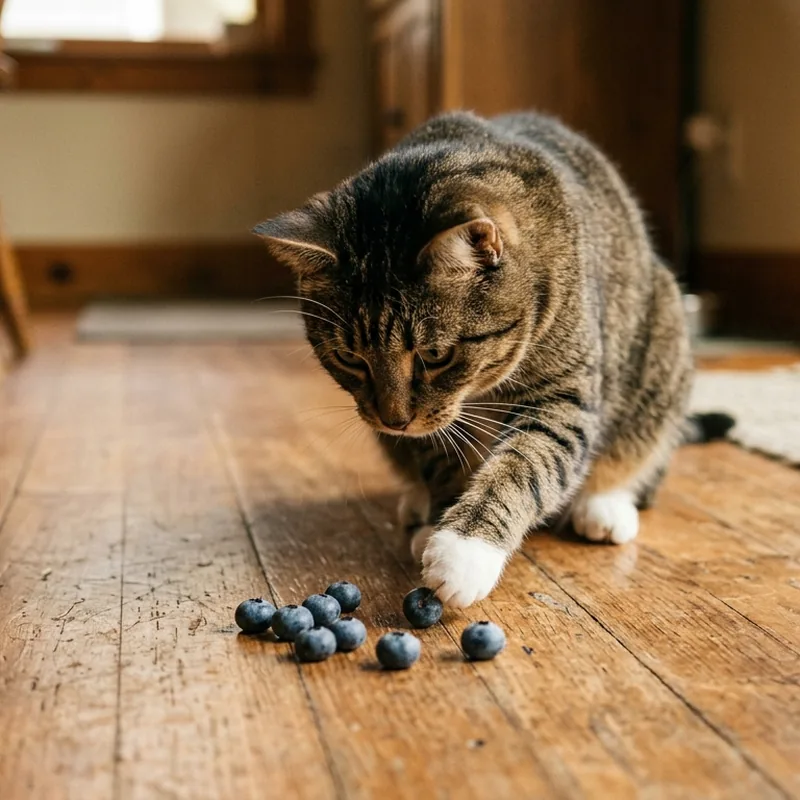
Are Blueberries Actually Safe for Cats?
Yes — blueberries aren’t on the toxic food list for cats, and a small number offered occasionally is considered low-risk. They contain antioxidants and vitamin C, though since cats are obligate carnivores, there’s no meaningful nutritional gap that blueberries fill for them the way animal protein does.
Why Some Cats Show No Interest
Cats can’t taste sweetness, so many simply ignore fruit entirely. If your cat has never shown interest in blueberries, that’s completely normal and not a sign anything’s wrong — there’s no need to encourage fruit-eating in a cat that isn’t drawn to it on their own.
Serving Size and Prep
A couple of whole or lightly mashed blueberries is a reasonable occasional amount. Wash them first, and consider mashing for kittens or cats prone to gulping food, since whole berries can pose a minor choking risk in a cat that doesn’t chew thoroughly.
Not a Substitute for Balanced Nutrition
Blueberries, or any fruit, should never displace a meaningful portion of a cat’s regular diet. Cats need concentrated animal protein and specific nutrients like taurine that fruit simply doesn’t provide — keep any fruit treat to a very small, occasional extra.
FAQ
It's best to wait until they're a bit older and fully established on kitten food, and even then keep any amount very small.
Not a necessary one — cats get everything they biologically need from a balanced, protein-based diet. Any benefit from blueberries is a minor bonus, not a requirement.
Commercial cat treats labeled with fruit flavors are formulated to be safe for cats, but always check the ingredient list rather than assuming based on the flavor name.
Not at all — most cats show little to no interest in fruit, which is completely normal given their biology.
