
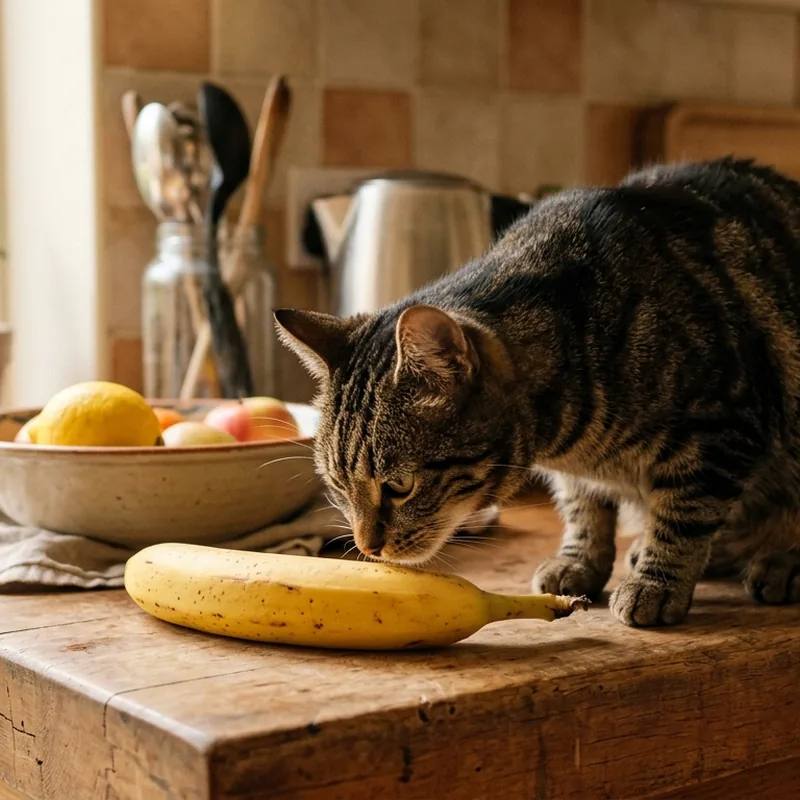
Cats Are Obligate Carnivores — What That Means Here
Unlike dogs, cats have no biological need for fruit or plant matter in their diet — their bodies are built to run almost entirely on animal protein. That doesn’t make banana dangerous, but it does mean it’s purely optional, offering essentially no nutritional benefit a cat actually needs.
Is Banana Actually Safe?
In small amounts, yes. A tiny piece isn’t toxic and most cats tolerate it fine, though many cats simply aren’t interested since they lack the taste receptors for sweetness that make fruit appealing to humans and dogs. If your cat does show curiosity, a small piece is a low-risk way to satisfy that.
How Much Is Reasonable
A pea-sized piece, offered occasionally rather than regularly, is plenty. Banana’s sugar and carbohydrate content isn’t something a cat’s digestive system is well-suited to handle in any real quantity, and overfeeding sugary treats to an obligate carnivore can contribute to weight gain over time.
Watch for Stomach Upset
Diarrhea or vomiting after eating banana usually just means the portion was too much for that individual cat. Scale back or skip it going forward — there’s no real upside to pushing a food your cat’s biology isn’t built to process much of.
FAQ
Most don't show much interest, since cats lack the ability to taste sweetness the way dogs and humans do. A cat that's curious about banana is usually reacting to the texture or your attention, not the flavor.
It's best to avoid it for very young kittens, whose digestive systems are more sensitive and who should be focused on kitten-formulated food during this stage.
It's not toxic but is tough and hard to digest. It's simplest to just avoid offering it.
No — there's no established digestive benefit for cats specifically. If your cat has ongoing stomach issues, that's a conversation for your vet, not a fruit-based home remedy.
