
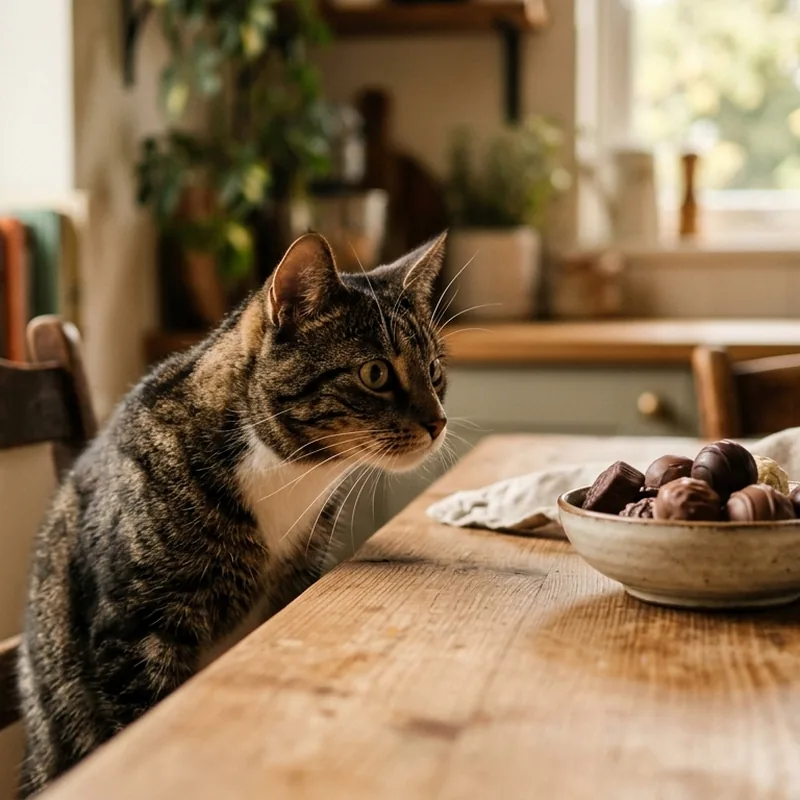
Why Chocolate Is Dangerous for Cats
Chocolate’s toxic compounds, theobromine and caffeine, affect cats through the same mechanism as dogs — both species process these stimulants far more slowly than humans, allowing them to build up to harmful levels. Because cats are usually smaller than dogs, a given amount of chocolate represents a proportionally larger dose for a cat’s body weight.
Why Cats Are Less Likely to Eat It — But Still at Risk
Cats lack the ability to taste sweetness, which is part of why chocolate poisoning is reported less often in cats than dogs — they simply aren’t as drawn to it. That said, cats will investigate food out of curiosity or texture interest, and baked goods containing chocolate chips or cocoa powder can still end up eaten accidentally, especially by kittens.
Symptoms to Watch For
- Vomiting and diarrhea
- Restlessness, agitation, or unusual hyperactivity
- Rapid heart rate or panting
- Tremors, and in severe cases, seizures
What to Do
Contact your vet or animal poison control immediately if you know or suspect your cat ate chocolate, even a small amount. Have the type of chocolate and approximate quantity ready — this lets them assess risk quickly rather than guessing.
FAQ
Yes, the same as with dogs — dark and baking chocolate contain far more theobromine per ounce than milk chocolate, making them more dangerous per bite.
It's less common than with dogs since cats can't taste sweetness, but a curious cat may still investigate food out of general interest or texture.
Usually low risk, but it's still worth a quick call to your vet to be safe, particularly if a meaningful amount of chocolate residue was on it.
Reputable pet treat brands don't use real chocolate or theobromine-containing ingredients in cat products — any 'chocolate flavor' marketed for cats is an artificial flavoring, not real cocoa.
