
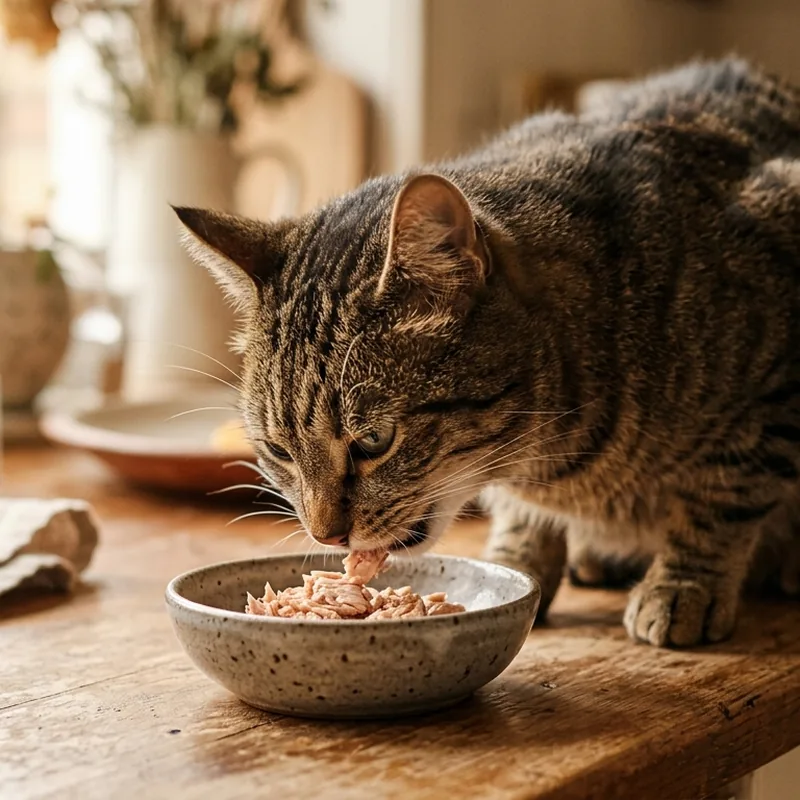
Why Tuna Isn’t a Good Everyday Food for Cats
It might seem like the obvious cat food given how often cats are shown loving fish, but plain tuna doesn’t provide the full, balanced nutrition a cat needs — it’s missing key nutrients like taurine in the amounts cat food is specifically formulated to include. A cat fed mostly tuna over time can develop nutritional deficiencies even though tuna itself isn’t toxic.
The Mercury Concern
Tuna, like other larger predatory fish, accumulates mercury. An occasional small piece isn’t a concern, but regular tuna feeding — daily or close to it — can lead to mercury exposure building up over time, which is the main reason vets recommend keeping it strictly occasional rather than routine.
Which Tuna Is Safest?
- Plain, cooked tuna with no seasoning, oil, garlic, or onion
- If using canned tuna, choose water-packed rather than oil-packed or brine, and drain thoroughly
- Avoid tuna prepared for human dishes with sauces, salt, or spices
- Skip tuna packed specifically as cat food treats only occasionally too — check the label for how it’s meant to be used
How Often Is Occasional?
A small piece once a week or less is a reasonable way to think about it. If your cat particularly loves tuna, using it as a rare high-value treat — for training or vet-visit bribery, for example — gets the enjoyment without the frequency that raises mercury concerns.
FAQ
It's not recommended — regular tuna feeding raises mercury exposure concerns and doesn't provide complete nutrition on its own.
The oil adds unnecessary fat and calories, and can contribute to stomach upset. Water-packed tuna, well-drained, is the better choice if you're offering canned tuna.
The strong smell and fatty, savory flavor are highly appealing to a cat's sense of smell, which is a major part of how cats evaluate food.
Yes — some cats become so fond of tuna's strong flavor that they start refusing regular cat food, which is another good reason to keep it as an occasional treat rather than a habit.
