
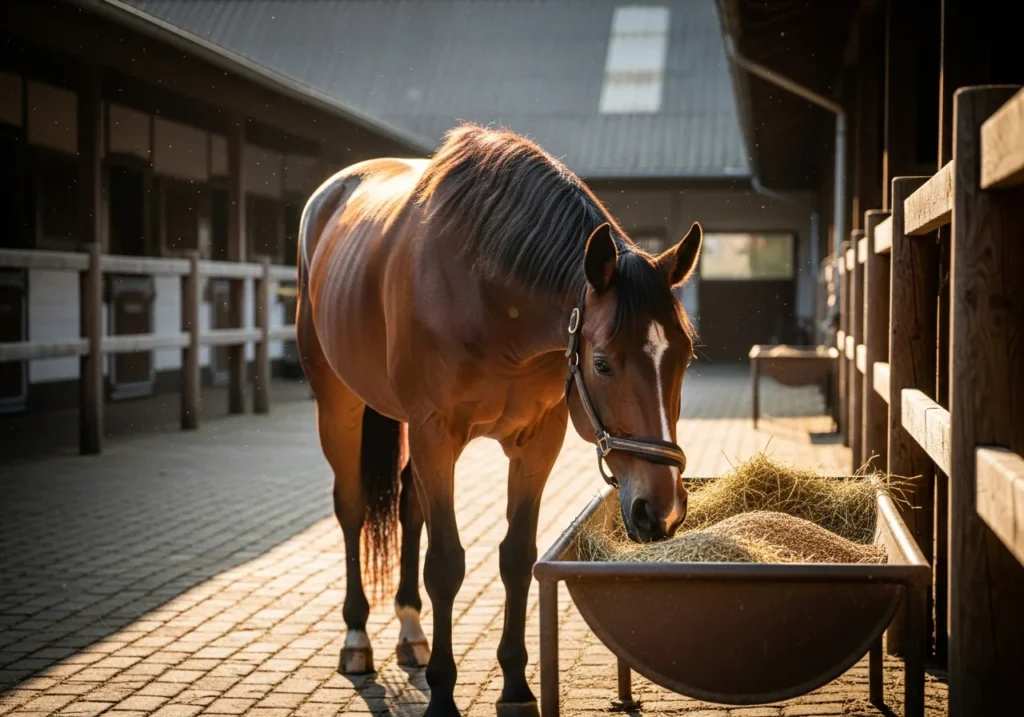
The best horse feed depends on workload: a ration balancer pairs with good forage for light-work horses, while a higher-calorie performance feed suits horses in heavy training. Senior and growth formulas exist for older horses and foals with specific needs.
Feed selection should always start with forage quality — feed is a supplement, not a replacement, for hay or pasture. Once forage is dialed in, here’s how to think about matching a feed type to your horse.
| Feed Type | Best For | Key Trait |
|---|---|---|
| Ration balancer | Easy keepers, light work, good pasture | Low-calorie, nutrient-dense |
| Performance/senior feed | Heavy work, hard keepers, older horses | Higher calorie and fat content |
| Growth/foal feed | Weanlings and young growing horses | Balanced for controlled, steady growth |
| Low-starch/metabolic feed | Horses with insulin resistance or laminitis history | Reduced sugar and starch |

Ration Balancer Pellets
A concentrated, low-volume feed that fills nutritional gaps without adding unnecessary calories — ideal for horses maintaining weight easily on forage alone.
Check Price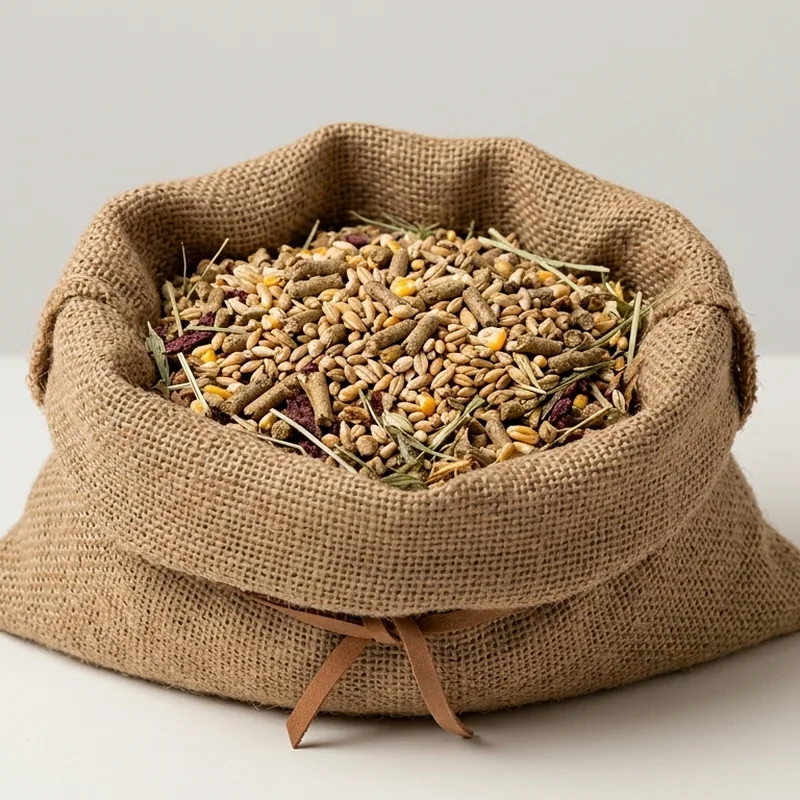
Performance Textured Feed
Higher in calories and fat, built for horses in regular training or competition that burn through forage-only calories too fast to maintain condition.
Check Price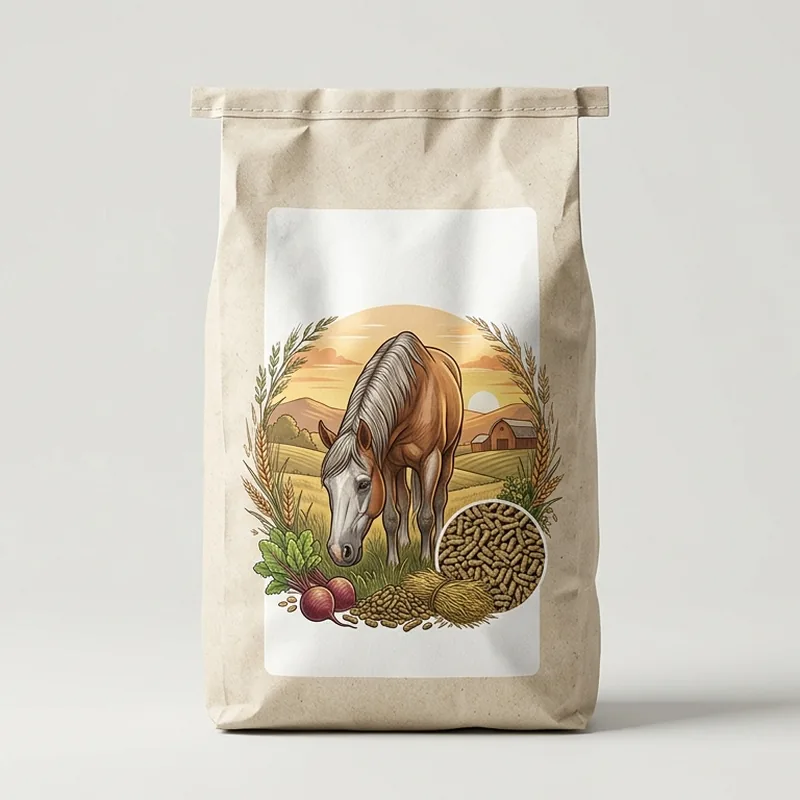
Senior Complete Feed
Designed to be fed with reduced or no hay for horses with dental issues, since it’s higher in fiber and can be soaked into a mash.
Check PriceWhat to Check on the Bag
Look at guaranteed protein, fat, and fiber percentages, and check the ingredient list for whole grains or beet pulp rather than heavy filler. For metabolic-sensitive horses, non-structural carbohydrate (sugar + starch) percentage matters more than any other number on the label.
Reading a Feed Tag Like a Vet Would
Concentrate feed bags list guaranteed analysis (protein, fat, fiber percentages) and an ingredient list in descending order by weight, same as pet food. Whole grains and named ingredients (oats, beet pulp) are generally preferable to vague terms like “grain products.” Protein percentage should match your horse’s actual needs — a easy-keeper in light work rarely needs a high-protein performance formula, and feeding one anyway just adds unnecessary calories and cost.
Matching Product Type to Horse
Pelleted feeds are convenient and reduce selective eating, but some horses do better with textured (“sweet”) feed for palatability, especially picky eaters or seniors transitioning off hay. Ration balancers — concentrated, low-volume feeds providing vitamins and minerals without excess calories — are worth considering for easy keepers and horses maintaining weight fine on forage alone but still needing balanced nutrition.
Transitioning Between Feeds
Any feed change, including switching brands within the same feed type, should happen gradually over 7-10 days by mixing increasing proportions of the new feed with the old. Horses have sensitive hindgut microbiomes, and abrupt diet changes are a well-documented colic risk factor that’s entirely preventable with a slow transition.
Storage Matters
Keep feed in a rodent- and insect-proof sealed container, in a cool, dry location out of direct sun. Buy amounts you’ll use within 4-6 weeks — feed loses vitamin potency over time, and warm, humid storage accelerates spoilage and mold risk, which can cause serious illness if fed.
Comparing Feed Brands the Right Way
Don’t compare feeds by price per bag alone — compare cost per day at the actual recommended feeding rate, since a cheaper bag fed at a much higher rate can cost more overall than a pricier bag fed sparingly. Look at the guaranteed analysis for protein, fat, and fiber, and check whether the feed is formulated for your horse’s specific life stage and workload rather than a generic “all-purpose” label.
Senior Feed Considerations
Senior formulas are typically more digestible, often extruded or pelleted for easier chewing, and calorie-dense to help maintain weight in horses whose digestive efficiency has declined with age. Some senior feeds are designed to be a complete forage replacement (soaked into a mash) for horses who can no longer chew hay effectively — worth knowing if you’re planning ahead for an aging horse.
Feeds for Metabolic Conditions
Horses with Equine Metabolic Syndrome or Cushing’s disease need low-sugar, low-starch feed formulated specifically for that purpose — standard sweet feed or high-grain formulas can trigger laminitis in these horses. Look for feeds explicitly labeled low-NSC (non-structural carbohydrates) and work with your vet to confirm a feed is appropriate for a diagnosed condition rather than guessing from the label alone.
When to Involve an Equine Nutritionist
For horses with complex needs — performance horses, those recovering from illness, or hard keepers who struggle to maintain weight despite adequate feeding — a consultation with an equine nutritionist (many feed companies offer this free) can identify gaps a generic feeding chart misses.
Regional Feed Availability
Not every feed brand is available everywhere, and shipping bagged feed long distances is rarely practical given weight and cost. Local feed stores and your vet or barn manager are often better sources for what’s genuinely accessible and well-regarded in your specific area than a national “best of” list.
Reading Between the Marketing
Terms like “natural” or “premium” aren’t regulated the way medical claims are — the guaranteed analysis and ingredient list tell you far more than marketing language on the front of the bag. Compare actual nutrient numbers across brands rather than trusting packaging alone.
Working With Your Current Feed Store
A good local feed store’s staff often have real, accumulated knowledge of what works well for horses in your specific region and climate — don’t overlook this resource in favor of only researching online. They can also flag feed recalls or regional supply issues faster than most other sources.
Making a Switch Without Setbacks
Beyond the standard 7-10 day transition, watch closely during the first two weeks after any feed change for manure consistency, appetite, and general demeanor — catching a poor reaction early, before a full switch, is much easier to reverse than after a horse is fully transitioned and showing symptoms.
When “Good Enough” Beats “Perfect”
New owners can get stuck in analysis paralysis trying to find the theoretically optimal feed. In practice, a solid, appropriately-formulated feed for your horse’s life stage and workload, fed consistently and adjusted based on real body condition changes, will outperform an constantly-switched “perfect” feed chosen through endless comparison. Pick a reasonable, well-reviewed option suited to your horse’s category, commit to it for a few months, and adjust based on real results rather than theoretical optimization.
Asking Your Vet for a Direct Recommendation
If you’re genuinely stuck choosing between options, your vet has seen how various feeds perform in horses in your specific area and climate — a direct question at your next appointment often cuts through hours of online research with a recommendation grounded in real local experience.
Understanding Feed Company Reputation and Research
Established feed manufacturers with dedicated equine nutritionists on staff and published research backing their formulas generally offer more consistency than smaller, less-established brands — not because small brands are inherently worse, but because track record and research investment matter for something as important as daily nutrition. Check whether a company publishes its formulation philosophy and has veterinary or nutritionist involvement, which is usually disclosed on their website.
Buying in Bulk vs. Smaller Bags
Bulk buying saves money per pound but only makes sense if you can store feed properly (dry, pest-proof, cool) and will use it within a reasonable window before nutritional quality declines. For a single horse, a mid-size bag used within 4-6 weeks is often the more practical choice over a large bulk purchase that risks going stale before it’s finished.
Working Around Picky Eaters
Some horses are genuinely selective eaters, refusing pellets they’ll happily eat if lightly dampened, or preferring textured feed over pellets. Rather than assuming a picky horse simply needs a “better” feed, experiment with texture, dampening, or mixing a small amount of a favored ingredient (like a splash of apple juice or a handful of chopped carrots) to improve palatability without compromising the nutritional formula.
Talking to a Previous Owner About Diet History
If you’re taking over an existing horse, ask the previous owner for a detailed feeding history — current feed, amount, and any recent changes — rather than starting from scratch with your own preferred brand immediately. Continuing a horse’s established diet for the first few weeks while it settles in, then transitioning gradually if you want to change, reduces stress during an already significant transition.
Cost-Saving Without Cutting Corners
Buying feed in appropriately sized bags to reduce waste from spoilage, taking advantage of loyalty programs many feed stores offer, and comparing price per day rather than price per bag are all legitimate ways to manage cost without compromising on actual nutritional quality.
A Closing Thought
Whatever feed you land on, the horse’s response over the following weeks — coat quality, energy, manure consistency, weight trend — is the real test, more reliable than any spec sheet comparison alone.
Consulting an Equine Nutritionist for Complex Cases
Horses with genuine metabolic conditions, senior horses with dental limitations, or performance horses with specific competitive demands often benefit from a consultation with an equine nutritionist rather than relying purely on general feeding guidelines, since these situations can involve real tradeoffs a generalized approach isn’t equipped to navigate well.
More Horses Resources
FAQ
No — many horses in light work do fine on quality forage plus a vitamin/mineral balancer, with grain reserved for horses that need extra calories.
A concentrated, low-calorie feed that fills nutritional gaps (vitamins, minerals, protein) without adding excess calories — useful for easy keepers on good pasture.
Mix the old and new feed together over 7–10 days, gradually increasing the new feed's ratio, to avoid digestive upset.
