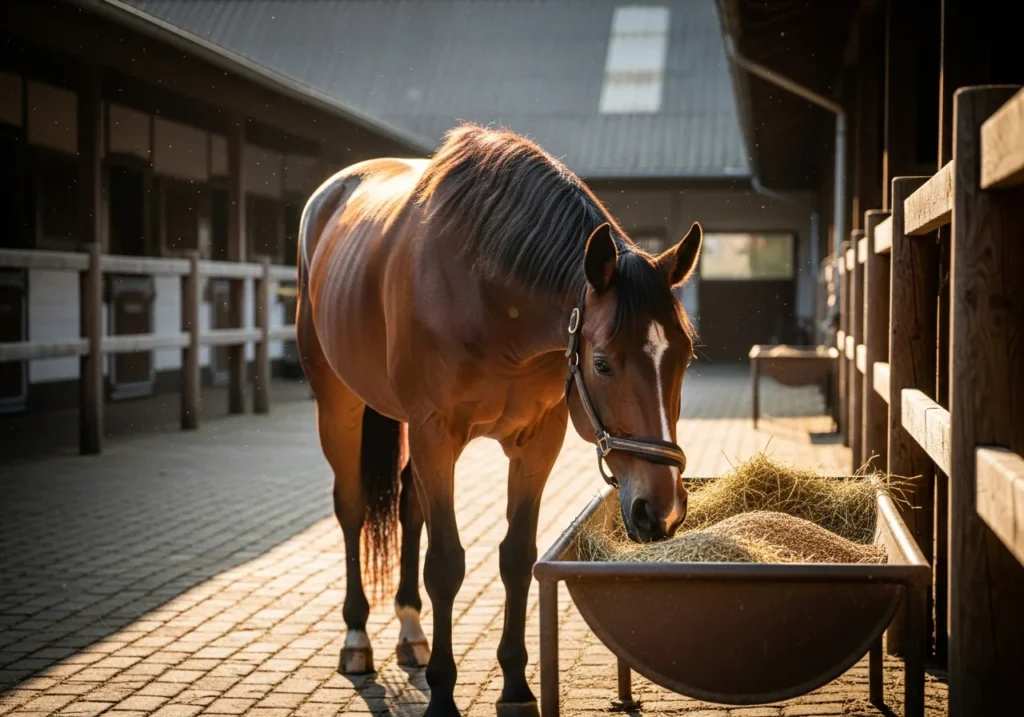
Feeding a horse well comes down to one core idea: forage first, everything else second. Horses evolved to graze almost continuously on grass, and their digestive system — a relatively small stomach paired with a long hindgut built for slow, steady fiber fermentation — works best when it’s never left empty for long. Getting feeding wrong is also one of the fastest ways to end up with a colic emergency, so it’s worth understanding the basics properly.
How Much to Feed
As a starting point, most horses need about 1.5–2% of their body weight in forage (hay or pasture) each day. A 1,000-pound horse, for example, needs roughly 15–20 pounds of hay daily if it’s not on pasture. This should be split across multiple feedings rather than one big pile — horses fed in long gaps are more prone to ulcers and colic.
Grain or concentrate feed is additional, not a replacement for forage, and should be scaled to workload. A horse in light riding work often needs little to no grain if forage quality is good; a horse in heavy competition work, a growing foal, or a senior horse with dental issues may need more calorie-dense feed.
Forage Quality Matters
Not all hay is equal. Good hay should smell fresh, be free of mold or dust, and have a reasonable leaf-to-stem ratio — too stemmy and it’s lower in nutrients, too fine and it may be overly rich for some horses. Pasture grass quality varies by season too; lush spring grass is high in sugar and can be risky for horses prone to laminitis or metabolic issues, and may need to be limited with a grazing muzzle.
Water and Salt
A horse can drink 5–10 gallons of water a day, more in hot weather or heavy work, and reduced water intake is one of the biggest colic risk factors. Free-choice salt (a salt block or loose salt) helps encourage normal drinking and replaces electrolytes lost through sweat.
Making Feed Changes Safely
Any change in hay type, grain brand, or turnout schedule should happen gradually over 7–10 days, mixing old and new feed in increasing ratios. Sudden switches disrupt the hindgut’s bacterial balance and are a well-documented colic trigger.
Supplements — When They’re Actually Needed
Most horses on good-quality forage and a balanced ration don’t need a long list of supplements. Common, genuinely useful additions include a vitamin/mineral balancer if forage quality is inconsistent, electrolytes for horses in heavy work or hot climates, and joint supplements for older or hard-working horses — ideally recommended by your vet rather than added speculatively.
For specific feed brand comparisons, see our Best Food for Horses buying guide.
FAQ
Only if your horse needs the extra calories or nutrients — a horse in light work on good pasture often doesn't need grain at all. Overfeeding grain is a common cause of weight gain and metabolic issues.
Horses are designed to graze near-continuously. If pasture access is limited, hay should be available in multiple small feedings throughout the day rather than one or two large meals.
Sudden feed changes, low water intake, limited turnout, and moldy or poor-quality hay are among the most common triggers. Gradual diet changes and constant access to clean water reduce the risk significantly.
