
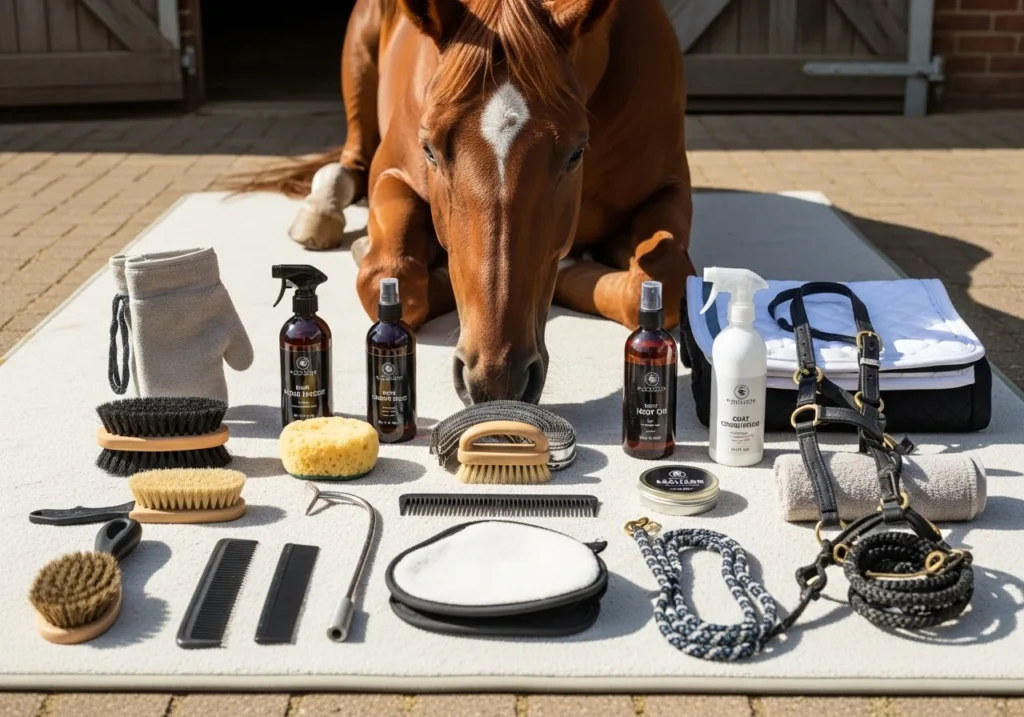
Horse gear falls into a few clear categories: tack (saddle, bridle, girth), everyday handling gear (halter, lead rope), grooming tools, and protective gear (fly masks, blankets). None of it needs to be expensive to be good — fit and function matter far more than brand name, especially for tack.
Tack — Saddle, Bridle, Girth
Saddle fit is the single highest-stakes gear decision for a horse — an ill-fitting saddle can cause real pain and long-term back problems, and often shows up as behavioral resistance (bucking, refusing to move forward, pinned ears when tacking up) rather than an obvious injury. A saddle fitter’s assessment is worth the cost, especially for a new horse-and-saddle pairing. Bridles and girths are more forgiving but still need to fit comfortably without pinching.
Everyday Handling Gear
A well-fitted halter and a sturdy lead rope are used daily for turnout, grooming, and vet visits — these are worth buying in good quality since they see constant wear. A stable or field halter that’s slightly adjustable accommodates minor weight changes over time.
Grooming Tools
A basic kit — curry comb, stiff and soft brushes, hoof pick, and a mane/tail comb — covers daily grooming needs. Grooming isn’t just cosmetic; it’s a daily health check that surfaces cuts, swelling, or skin issues early.
Fly and Weather Protection
Fly masks and sheets protect against biting insects that can cause real skin irritation and stress in warm months, and winter blankets may be needed for clipped horses or those in colder climates without heavy natural coats. Fit matters here too — a poorly fitted blanket can rub and cause sores.
Feed and Supplements
Beyond forage, a feed scoop, slow feeder hay net (which extends grazing time and reduces gulping), and any vet-recommended supplements round out the feeding side of gear. See our Best Horse Feed guide for specific picks.
For saddle-specific recommendations, see our Best Horse Saddle buying guide.
Building a Starter Tack Kit
Beyond the saddle itself, a functional starter kit includes a properly fitted bridle, a girth sized correctly for your horse, saddle pads, a halter and lead rope for groundwork, and a basic grooming kit (curry comb, body brush, hoof pick, mane/tail brush). Fit matters more than brand for nearly everything on this list — an ill-fitting saddle or girth can cause real discomfort and behavioral issues that look like a training problem but are actually a pain response, sometimes described by riders as sudden bucking, girthiness, or reluctance to move forward.
A properly fitted saddle is worth a professional fitting session, especially for a new owner who may not yet recognize the subtle signs of a poor fit — dry spots after riding, uneven sweat patterns, or a sore back are all clues worth checking.
Don’t Skip Hoof Care Tools
Even with a farrier on a regular 6-8 week schedule, every horse owner should own a hoof pick and know how to check for stones, thrush (a smelly bacterial infection of the frog, common in wet conditions), and obvious cracks between farrier visits. Daily hoof checks catch problems early, before they become lameness issues, and take less than five minutes as part of a normal grooming routine.
Blankets and Weather Gear
Not every horse needs a blanket — a healthy horse with a natural winter coat and access to shelter often regulates temperature fine on its own. Clipped horses, senior horses, and those in harsh climates with limited shelter are the ones who typically benefit most. If you do blanket, fit matters (a poorly fitted blanket can rub sores) and horses need blankets removed periodically to check body condition underneath, since weight loss can hide under a bulky blanket for weeks if you’re not checking.
Fly Control
Fly masks, fly sheets, and topical fly sprays are a real quality-of-life item during warm months — excessive fly worry can affect a horse’s weight (from reduced grazing time) and behavior. Fly predators (a biological control released near manure areas) are a lower-maintenance option many barns use alongside physical barriers.
Grooming Kit Essentials Explained
A curry comb loosens dirt and dead hair and is used first in circular motions. A body brush follows to whisk away what the curry comb loosened. A hoof pick clears debris daily, ideally before and after riding. A mane and tail brush or wide-tooth comb prevents breakage better than a standard fine brush, which can strip out healthy hair. A sweat scraper removes excess water after bathing or heavy sweating, speeding drying and preventing chill in cooler weather.
Trailer and Transport Equipment
Shipping boots or standing wraps protect legs during transport, and a properly fitted trailer with good ventilation and secure footing matters as much as the tow vehicle. Not every owner needs to own a trailer, but knowing how your horse loads and travels — and having basic transport gear on hand — matters even if you rely on a friend or hauler for actual trips.
First Aid Kit Basics
A horse-specific first aid kit should include vet wrap, gauze, a digital thermometer, saline solution, a stethoscope if you’re comfortable using one, and your vet’s emergency number posted where anyone caring for the horse can find it. Basic wound cleaning supplies handle minor cuts and scrapes; anything deeper or near a joint needs a vet regardless of how capable your first aid kit is.
Budget Priorities for New Owners
If budget is tight, prioritize a properly fitted saddle and girth, a sturdy halter and lead, and basic hoof/grooming tools first — these directly affect comfort and safety. Cosmetic extras (matching sets, decorative tack) can wait. A well-fitted, secondhand saddle beats a poorly fitted new one every time.
Cleaning and Storage Supplies
Beyond the tack itself, leather cleaner, conditioner, and a dedicated tack cleaning space extend equipment life significantly. A tack trunk or cabinet that keeps gear dry and organized also makes it far easier to spot when something needs repair or replacement before it fails during use.
Longeing and Groundwork Equipment
A longe line, longe whip, and surcingle or longeing cavesson support groundwork and exercise without riding — genuinely useful for warming up a fresh horse safely, rehabbing after injury, or working through a specific training issue from the ground before adding a rider back into the equation.
Seasonal Supply Rotation
Rather than buying everything at once, many experienced owners build their supply kit seasonally — fly control and lightweight sheets before summer, blankets and heated water bucket options before winter, and a spring focus on shedding tools and pasture-transition supplies. This spreads cost out and means you’re buying gear closer to when you’ll actually assess whether it’s the right choice for your specific horse and climate.
Where to Buy — New Retail vs. Tack Swaps
Tack swaps, consignment shops, and online secondhand marketplaces are worth checking before buying everything new, especially for big-ticket items like saddles. Inspect secondhand gear carefully for structural issues (especially saddle trees and stitching), but the savings on gently-used quality equipment are often substantial compared to retail.
Building Your Kit Over Time, Not All at Once
New owners sometimes feel pressure to buy everything on a comprehensive supply list before bringing a horse home. In reality, a smaller starter kit — halter, lead, basic grooming tools, a properly fitted saddle and girth, and a first aid basics kit — covers genuine needs for the first weeks, while you learn your specific horse’s preferences and needs before investing in the rest. Buying reactively, based on what you actually find yourself needing, often results in better purchases than buying everything speculatively upfront.
Winter-Specific Gear Worth Planning For
Beyond blankets, heated water buckets or tank heaters prevent water from freezing (critical, since reduced winter water intake is a genuine colic risk factor), and hoof boots or snow pads help horses that struggle with snow packing into their hooves. Planning winter gear before the season starts, rather than scrambling during the first cold snap, avoids paying premium prices during high-demand periods.
Training and Enrichment Equipment
Ground poles, cavaletti, and simple obstacle equipment support groundwork and under-saddle training variety, helping prevent the boredom and resulting behavioral issues that come from a repetitive routine. Even a horse used primarily for trail riding benefits from occasional groundwork and obstacle variety to keep training sharp and the relationship engaged.
Assessing What You Actually Need vs. Want
The tack and supply market has an enormous range of specialty products, many genuinely unnecessary for a typical using horse. Before adding anything beyond the core essentials, ask whether it solves an actual problem you’re experiencing rather than one you’ve read about — this keeps both cost and clutter manageable, especially in the first year of ownership when priorities aren’t always clear yet.
A Note on Warranty and Return Policies
Higher-cost items like saddles and blankets are worth buying from retailers with clear return or exchange policies, since fit issues often only become apparent after actual use with your specific horse. A generous return window matters more than a small price difference between retailers for these bigger-ticket purchases.
More Horses Resources
FAQ
A properly fitted saddle — a poor-fitting saddle is one of the most common causes of back pain and behavioral resistance under saddle.
A full starter kit — halter, lead, grooming tools, saddle and bridle, fly protection — typically runs $500–$1,500+ depending on whether you buy new or used tack.
Often yes, especially saddles, as long as the tree (internal frame) isn't damaged and the fit is checked by a professional — used tack is one of the best ways to manage cost.
