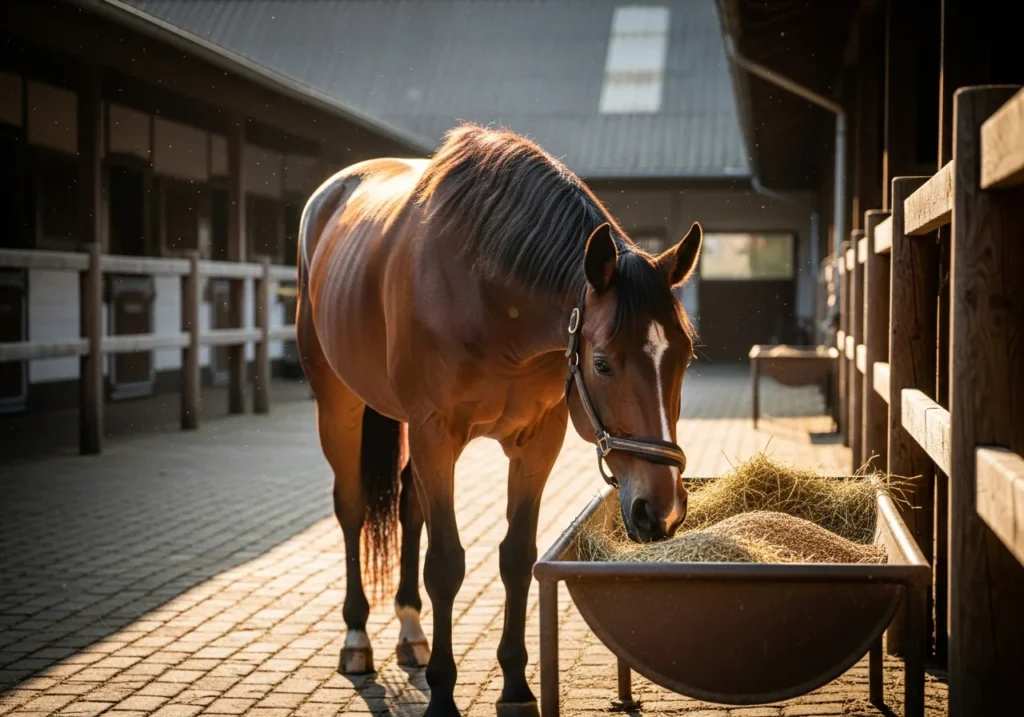
The best horse feed matches your horse’s actual calorie and nutrient needs: a ration balancer for easy keepers on good forage, a performance feed for horses in heavy work, and a senior formula for older horses with dental limitations.
Low-Calorie Ration Balancer
Fills nutritional gaps without adding excess calories — the right choice for horses that hold weight easily on forage alone.
High-Fat Performance Feed
Extra calories from fat rather than excess starch, suited to horses in regular training that need more energy without the risks of a high-sugar diet.
Soakable Senior Feed
Designed to be fed wet as a mash, making it easier for older horses with dental wear to get adequate nutrition.
Reading Feed Labels
Check guaranteed analysis for protein, fat, and fiber percentages, and look for named whole-grain or beet-pulp ingredients rather than vague “grain products” fillers. For metabolic-sensitive horses, non-structural carbohydrate content matters more than any other single number.
Not sure how much to feed? See our companion guide, How Much Should You Feed a Horse.
FAQ
Not necessarily — the right feed type for your horse's workload and condition matters more than price. An expensive performance feed is wasted (and can cause weight gain) on a horse that only needs a ration balancer.
Gradually, over 7–10 days, mixing old and new feed in increasing proportions to avoid digestive upset.
Often yes, especially if dental issues make chewing hay difficult — senior feeds are typically higher in fiber and can be soaked into a mash.
