
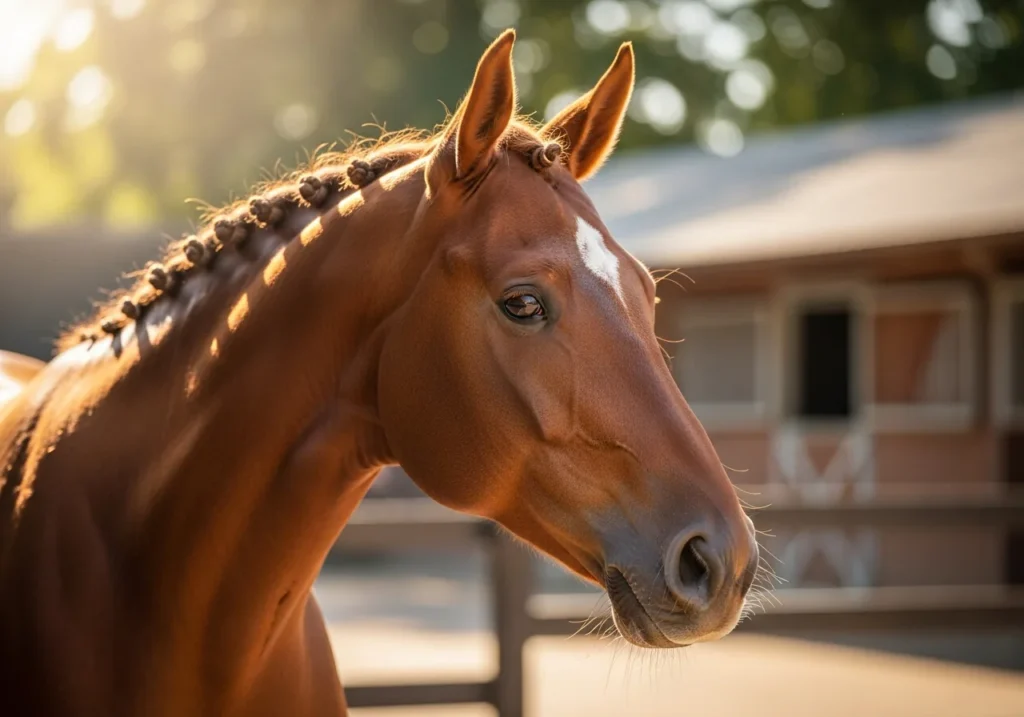
Breed is a useful starting point when researching horses, but it’s less predictive of temperament than most first-time buyers expect — an individual horse’s training, handling history, and personality often matter more than its breed on paper. Still, breeds do differ meaningfully in typical build, energy level, and common use, which makes breed knowledge genuinely useful when narrowing down what kind of horse might fit your goals.
Quarter Horse
One of the most popular breeds in the US, Quarter Horses are known for a generally calm, willing temperament and versatility — they’re used in western riding, ranch work, trail riding, and some English disciplines. Their steady nature makes them a common recommendation for first-time owners.
Thoroughbred
Bred for speed and stamina, Thoroughbreds tend to be higher-energy, sensitive, and responsive — traits that make them excellent for experienced riders in disciplines like eventing and dressage, but often overwhelming for true beginners.
Arabian
Known for endurance, intelligence, and a distinctive refined build, Arabians are popular in endurance riding and are generally people-oriented, though their intelligence and sensitivity mean inconsistent handling can lead to behavioral issues faster than with more laid-back breeds.
Ponies (Multiple Breeds)
Pony breeds like the Welsh Pony and Shetland are popular first mounts for children — smaller, often sturdy, and generally good-tempered, though “pony attitude” (a stubborn streak) is a real and often-joked-about trait in some pony breeds.
Draft Breeds (Clydesdale, Percheron, Belgian)
Bred originally for farm and pulling work, draft breeds are large but frequently calm and patient — traits that carry over well to riding, especially draft crosses that combine size and gentleness with a lighter, more rideable build. They do need more forage and larger tack.
Choosing by Temperament, Not Just Breed
Because individual variation within a breed is significant, the most reliable way to choose a horse is to spend time riding and handling the specific animal — ideally with a trainer’s input — rather than picking based on breed reputation alone. See our guide to choosing the right horse for a practical evaluation checklist.
Breed Isn’t the Whole Story
Two horses of the same breed can have completely different temperaments, and a horse’s individual training and handling history usually matters more for a first-time owner than breed alone. That said, breed does shape general tendencies worth knowing before you shop, particularly around energy level, build, and the type of work a breed was historically developed for.
Breeds Commonly Recommended for Beginners
Quarter Horses are frequently recommended first horses thanks to a generally calm, versatile temperament suited to both trail riding and light show work, plus a sturdy, forgiving build. Morgans are known for being people-oriented and steady, with a compact, strong frame. Many ponies and pony-crosses are also excellent first mounts for younger or smaller riders, despite the misconception that ponies are automatically “easier” — some pony breeds are notably strong-willed and opinionated, which surprises new pony owners.
Paints and Appaloosas, closely related to Quarter Horses in temperament and use, are also common beginner-friendly choices, often valued as much for coloring as for their generally workable dispositions.
Breeds That Usually Need More Experience
Hot-blooded breeds like Thoroughbreds and Arabians were bred for speed and endurance and often carry more energy and sensitivity, which can be rewarding for an experienced rider but overwhelming for a first-time owner, especially an off-the-track Thoroughbred still adjusting out of race training. Draft breeds and draft crosses bring calm temperaments but significant size and strength that require confident handling on the ground, not just under saddle — a 2,000-lb draft horse that hasn’t learned good ground manners is a genuinely different safety consideration than a 1,000-lb Quarter Horse.
Warmbloods, bred specifically for competitive disciplines like dressage and jumping, often carry more sensitivity and energy suited to riders with a specific competitive goal and the experience to match it.
Gaited Breeds Worth Knowing About
Breeds like the Tennessee Walking Horse and Missouri Fox Trotter perform a smooth four-beat gait instead of the standard trot, which many riders — especially those with back or joint concerns — find far more comfortable for long trail rides. Gaited breeds have a dedicated following for exactly this reason, and it’s worth trying one before assuming a standard trotting breed is your only option.
Understanding Height and Build Terminology
Horse height is measured in “hands” (4 inches per hand) at the withers — a 15-hand horse stands 60 inches there. Breeds also differ in bone density and frame: “light” breeds like Arabians and Thoroughbreds are built for speed and endurance, “stock” breeds like Quarter Horses for quick, powerful movements suited to ranch work, and “draft” breeds for pulling power and calm strength. Understanding these categories helps make sense of why a breed suits certain disciplines better than others.
Color Isn’t a Breed (Usually)
Palomino, buckskin, and pinto describe coat color and pattern, not breed — many different breeds can carry these colorings. Appaloosas and Paints are exceptions where color/pattern is part of the breed registry itself. New buyers sometimes shop by color first, but temperament and training matter far more for a good match than coat color.
Mixed-Breed and Grade Horses
A horse without registered pedigree — often called a “grade” horse — can be just as suitable a mount as a registered purebred, and is often more affordable. Breed papers matter for showing in breed-specific competitions or breeding, but for a using horse or first horse, temperament, training, and soundness matter far more than papers.
Miniature Horses — A Different Category Entirely
Miniature horses, standing under 38 inches, are generally not suitable for riding by adults but are popular as companion animals, driving horses (pulling small carts), and even trained service animals. They have real horse temperaments and care needs despite the small size, and shouldn’t be treated like an oversized pet without proper horse-specific care.
Regional Popularity and Availability
Certain breeds are simply more common and easier to find in different regions — Quarter Horses dominate much of the western and southern US, while certain warmblood and sport horse breeds are more concentrated in areas with strong show and event cultures. Availability in your area can reasonably factor into breed choice, since it affects price, selection, and access to breed-experienced trainers and vets nearby.
Crossbreeding and Hybrid Vigor
Deliberately crossed breeds — a Quarter Horse/Draft cross, for instance — often combine traits from both parent breeds, sometimes yielding a calm, sturdy, versatile horse well suited to a range of riders. Don’t dismiss a well-matched cross simply because it lacks a single-breed pedigree.
Talking to Breed-Specific Owners and Clubs
Breed associations and local owner clubs are a genuinely underused resource for first-time buyers — members who’ve owned a specific breed for years can speak honestly about real-world quirks, common health considerations, and typical costs in a way a sales listing never will. Many breed clubs also maintain referral lists for reputable breeders and sellers, a safer starting point than an open online marketplace.
Trying Before Committing to a Breed Preference
If possible, take lessons on a few different breeds before deciding what you want to buy — riding a Quarter Horse, an Arabian, and a draft cross in the same month teaches you more about your own preferences and comfort level than any amount of reading about breed characteristics online.
Making Peace With “Just Right” Over “Perfect”
No breed or individual horse is perfect on paper, and chasing an idealized breed reputation can distract from evaluating the actual horse in front of you. A grade horse with a wonderful temperament and solid training is a better choice than a “correct” breed representative with training or health gaps. Let the individual animal, evaluated honestly, outweigh breed reputation in your final decision.
How Registries and Papers Actually Work
Breed registries maintain official records of pedigree, and papers verify a horse’s documented lineage — but registration alone says nothing about training, temperament, or soundness. A “papered” horse with no handling history is not automatically a better choice than an unpapered grade horse with excellent manners. Registries matter most if you plan to breed or compete specifically in breed-restricted classes; for a using or trail horse, they’re a nice-to-have, not a requirement.
Conformation Basics for New Buyers
Conformation — how a horse is physically built — affects soundness and suitability for different work over the long term. A knowledgeable set of eyes (trainer, vet) evaluating leg alignment, back length, and overall balance during a pre-purchase visit can flag structural issues likely to cause soundness problems years down the line, something a new buyer often can’t assess alone regardless of how much they’ve read about it.
Age Terminology and What It Means for You
“Foal” (under 1 year), “yearling,” “weanling,” and “broodmare” or “stallion” all describe specific life stages with specific care needs. For most first-time buyers, an adult horse already past the unpredictable training years of youth, but not yet into advanced senior care needs, represents the most practical starting point.
A Closing Thought
Let the individual horse, not the breed label, make the final case. The best matches come from evaluating the actual animal in front of you.
More Horses Guides
FAQ
Quarter Horses and many pony breeds are commonly recommended for beginners for their generally steady, willing temperament, though individual temperament varies more than breed.
Usually not — Thoroughbreds tend to be higher-energy and more sensitive, and are typically better suited to riders with more experience.
Many do, especially draft crosses — they're often calm and patient, though their size means tack and equipment need to be sized accordingly.
