
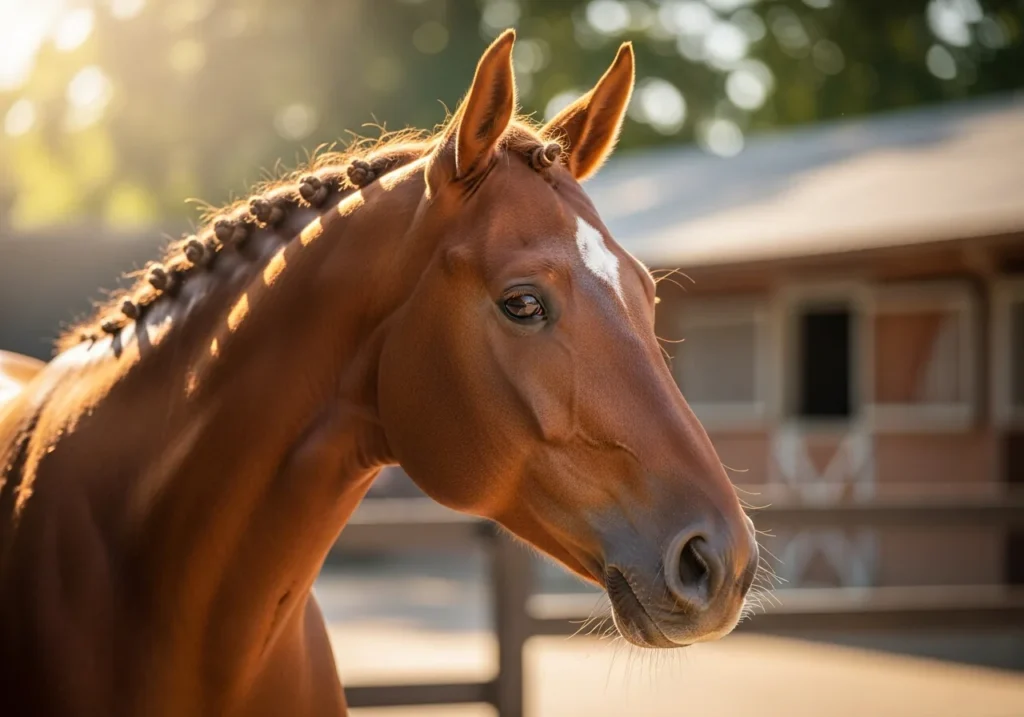
Choosing the right horse means matching its training level and temperament to your actual riding experience, having a vet perform a pre-purchase exam, and riding the horse multiple times — ideally in different settings — before committing.
Be Honest About Your Experience Level
It’s tempting to fall for a horse that “just needs some work,” but a green horse paired with an inexperienced rider is one of the most common (and avoidable) setups for accidents. Match the horse’s training level to your actual current skill, not your aspirational skill.
Ride It More Than Once
A single test ride, especially in a controlled arena, doesn’t reveal everything. Ask to ride the horse on more than one visit, ideally including some time outside the arena if that’s how you plan to use the horse, to see how it behaves in different settings.
Get a Pre-Purchase Vet Exam
A vet exam checks soundness, basic health, and can flag issues — old injuries, subtle lameness, vision or dental problems — that aren’t obvious from riding alone. It’s an added cost, but a small one compared to the cost of discovering a serious issue after purchase.
Ask for History
Ask about the horse’s training history, any past injuries or health issues, and why the current owner is selling. Consistent, straightforward answers are a good sign; vague or evasive answers are worth following up on.
Trust Your Gut, Backed by Evidence
If a horse feels wrong during trial rides even though everything “checks out” on paper, that instinct is worth listening to — horse ownership is a long-term relationship, not just a transaction.
See our Best Horses for Beginners guide for what temperament traits to prioritize if this is your first horse.
Match the Horse to Your Actual Skill Level
Be honest about your riding experience, not aspirational. A horse that’s “a little much” for your current skill isn’t a project that will make you a better rider faster — it’s usually a safety risk and a source of frustration for both of you. Many experienced trainers recommend buying slightly under your skill ceiling rather than at or above it.
Define Your Actual Use Case
Trail riding, arena work, light showing, or a specific discipline like dressage or barrel racing each favor different builds, temperaments, and training backgrounds. A horse that excels at one may be a poor fit for another — a finely tuned reining horse and a laid-back trail companion are genuinely different animals, even if both are technically “beginner-friendly.”
The Trial Period
Whenever possible, arrange a trial period (often 2-4 weeks) before finalizing a purchase, ideally with a written agreement covering care responsibilities and what happens if it doesn’t work out. A horse can seem perfect during a single visit and reveal quirks or incompatibilities only after time in your actual care and routine.
Budget for the Whole Picture, Not Just Purchase Price
The horse’s price tag is often the smallest line item across a year of ownership. Factor in board or land costs, farrier and vet care, tack, and a financial buffer for emergencies before deciding what price range for the horse itself actually fits your budget.
Questions to Ask Every Seller
Ask directly about health history, any past injuries or lameness issues, vices (cribbing, weaving, aggression), how the horse handles being caught, loaded, and handled by unfamiliar people, and why they’re selling. Vague or evasive answers to direct questions are a bigger red flag than any single answer itself.
Evaluating Ground Manners
Watch the horse being caught in a pasture (not already haltered and waiting), led, tied, and handled for grooming before you even think about riding. A horse with poor ground manners is a daily safety and frustration issue that under-saddle skill doesn’t fix.
The Role of a Written Agreement
A bill of sale specifying any trial period terms, health guarantees (if offered), and clear transfer of ownership protects both buyer and seller. Verbal agreements are harder to enforce if a dispute arises after the sale.
Location and Long-Term Practicality
Consider realistically where the horse will live, who will care for it on days you can’t, and whether your chosen boarding or home setup can accommodate the horse’s needs long-term — not just in the excitement of the first few months of ownership.
Involving Your Whole Support Team Early
Loop in your vet, farrier, and trainer before finalizing a purchase where possible — a farrier’s read on a horse’s hoof conformation or a trainer’s assessment of movement can surface concerns a first-time buyer wouldn’t catch alone, and it’s far easier to walk away from a bad match before purchase than after.
Trusting Your Gut Alongside the Checklist
Beyond the practical checklist, pay attention to how you feel around the horse and whether the interaction feels comfortable and mutually calm. A horse that ticks every practical box but leaves you uneasy is worth a second look before committing — that instinct is often picking up on something real.
Understanding Sale Terminology
Terms like “green broke,” “finished,” “made,” and “started under saddle” describe very different training levels, and sellers don’t always use them consistently — always ask for specifics (how many rides, what the horse has actually done, not just a label) rather than relying on terminology alone to judge a horse’s readiness for your skill level.
Taking Your Time With the Decision
A good horse worth buying will still be a good match after a second or third visit — resist pressure to decide on the spot, especially from a seller pushing urgency (“someone else is interested”). The horses genuinely worth waiting for are worth the extra week of consideration, and legitimate sellers understand that.
After You’ve Said Yes — What Comes Next
Once you’ve committed, arrange transport, confirm your boarding or home setup is genuinely ready, and plan a gradual introduction to your routine rather than expecting an immediate seamless transition. Horses, like any animal moving to a new home, often need a settling-in period, and minor behavioral quirks in the first few weeks don’t necessarily reflect how the horse will be once fully settled.
Setting Realistic Expectations for Year One
The first year of owning any horse, even a well-matched one, is genuinely a learning period for both horse and rider. Expect some adjustment, occasional setbacks, and a real learning curve — this is normal and doesn’t mean you made the wrong choice. Owners who expect a smooth, immediate partnership are often the ones who become discouraged unnecessarily early.
Understanding Why Horses Get Sold
Horses change hands for many entirely normal reasons — an owner outgrowing a horse’s training level, financial changes, relocation, or simply a horse and rider not clicking despite no fault on either side. Not every sale reflects a problem horse, and a direct, non-judgmental conversation about the reason for sale often reveals useful, honest context rather than a red flag.
The Practical Value of a Local Purchase
Buying a horse within reasonable driving distance, rather than one requiring long-distance transport sight-unseen or after a single visit, lets you visit multiple times, involve your own trainer and vet more easily, and reduces the stress and cost of transport. Long-distance purchases can work out, but they remove several of the safety checks that make a purchase decision more reliable.
Preparing Your Home Setup Before You Buy
Have your boarding arrangement confirmed or your home setup (fencing, shelter, water) fully ready before you commit to a specific horse, not scrambling to arrange it afterward. A rushed setup increases the odds of gaps in safety or care during the critical first weeks of a new horse settling in.
What Experienced Owners Wish They’d Known
Many experienced owners, looking back, say they wish they’d prioritized temperament and ground manners over looks or breed prestige in their first horse, and that they’d been more patient in the search rather than settling due to time pressure or excitement. These are common, learnable lessons worth taking seriously before your own search rather than after.
A Final Perspective on Patience
The horse-buying process, done carefully, often takes weeks to months, not days — and that timeline reflects the seriousness of a decision affecting years of your life and a living animal’s wellbeing. Owners who rush the process to match an arbitrary timeline (wanting a horse by a specific season, for instance) are more likely to end up in a mismatch than those who let the right horse take the time it takes to find.
One More Consideration: Insurance Before You Sign
Look into equine insurance options before finalizing a purchase, not after — some policies have waiting periods or require enrollment shortly after purchase to cover certain conditions, so this is worth researching during your search rather than treating it as a post-purchase afterthought.
A Closing Thought
Take your time, involve people who know more than you do, and trust the process even when it feels slow. The horses worth having are worth waiting for.
Bringing an Experienced Horse Person Along
Whenever possible, bring a trusted, experienced horse person — a trainer, knowledgeable friend, or your riding instructor — along when evaluating a potential horse. A second, more experienced set of eyes often catches subtle temperament or soundness concerns that a newer buyer’s excitement and inexperience can genuinely miss.
More Horses Guides
FAQ
Strongly recommended — a vet exam can catch soundness or health issues that aren't obvious in a single test ride and can save significant money and heartbreak later.
At least two or three visits in different conditions (different weather, different times of day) gives a more honest picture than a single ride.
Yes, if possible — an experienced trainer or instructor can spot training gaps or red flags that a newer rider might miss.
