

A solid-surface (not wire) wheel at least 8-11 inches in diameter, depending on species, lets a hamster run without curving its spine unnaturally.
| Species | Minimum Wheel Diameter |
|---|---|
| Syrian Hamster | 10-11 inches |
| Dwarf Hamster | 6.5-8 inches |
| Mouse | 6-8 inches |
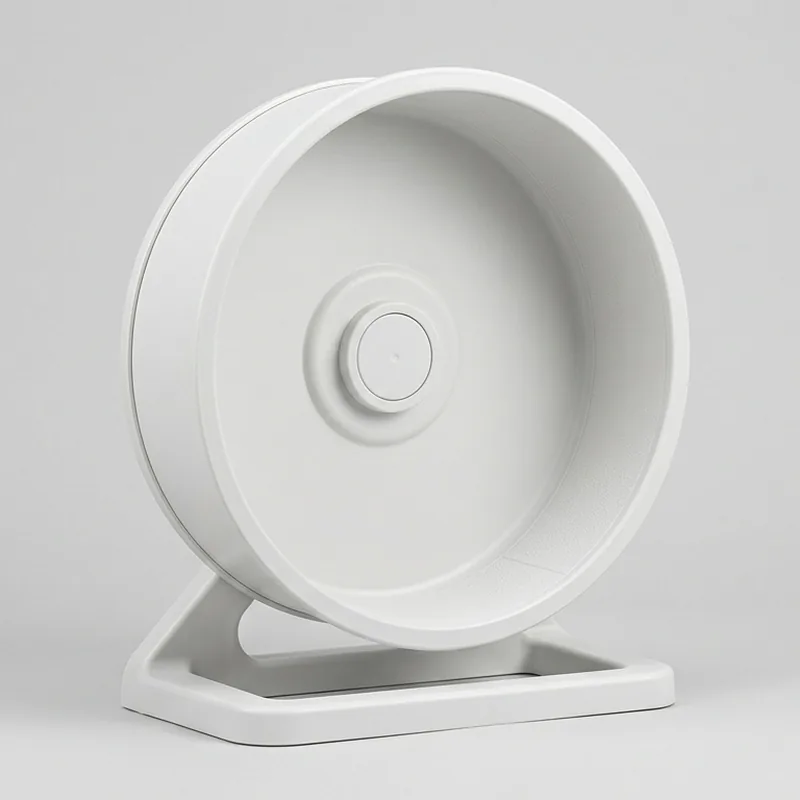
Solid-Surface Silent Wheel
Correctly sized to prevent spine curvature, with a solid running surface that’s safer than wire rungs.
Check PriceWhy Wheel Size Actually Matters
A wheel that’s too small forces a hamster to arch its spine into a curve while running, which over months of nightly use can contribute to genuine spinal and joint problems. This is one of the most common, least talked-about welfare issues in hamster keeping, largely because undersized wheels are still sold in “starter kits” marketed specifically for hamsters. The rule of thumb is simple: your hamster should be able to run with a flat or very slightly curved back, not an arched one — if in doubt, size up rather than down.
Solid-Surface vs. Wire-Rung Wheels
Wire-rung wheels are cheaper and still common in budget cages, but they pose a real injury risk — a hamster’s foot can slip between the rungs during a fast run, causing anything from minor injury to a broken leg. Solid-surface wheels eliminate this risk entirely and are worth the extra cost as a genuine safety purchase, not just a nicer-to-have upgrade. Look specifically for “solid running surface” in the product description rather than assuming a wheel is safe based on price or brand alone.
Silent vs. Standard Wheels
Hamsters are nocturnal and will use a wheel heavily overnight — a standard bearing wheel can be loud enough to disrupt sleep if the cage is in or near a bedroom. Wheels marketed as “silent” use a different bearing mechanism and are worth the modest price premium for anyone keeping a hamster’s cage in a shared living space. That said, “silent” is relative — expect quiet, not completely soundless, especially as the wheel ages.
Placement and Setup
Wheels should be mounted securely, either free-standing with a stable base or wall-mounted, so they don’t wobble or tip during use. Position it away from food and water dispensers so bedding and debris kicked up during running doesn’t contaminate them. Some hamsters take a few days to start using a new wheel confidently — this is normal and doesn’t necessarily mean the wheel is the wrong fit.
Signs You Need to Replace a Wheel
Squeaking that doesn’t resolve with a drop of pet-safe lubricant on the axle, visible cracks in the running surface, or a hamster that’s clearly grown too large for a wheel it used comfortably before (common when a young hamster reaches full adult size) are all reasons to size up or replace. An ill-fitting wheel is worth replacing promptly rather than waiting, given the spinal-health stakes involved.
Species-Specific Notes
Syrian hamsters need the largest wheels on this list and should never share a wheel sized for a dwarf species. Dwarf hamsters (Roborovski, Campbell’s, Winter White) need a smaller diameter but still benefit from a solid surface and secure mounting. Mice, while not hamsters, have similar wheel needs to dwarf hamsters — a solid, appropriately sized wheel with secure mounting, sized to their smaller body.
Common Wheel-Buying Mistakes
- Trusting the “one size fits all” marketing on cheap wheels. Species and even individual size within a species genuinely matters — measure your hamster or check its species-typical adult size before buying.
- Assuming a wheel that came with a cage is adequate. Bundled starter-kit wheels are frequently undersized and wire-rung, prioritizing cost over welfare.
- Not checking wheel diameter against your hamster’s actual size once fully grown. A wheel that fit a juvenile hamster may become too small within a few months as it reaches adult size.
- Ignoring noise until it becomes a nightly problem. If the cage lives in a bedroom, factor noise level into the purchase decision from the start rather than discovering it’s disruptive after the fact.
How to Introduce a New Wheel
If replacing an existing wheel, keep the old one accessible for a few days alongside the new one where possible, since some hamsters are cautious about unfamiliar objects in their space. Placing a small treat near or on the new wheel can help build a positive association. Most hamsters adapt within a few days to a week; a hamster that avoids a new wheel for much longer than that may find something about its placement or surface texture uncomfortable, worth reassessing.
Maintenance and Cleaning
Wheels get dirty faster than most owners expect, since hamsters sometimes toilet while running. Wipe down the running surface regularly with a pet-safe cleaner, and check the axle and bearing mechanism periodically for buildup that could cause squeaking or resistance. A wheel in poor condition doesn’t just sound bad — added resistance from grime or a failing bearing can discourage a hamster from using it as much as it naturally would, reducing an important source of daily exercise.
Exercise Beyond the Wheel
A wheel is an important exercise outlet but shouldn’t be the only one. Supervised time in a hamster-safe playpen, tunnels, and climbing structures within the enclosure all add to overall activity and mental stimulation. A hamster that’s only ever confined to a cage with a wheel, even a good one, is missing out on the exploratory behavior that’s a genuine part of species-typical wellbeing.
Budget vs. Premium Wheels
Price differences between hamster wheels mostly come down to bearing quality (affecting noise and smoothness), surface material (affecting grip and cleanability), and mounting hardware durability. A mid-range solid-surface wheel from a known small-pet brand is usually a better investment than the cheapest wire option or an unnecessarily expensive designer wheel — the welfare-critical features (size, solid surface, secure mounting) are available well before the premium price tier.
Traveling Wheels and Multi-Cage Setups
If you keep more than one hamster (in species where solitary housing isn’t required, which is most hamster species as adults), each animal needs its own correctly sized wheel in its own separate enclosure — hamsters generally can’t safely share a cage as adults regardless of wheel availability. For households moving a hamster between a main cage and a supervised playpen, a second, portable wheel sized appropriately for the playpen space can help maintain a consistent exercise routine outside the main enclosure.
The Bottom Line
A correctly sized, solid-surface wheel is one of the highest-impact purchases you’ll make for a hamster’s daily wellbeing — arguably more important than most other cage accessories combined, given how many hours a night a hamster will spend running. Size for the adult animal, prioritize a solid surface over price, and replace it without hesitation if it’s ever clearly too small or damaged.
What Actual Owners Report
Among experienced hamster keepers, the most consistent piece of feedback about wheels is regret over buying too small the first time — it’s rare to hear someone wish they’d bought a smaller wheel, but common to hear about upgrading within the first year as a hamster outgrows an undersized starter wheel or as the owner learns more about correct sizing after the fact. Buying appropriately sized from the start, even if it costs somewhat more upfront, tends to be the more economical choice over the animal’s lifetime.
Frequently Overlooked Detail: Wheel Depth
Beyond diameter, the depth (how enclosed the running track is) affects safety too — a wheel with low or no side walls lets a hamster’s foot slip off the edge during a fast run. Deeper, more enclosed running tracks reduce this risk meaningfully, particularly for younger or more energetic hamsters that run at higher speeds. This detail is easy to overlook when comparing wheels primarily by diameter, but it’s worth checking product photos and descriptions closely before buying.
Comparing Popular Options

11-Inch Solid Silent Wheel
Sized for Syrian hamsters, solid running surface, quiet bearing mechanism — a strong default choice for most standard-size hamster cages.

7-Inch Solid Wheel
Correctly scaled for Roborovski, Campbell’s, and Winter White dwarf hamsters, avoiding the spine-arching problem of oversized or undersized wheels alike.

Wall-Mounted Solid Wheel
Frees up floor space in smaller cages while still offering a full-size, solid running surface at a lower price point than free-standing designs.
Whichever option you land on, re-measure your hamster’s size periodically, especially in the first year, and don’t hesitate to size up if a wheel that once fit now looks noticeably too small.
A well-chosen wheel, replaced as needed as your hamster grows or as parts wear out, remains one of the simplest and most effective things you can do for a captive hamster’s long-term physical health and nightly enrichment.
It’s a small, one-time decision that pays off every single night for years, which makes it worth the extra few minutes of comparison shopping before adding to cart.
If you take away one thing from this guide, make it this: measure before you buy, prioritize a solid running surface over price, and re-check the fit as your hamster grows into adulthood.
That single habit prevents most of the welfare and safety issues linked to hamster wheels entirely.
Simple, consistent, and easy to get right the first time once you know what to look for.
More Small Pets Resources
FAQ
An undersized wheel forces the hamster's spine to curve unnaturally while running, which can cause long-term back problems.
At least 11 inches (28 cm) — a smaller wheel forces the hamster to arch its back unnaturally, which can lead to spinal strain over time.
Watch its back while it runs — if it curves upward instead of staying flat, the wheel is undersized for that hamster.
