
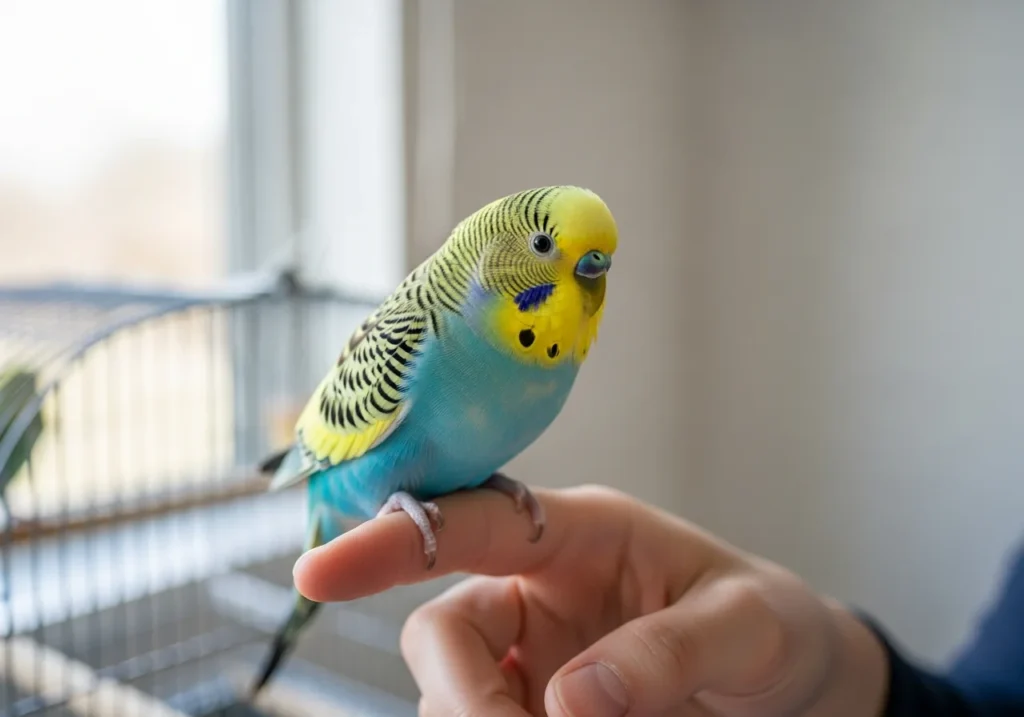
A simple daily observation habit — checking droppings, activity level, appetite, and vocalization — matters more for birds than a weekly check, since birds hide illness so effectively that subtle daily changes are often the only early clue.
A simple daily observation habit — checking droppings, activity level, appetite, and vocalization — matters more for birds than a weekly check, since birds hide illness so effectively that subtle daily changes are often the only early clue.
Daily Observation Checklist
- Check droppings for color, consistency, and volume changes.
- Note activity level and whether the bird is perching normally.
- Check appetite — is food actually being eaten, not just scattered?
- Note vocalization — unusually quiet or unusually distressed calling both matter.
- Look at feather condition — fluffing, plucking, or dull appearance.
First-Year Vet Schedule for a New Bird
A full avian wellness exam within the first couple weeks home (even if the bird seems healthy) establishes a baseline, followed by annual checkups — more frequent for very young or senior birds.
Why Birds Hide Illness So Effectively
In the wild, a visibly sick bird is an easy target for predators, so birds evolved to mask symptoms until they truly can’t anymore — often meaning a bird that “suddenly” seems very sick has actually been unwell for days or weeks, just hiding it well. This makes daily observation far more valuable for birds than for most pets, since you’re catching the tiny cracks in that masking behavior rather than waiting for an obvious symptom.
This is also why any noticeable symptom in a bird should be taken more seriously than a similar symptom might be in a dog or cat — by the time a bird shows something visibly wrong, the underlying issue has often already progressed further than it would have in an animal less inclined to mask discomfort.
Reading Droppings in Detail
A normal bird dropping has three parts: solid dark fecal matter, white urates, and a small amount of clear liquid urine. Changes in any part can be meaningful:
- Watery droppings (excess liquid) — can indicate stress, diet change, or kidney issues; a day or two after a diet switch is less concerning than a persistent pattern.
- Green or dark discoloration in the fecal portion — sometimes diet-related (dark vegetables), but persistent dark green can also signal a bird that isn’t eating enough and is metabolizing its own tissue.
- Blood in droppings — always warrants a same-day vet call, no exceptions.
- Significant volume drop — often the first sign of reduced food intake, sometimes before appetite loss is otherwise obvious.
Since normal droppings vary somewhat with diet, the most useful approach is knowing what’s normal for your specific bird on its specific diet, so you can spot a genuine change rather than comparing to a generic chart.
Breathing and Respiratory Signs
Respiratory issues are common and can escalate quickly in birds due to their efficient but delicate respiratory system. Watch for tail-bobbing with each breath, open-mouth breathing, audible clicking or wheezing sounds, or discharge from the nares (nostrils). Any of these are same-day vet concerns — birds compensate for respiratory distress well until they suddenly can’t, so “watch and wait” is not the safe approach here.
Feather Condition as a Health Window
Feathers take real metabolic resources to grow and maintain, so a bird under nutritional or health stress often shows it there first. A dull, ragged, or unusually fluffed appearance (fluffing to conserve body heat is a classic early sign of illness, distinct from normal relaxed fluffing) is worth noting. Feather plucking is a separate and more complex issue — sometimes medical (skin irritation, pain, parasites), sometimes behavioral (boredom, stress, hormonal) — and persistent plucking beyond normal preening always deserves a vet visit to rule out medical causes before assuming it’s purely behavioral.
Weight Checks: The Most Objective Signal
Birds hide illness so well behaviorally that weight is often the most honest indicator available. A weekly weigh-in on a gram-scale (a kitchen scale accurate to 1 gram) catches trends long before visible symptoms appear — birds can lose a concerning percentage of body weight while still eating and behaving in a way that looks mostly normal to a casual observer. A loss of more than 10% of body weight, or any steady downward trend over 2-3 weeks, is worth a vet call even without other symptoms.
Vocalization Changes: Both Directions Matter
Owners often only watch for a bird going quiet, but increased or distressed vocalization matters just as much. A normally quiet bird suddenly screaming persistently could be in pain, and a normally vocal, social bird going unusually silent is one of the more reliable early illness signals across nearly all bird species. Context matters too — vocalization tied to a specific trigger (a new pet, a schedule change) is more likely behavioral, while vocalization changes with no clear external cause are more likely medical.
When to Go Beyond “Watch and Wait”
A few signs mean skip the wait-and-see approach entirely and get same-day veterinary care: fluffed feathers combined with closed eyes during the day, any blood (in droppings, from the beak, or from a wound), inability to perch or standing on the cage floor, seizure activity, or a complete refusal to eat for more than 24 hours. Birds’ fast metabolisms mean they decompensate quickly once a problem crosses from “manageable” to “emergency” — the margin for waiting is much narrower than with a dog or cat showing similar symptoms.
Building a Sustainable Daily Habit
A daily check doesn’t need to take long if it’s built into an existing routine — most owners find it works well tied to the first feeding of the day, when droppings from overnight are visible in the cage tray and the bird’s morning behavior (typically its most active period) is easy to observe. Keeping a simple log, even just a quick phone note when something seems slightly off, makes it much easier to describe a pattern accurately to a vet later rather than relying on memory of “it’s been a few days since I noticed.”
Species Differences in Symptom Presentation
Not every species hides illness identically. Smaller birds like budgies and finches have faster metabolisms and can decline from a stable state to critical within hours, making daily (sometimes twice-daily) observation especially important. Larger parrots — macaws, African greys, cockatoos — tend to show a slightly longer runway between early subtle signs and a genuine emergency, but “longer” still often means a day or two, not weeks. Species known for stoic temperaments, like many cockatoo and macaw individuals, can be particularly good at masking discomfort behaviorally even when their droppings or weight already show a problem.
Environmental Factors That Mimic Illness
Not every behavior change is medical. A bird going through a normal molt often seems quieter and less active, and mild fluffing during a cold draft is a normal thermoregulation response, not automatically a red flag. Stress from a recent move, a new pet, schedule disruption, or even rearranged furniture near the cage can also cause temporary appetite or vocalization changes. The key distinction is duration and combination — a single day of quietness with a clear environmental trigger and normal droppings is very different from multi-day quietness with no obvious cause.
Keeping Records That Actually Help a Vet
A vet working from “he’s seemed a little off the past few days” has far less to work with than one given specifics: exact dates symptoms started, whether droppings changed and how, whether appetite changed for pellets specifically vs. treats, and any recent changes to diet, cage location, or household routine. A simple running note in your phone, updated whenever something seems even slightly unusual, turns a vague impression into a useful timeline — and vets consistently report that owners who track this way tend to catch problems earlier and describe them more usefully during appointments.
Quarantine and New Bird Introductions
A daily health check becomes especially critical during the first 30-45 days after bringing home a new bird, since this is the highest-risk window for symptoms of an illness contracted before adoption or purchase to surface. New birds should be kept in a fully separate room from existing birds during this period, with separate food/water dishes and hand-washing between handling different birds, since several avian illnesses are contagious and can spread through shared air space alone, not just direct contact.
Senior Bird Considerations
Older birds — and companion parrots can live several decades, so “senior” varies hugely by species — benefit from slightly more frequent formal check-ins even alongside daily observation, since age-related conditions like arthritis, cataracts, or organ function decline can progress gradually enough that daily comparison to “yesterday” misses the slow trend. A monthly weigh-in and a slightly more thorough visual check (feet, eyes, cere) alongside the daily routine helps catch these slower changes that daily observation alone can under-detect.
Whatever routine you settle into, consistency matters more than complexity — a simple two-minute daily glance done every single day catches far more than an elaborate weekly checklist that gets skipped when life gets busy. The goal isn’t a perfect system, just one you’ll actually stick with long enough to notice when something changes.
When something does seem off, trust that instinct and call your avian vet rather than waiting to see if it resolves on its own — with birds, the cost of a false alarm is far lower than the cost of waiting too long.
More Birds Guides
FAQ
Annual wellness visits for healthy adult birds are the standard recommendation, with more frequent visits for young, senior, or previously ill birds.
Nothing specialized is required — consistent daily observation is the main tool. A small notebook or phone note to track any changes over time can help spot patterns.
Basic observation is fine, but hands-on physical checks (like weight or keel bone assessment) should be taught by an avian vet first, since birds are fragile and easily stressed by improper handling.
