
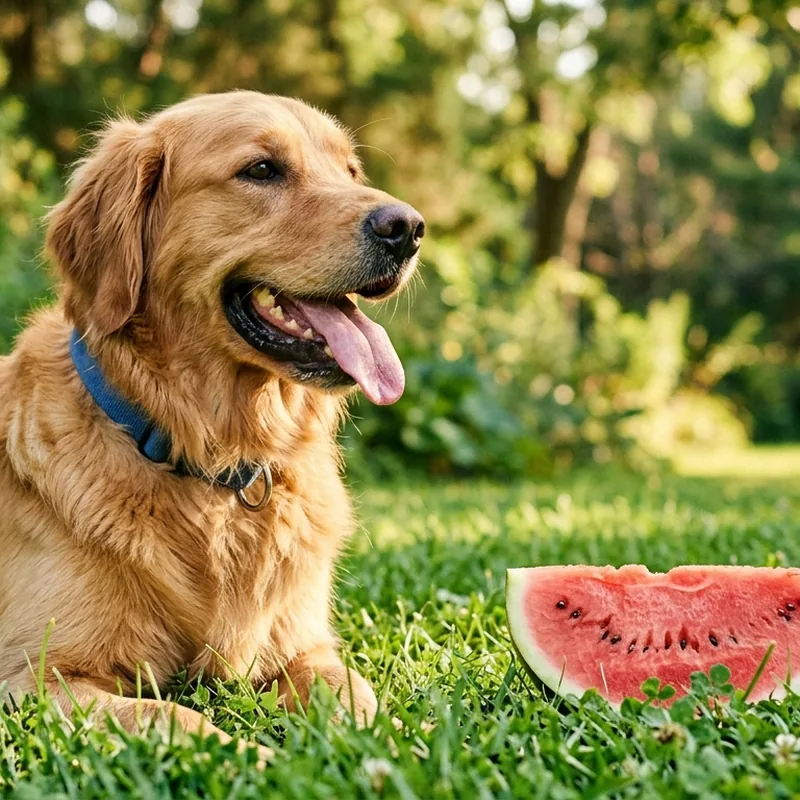
Why Watermelon Flesh Is a Good Treat
Watermelon is over 90% water, which makes it a handy way to help a dog stay hydrated on a hot day, and it’s naturally low in calories compared to most fruit. It also provides small amounts of vitamin A, vitamin C, and potassium.
The Seeds Are the Real Risk
Watermelon seeds — especially in any real quantity — can cause an intestinal blockage, particularly in small breeds. Seedless watermelon still contains small soft white seeds occasionally, so it’s worth a quick visual check before serving, not just an assumption that ‘seedless’ means zero seeds.
Skip the Rind
The tough green rind is hard to digest and is a common cause of digestive upset or, in more serious cases, intestinal blockage if swallowed in large pieces. Cut the flesh away from the rind entirely rather than letting your dog chew on the whole slice.
How to Serve It
- Cut flesh into small, seed-free cubes
- Remove the rind completely
- Freeze cubes for a longer-lasting hot-weather treat
- Keep portions modest — a few cubes, not half a slice
FAQ
Usually mild digestive upset like vomiting or diarrhea. In larger amounts or in small dogs, it can contribute to a blockage — watch for repeated vomiting, lethargy, or a swollen abdomen and call your vet if you see those signs.
Small amounts of seedless, rind-free flesh are generally fine once puppies are eating solid food, but introduce it gradually.
Its high water and potassium content mean you should check with your vet first if your dog has kidney disease, since potassium intake sometimes needs to be managed carefully in those cases.
A seed or two accidentally swallowed usually isn't a problem, but it's still better to remove seeds deliberately rather than relying on that.
