
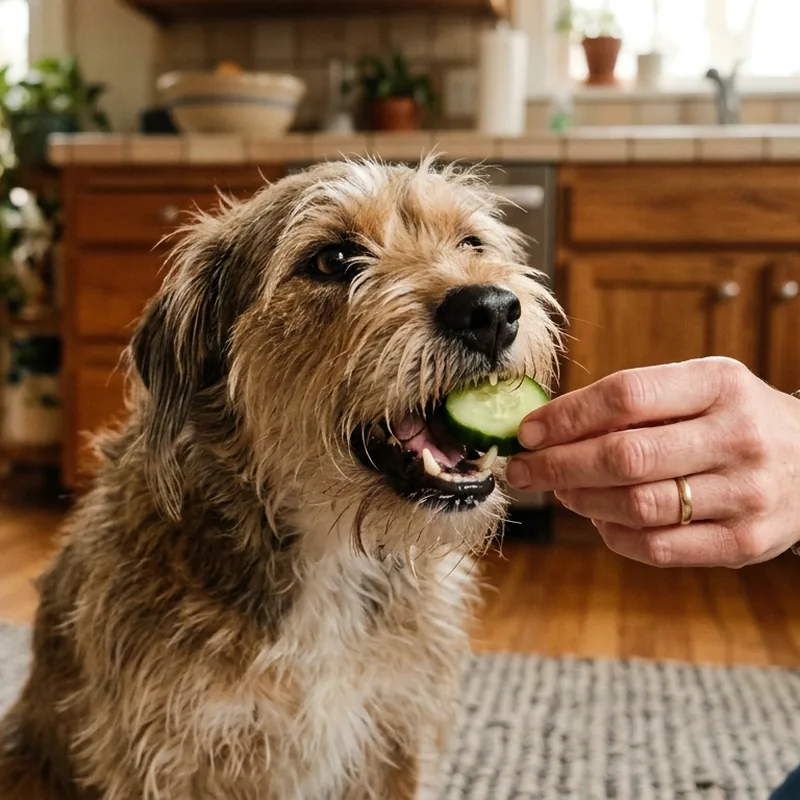
Why Cucumber Works Well as a Dog Treat
Cucumber is about 95% water and very low in calories, carbohydrates, and fat, which makes it one of the few treats you can offer fairly generously without much concern for weight gain. It also provides small amounts of vitamin K and potassium.
Good for Weight Management
Because it’s so low in calories, cucumber is often suggested as a substitute for higher-calorie commercial treats when training a dog that’s overweight or on a calorie-restricted diet. Swapping even some regular treats for cucumber slices can meaningfully cut daily treat calories without cutting training rewards.
How to Serve Cucumber Safely
- Wash it well and consider peeling if your dog has a sensitive stomach, since the skin is more fibrous
- Cut into thin coins or small sticks appropriate to your dog’s size
- Introduce gradually — a new food in large amounts can cause loose stool even if it’s otherwise safe
- Refrigerated slices make a refreshing treat in warm weather
When to Be Cautious
Whole cucumbers or large uncut chunks can pose a choking risk, particularly for small dogs. As with any new food, watch for the first few times to confirm your dog tolerates it well before making it a regular part of their treat rotation.
FAQ
No — pickles are cured in vinegar, salt, and often spices like garlic, which are not good for dogs. Stick to plain, fresh cucumber.
Some owners find it has a mild freshening effect, likely just from the crunch and water content, though it's not a substitute for dental care.
A few slices as a treat is plenty for most dogs. Because it's so low-calorie, moderate overfeeding is unlikely to cause harm beyond a possible loose stool.
Yes, it's not toxic, though it's more fibrous than the flesh. Peeling it is optional and mostly a matter of digestive comfort for sensitive dogs.
