
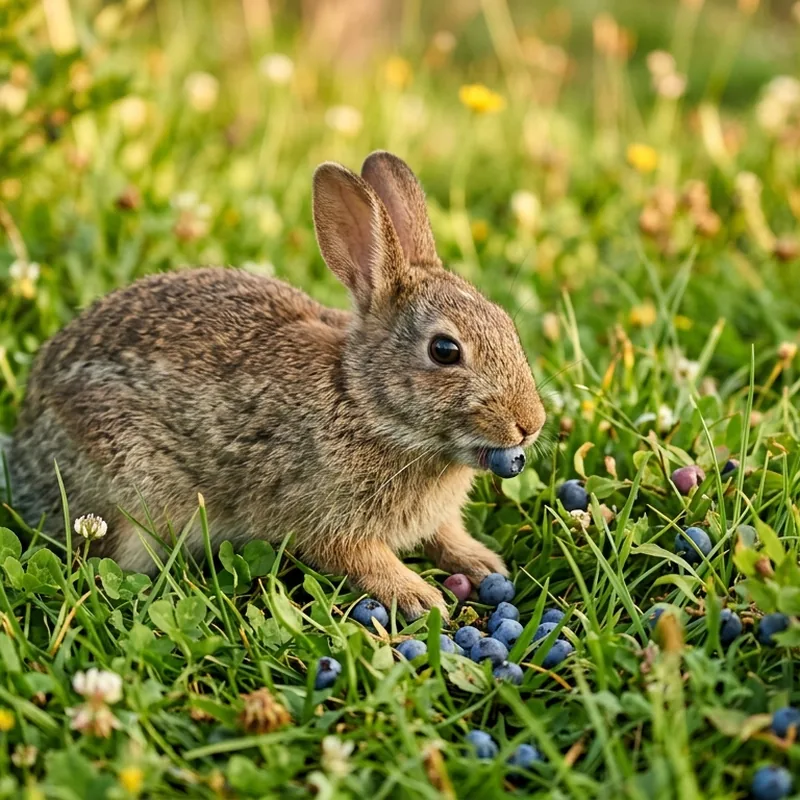
Why Treats Need to Stay Small for Rabbits
A rabbit’s digestive system is built around a steady, high-fiber diet of hay, with fresh greens and a small amount of pellets rounding things out. Fruit, including blueberries, is genuinely a treat category, not a food group — too much sugar too often can throw off the delicate balance of a rabbit’s gut bacteria, which is a more serious issue for rabbits than it is for most pets.
How Many Blueberries Is Safe
One or two blueberries, a couple of times a week at most, is a sensible amount for an average-sized rabbit. Smaller rabbit breeds should get less. This isn’t about toxicity — it’s about keeping sugar intake low enough that it doesn’t disrupt digestion.
Signs You’re Overdoing Fruit Treats
Soft stool, reduced appetite for hay, or noticeably less interest in their normal pellets can all signal that treats have taken up too much of the diet. If you see these signs, cut back on fruit and make sure hay is still the clear majority of what your rabbit eats each day.
Introducing Blueberries for the First Time
Start with just one berry and watch for a day or two before offering more. Rabbits can be sensitive to new foods, and introducing anything new slowly is the safest way to catch a poor reaction early.
FAQ
No — young rabbits under about 3 months should stick to hay, water, and their mother's milk or a rabbit-appropriate pellet, without fruit, since their digestive systems are still developing.
Fresh is generally preferred, but a thawed frozen blueberry is fine occasionally. Avoid serving them still frozen, as extreme cold can be jarring.
Avocado is the most notable one to avoid entirely for rabbits, along with anything high in sugar fed in large amounts, like most dried fruit.
Not toxic, but overfeeding sugary treats can disrupt gut bacteria and lead to digestive upset, which for rabbits can become serious if it persists.
