
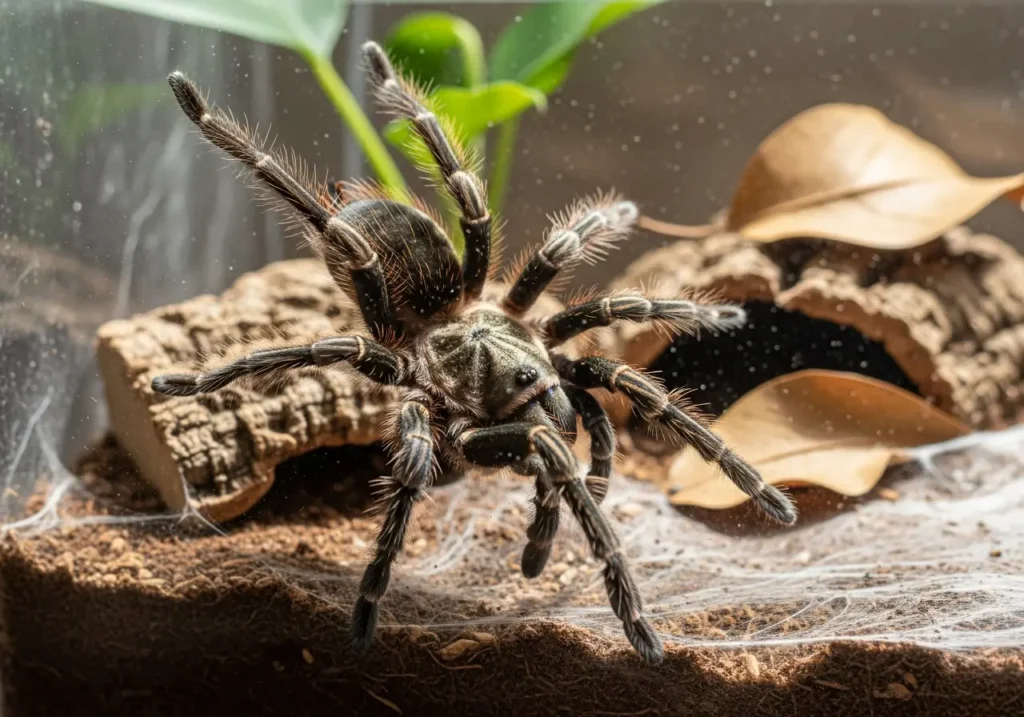
Choose a pet tarantula by matching temperament (calm, documented as slow-to-defend), lifespan expectations (females can live 15-20+ years in many species), and care difficulty (terrestrial species are easier than arboreal ones) to your actual experience level.
Choosing a pet tarantula comes down to matching temperament, size, and care difficulty to your actual experience level — not just picking the most striking-looking species.
Start With Temperament
Look specifically for species documented as calm and slow-to-defend, rather than fast, skittish, or prone to flicking urticating hairs at the slightest disturbance. Species-specific care sheets and established keeper communities are more reliable here than a pet-store label alone.
Consider the Long-Term Commitment
Female tarantulas of many popular species live well over a decade — some 15-20+ years. Male tarantulas of the same species often live only a few years. Decide which fits your situation before falling for a specific animal.
Match Care Difficulty to Experience
Terrestrial, ground-dwelling species are generally easier to observe and manage than arboreal (tree-dwelling) species, which move faster and are harder to safely rehouse. Save arboreal species for after you’ve got some experience.
New World vs. Old World: Why It Matters for Your First Choice
New World tarantulas (from the Americas) are generally the safer, calmer starting point — their main defense is flicking irritating urticating hairs rather than biting readily, and most beginner-recommended species fall into this category. Old World tarantulas (Africa, Asia) tend to be faster, more defensive, and more likely to bite when startled, with medically significant venom in some species — these are better suited to keepers with real experience already, not a first tarantula regardless of how visually striking a specific Old World species might look.
Researching a Specific Species Before Buying
Once you’ve narrowed down temperament and terrestrial-vs-arboreal preference, look up detailed, species-specific care information — exact humidity range, enclosure size recommendations, typical feeding response — rather than buying based on a general category label at a pet store. Species within the same broad group can still vary meaningfully in specific care requirements.
Buying From a Reputable Source
Specialty invertebrate breeders and established reptile/invertebrate expos generally offer better species identification, captive-bred sourcing, and honest condition information than a general big-box pet store, where staff may not specialize in invertebrates specifically. Ask directly whether the animal is captive-bred, and expect a straightforward answer — hesitation or vague answers are a reasonable reason to look elsewhere.
Considering Sex If It Matters to You
If long-term commitment is a priority, note that female tarantulas of many species live dramatically longer than males of the same species — a decade or more longer in some cases. Sexing a young tarantula accurately isn’t always possible at the point of sale, so if lifespan matters to your decision, ask the seller what sexing information (if any) is available, and factor in that some uncertainty may remain until the animal matures.
What to Do in the First Few Weeks After Bringing One Home
Minimize handling and disturbance during the initial settling-in period — a new environment is stressful even for a hardy species, and reduced activity or feeding response in the first couple of weeks is normal adjustment behavior, not necessarily a sign of a problem, as long as it resolves within a reasonable timeframe.
Evaluating Availability Before Committing to a Species
Some desirable species are harder to source reliably than others, with irregular availability from breeders — deciding on a backup second-choice species before shopping avoids the pressure to buy a less-suitable animal simply because it’s immediately available.
Understanding Growth Rate Expectations
Growth rate varies significantly by species — some tarantulas reach adult size in a couple of years, while others take considerably longer. If watching an animal grow through visible size changes matters to you, this is worth factoring into species choice alongside temperament and care difficulty.
Preparing Your Household Before the Animal Arrives
Set up and stabilize the enclosure’s temperature and humidity for at least a few days before the animal arrives, rather than assembling everything the same day — this ensures the environment is genuinely ready rather than still fluctuating during the animal’s most vulnerable initial adjustment period.
Learning From a Failed First Attempt
Some new keepers lose a first tarantula to a preventable husbandry mistake — this is a genuinely common experience in the hobby, not a sign someone shouldn’t keep invertebrates, and the useful response is identifying specifically what went wrong (usually humidity or handling-related) before trying again, rather than assuming the species itself was simply too difficult.
Networking Within the Hobby Before Your First Purchase
Joining an invertebrate-keeping community before buying, rather than after, lets you ask specific questions about species you’re considering and get honest input from people currently keeping them — this pre-purchase research phase is where a lot of avoidable first-tarantula mistakes get prevented.
Setting a Personal Budget Range Before Shopping
Tarantula prices vary enormously by species and rarity, from very affordable common species to significantly more expensive rare or difficult-to-source ones — setting a budget range before browsing prevents the common experience of falling for an animal well outside what you’d planned to spend on a first tarantula.
Understanding Tarantula Terminology Before You Shop
Terms like “sling” (a very young juvenile), “sub-adult,” and “adult” refer to specific developmental stages that affect both price and care requirements — understanding this terminology before browsing listings helps you accurately compare animals and understand what you’re actually buying, since a sling and an adult of the same species have meaningfully different near-term care needs.
Evaluating Seller Reputation Beyond Price
The cheapest available animal of a given species isn’t automatically the best choice — seller reputation for accurate species identification, honest condition disclosure, and safe shipping practices (for animals shipped rather than picked up in person) matters as much as price when making a first purchase.
Planning for the Full Care Timeline Before Buying
Beyond the initial purchase and setup, think through the realistic care timeline — molts, potential enclosure upgrades as the animal grows, and the eventual long-term steady-state routine — rather than focusing only on the immediate purchase decision. A little forward planning here prevents surprises a few months in.
A Final Word on Patience in Choosing
Taking a few extra weeks to research thoroughly before your first tarantula purchase costs nothing and meaningfully improves your odds of a smooth first experience — there’s no genuine downside to waiting until you feel confident in your choice.
Comparing Sources: Expos, Specialty Shops, and Online Breeders
Each sourcing option has different tradeoffs worth weighing together rather than defaulting to whichever is most convenient — expos let you inspect an animal directly, specialty shops often provide ongoing local support, and online breeders frequently offer the widest species selection with detailed lineage information, at the cost of shipping stress for the animal.
What a Detailed Care Sheet Should Actually Cover
A genuinely useful species-specific care sheet covers temperature and humidity ranges, typical adult size, expected temperament, feeding schedule, and lifespan by sex — if a source can’t provide this level of detail for a specific species you’re considering, treat that as a sign to look elsewhere for more complete information before buying.
Final Word: Your First Tarantula Doesn’t Have to Be Your Only Species
Many keepers who start with one calm, easy species go on to keep several different tarantulas or invertebrates over time — treating your first choice as a starting point for a potential ongoing hobby, rather than a single permanent decision, takes some of the pressure off getting it perfectly right immediately.
A Practical Pre-Purchase Question List
Before finalizing a purchase, confirm: is this animal captive-bred, what’s its approximate age and sex if known, and what specific care sheet does the seller recommend — having clear answers to these three questions before paying gives real confidence you’re making an informed choice rather than an impulse purchase.
Old World vs New World Tarantulas: Temperament Differences
The Old World versus New World distinction is one of the most important things to understand before choosing a pet tarantula, since it correlates strongly with temperament and handling suitability despite plenty of individual variation within each group. New World species, native to the Americas, are generally calmer, slower to become defensive, and rely primarily on urticating hairs — which they kick toward a perceived threat — as a first line of defense rather than a fast strike, making many popular beginner species like curly-hair or Chilean rose tarantulas relatively forgiving of occasional handling.
Old World species, native to Africa, Asia, and parts of Europe, lack urticating hairs entirely and instead rely on speed and, when truly threatened, a defensive bite as their primary response — several popular Old World species are also considered medically significant, meaning a bite carries more than a locally painful reaction and should be treated seriously. This doesn’t make Old World species poor pets, but it does mean handling expectations should be adjusted accordingly, and many experienced keepers treat Old World tarantulas as strictly observation-only display animals rather than attempting hands-on interaction regardless of the individual animal’s apparent calmness on a given day.
More Insects & Invertebrates Guides
FAQ
A documented calm temperament, terrestrial (ground-dwelling) habits rather than fast arboreal behavior, and hardiness to minor humidity fluctuations — these traits make a species far more forgiving for a first-time keeper.
Generally no — most tarantula keepers avoid regular handling, since it stresses the animal and carries some risk to both the tarantula and the handler.
It varies by sex and species — male tarantulas often live just a few years, while females of some species can live 15-20+ years.
