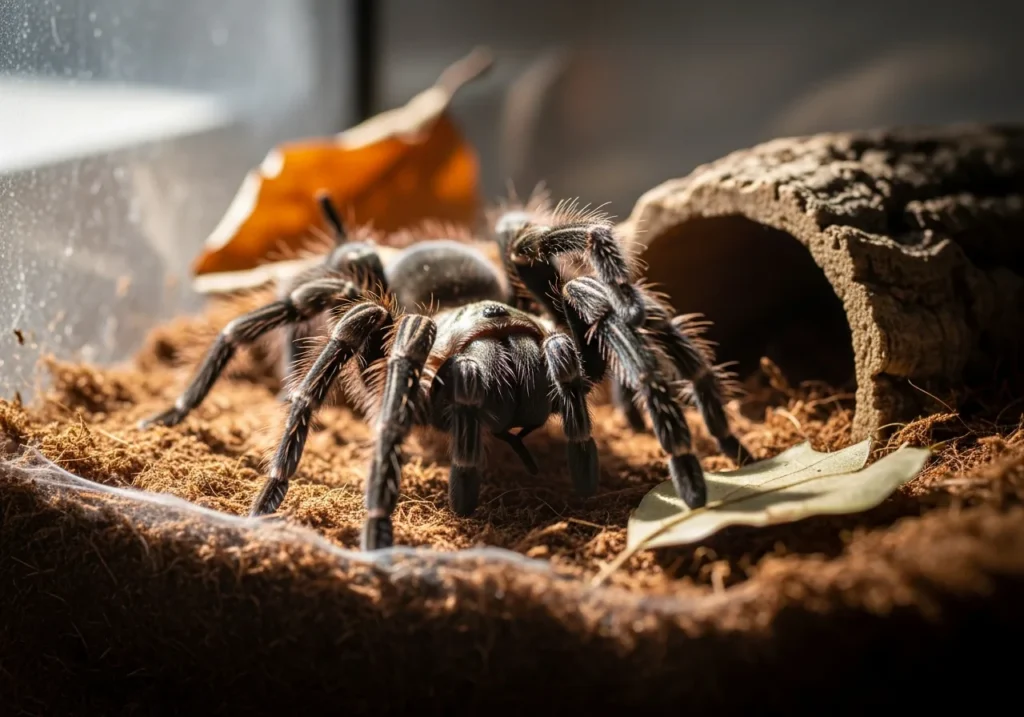
The clearest warning signs in a pet tarantula are curled, unresponsive legs, a leaking or discolored abdomen, or mites visibly covering the animal. Refusing food and slowing down, on their own, are usually just signs a molt is coming and aren't a concern.
The clearest warning signs in a pet tarantula are curled, unresponsive legs, a leaking or discolored abdomen, or mites visibly swarming the animal itself — these point to dehydration, injury, or infestation and deserve immediate attention.
What’s Actually Concerning
- Curled legs that don’t respond when the enclosure is gently disturbed — often signals severe dehydration or a failed molt.
- A leaking, discolored, or unusually shriveled abdomen — can mean injury, dehydration, or a ruptured abdomen from a fall.
- Mites covering the animal’s body, not just present in small numbers in the substrate — usually means the enclosure is too damp.
- No movement at all when gently prompted, combined with a sunken abdomen — a tarantula that’s genuinely unresponsive, versus one that’s simply resting (tarantulas can sit still for very long periods normally).
What’s Actually Normal (Not a Warning Sign)
Refusing food for days or weeks, reduced movement, and a dark bald patch on the abdomen almost always mean a molt is coming — this is completely normal and not a health concern on its own.
What to Do If You See a Real Warning Sign
Move the tarantula to a simpler enclosure with a shallow water dish nearby, keep handling to an absolute minimum, and reach out to an exotics-experienced vet or an established tarantula-keeping community for species-specific guidance — general vets often have limited invertebrate experience.
FAQ
Curled, unresponsive legs, a leaking or discolored abdomen, and mites visibly covering the animal are the clearest red flags, usually pointing to dehydration, injury, or infestation.
Yes — tarantulas are naturally low-activity animals and can sit motionless for very long stretches without anything being wrong. The concern is specifically an animal that stays unresponsive even when the enclosure is gently disturbed, combined with other signs like a sunken abdomen.
