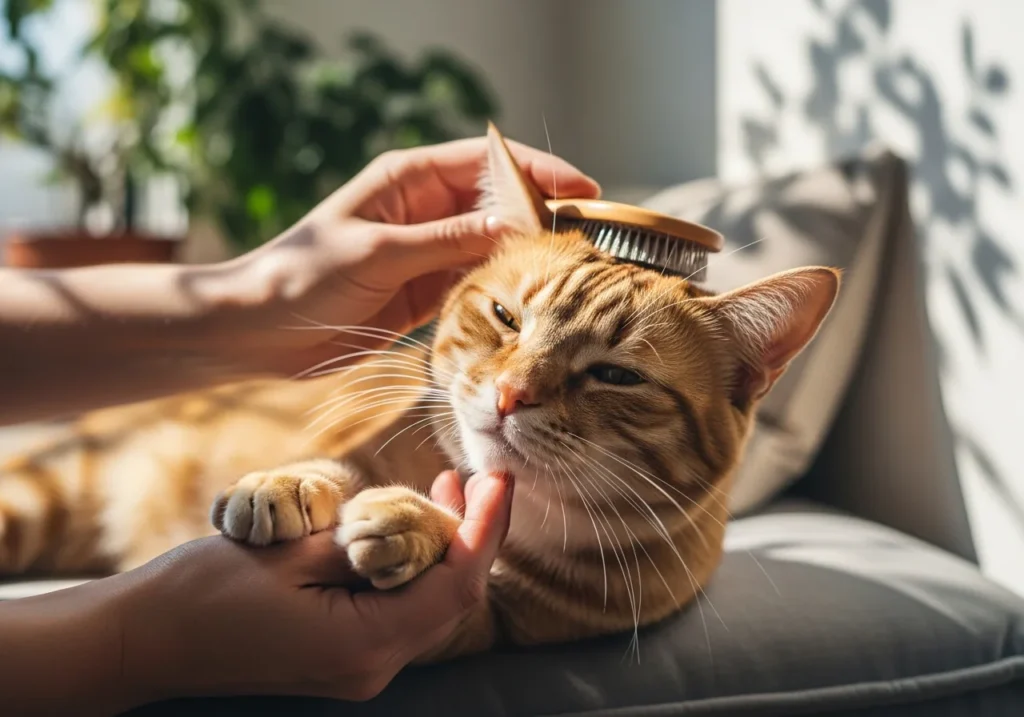
Cats are exceptionally good at hiding illness — an evolutionary trait, since showing weakness makes them vulnerable in the wild. That instinct doesn’t disappear at home, which is exactly why proactive health checks matter more for cats than for most pets.
Routine Care Schedule
Annual wellness visits for healthy adult cats, twice-yearly for seniors (roughly age 10+), plus year-round parasite prevention even for indoor-only cats — fleas and some parasites can still make their way indoors. Dental disease is extremely common in cats and often goes unnoticed until advanced, so regular dental checks matter.
Weekly At-Home Health Check
Check body weight by feel (ribs easy to feel, visible waist), look at eyes for clarity and discharge, check ears for odor or debris, and note any change in litter box habits — increased or decreased urination and stool changes are often the earliest visible signs of illness in cats.
Warning Signs That Warrant a Vet Call
- Not eating for more than 24 hours — genuinely urgent in cats, since they can develop a serious liver condition (hepatic lipidosis) from even short fasting periods.
- Straining in the litter box with little or no output — can indicate a urinary blockage, a true emergency, especially in male cats.
- Hiding more than usual or sudden aggression when touched.
- Noticeable weight loss despite normal or increased appetite — a classic hyperthyroidism sign in older cats.
Related Reading
See Signs Your Cat Is Sick and our Cats Health Checklist.
