
Beginner-Friendly
Leopard Gecko — doesn’t need UVB as urgently as diurnal species, calm temperament, well-documented care. Bearded Dragon — diurnal, interactive, hardy once husbandry is dialed in. Corn Snake — one of the most beginner-friendly snake species, docile and manageable size.
More Demanding
Chameleons — need precise humidity and are sensitive to stress; not recommended as a first reptile. Ball Pythons — generally easy but can be picky eaters and stress easily with handling changes. Crested Geckos — moderate difficulty, need higher humidity than desert species.
Amphibians
White’s Tree Frogs — hardy and beginner-friendly among amphibians. Amphibians generally need more humidity-focused setups than reptiles and are more sensitive to handling due to their permeable skin.
Research the Adult Size
Some popular species — certain monitor lizards and larger snakes — grow far beyond what beginners expect. Always confirm adult size and enclosure needs before committing.
Leopard Geckos in Detail
Leopard geckos are ground-dwelling, nocturnal, and don’t require the strict UVB many diurnal species need, though modern care recommendations still suggest low-level UVB for overall health. They tolerate handling well once settled, eat a straightforward insect-based diet, and their care requirements are extensively documented, making them a strong first-reptile choice. Adults typically reach 8-10 inches and live 15-20 years with correct care — a genuine long-term commitment despite their small size.
Bearded Dragons in Detail
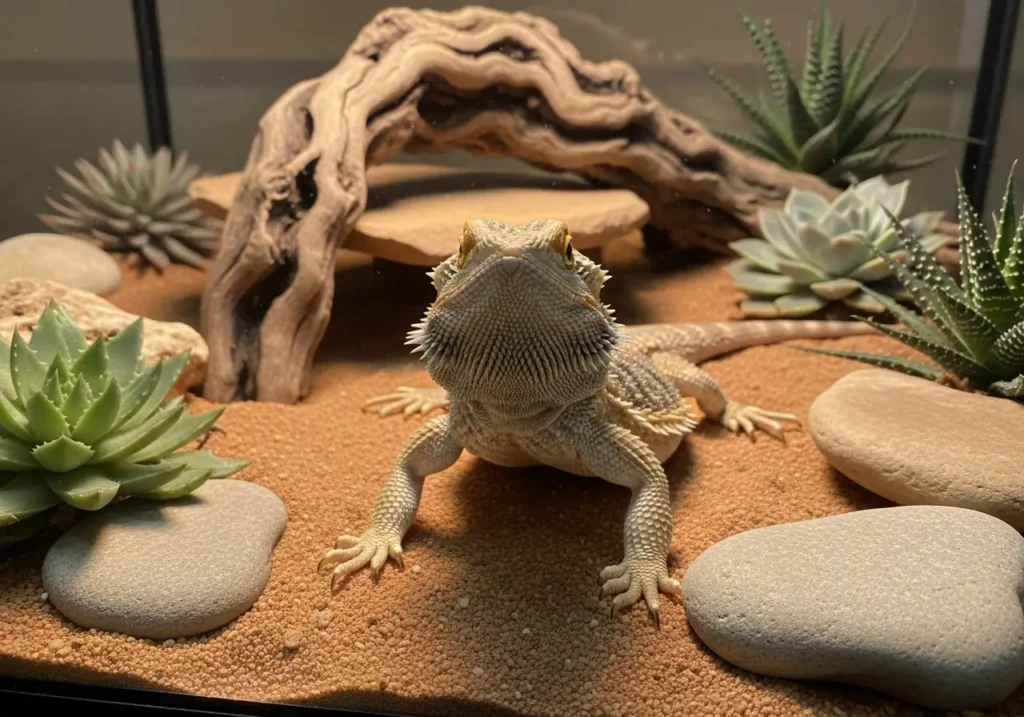
Bearded dragons are diurnal, social in temperament (relative to most reptiles), and famously food-motivated, often appearing to recognize and respond to their owner over time. They need a larger enclosure than a leopard gecko, strict UVB and basking temperature requirements, and a diet that shifts from insect-heavy as juveniles to more vegetable-heavy as adults. Adults reach 18-24 inches and live 10-15 years.
Crested Geckos in Detail
Crested geckos are arboreal (tree-dwelling), tolerate room-temperature housing without demanding heat equipment, and can be fed a mostly complete commercial powdered diet, simplifying feeding considerably compared to insect-dependent species. They’re a good fit for owners who want lower handling frequency, since crested geckos can drop their tail if stressed (unlike some geckos, it doesn’t regrow) and generally do better with gentle, infrequent handling.
Ball Pythons in Detail
Ball pythons are calm, rarely aggressive, and one of the most commonly kept beginner snakes. Their feeding schedule (whole prey every 1-2 weeks for adults) is simpler than many lizards’ daily needs, though ball pythons are known for occasional unexplained feeding strikes that can worry new owners despite usually being normal. Adults reach 3-5 feet and live 20-30 years — one of the longest lifespan commitments on this list.
Corn Snakes in Detail
Corn snakes are widely considered even more forgiving than ball pythons for husbandry mistakes, reliable feeders, and available in a wide range of color morphs. They’re active and inquisitive, and slightly more prone to trying to escape enclosures than ball pythons, making a securely latching terrarium lid a genuine necessity. Adults reach 3-5 feet and live 15-20 years.
Tortoises: A Different Commitment Entirely
Tortoises are herbivorous, often need outdoor access or a very large indoor enclosure as adults, and several commonly kept species live 40-80+ years — a commitment that can genuinely outlast the owner’s own lifetime and needs planning for accordingly. They’re a poor fit for anyone not prepared for decades-long care and substantial space, but a rewarding, genuinely long-term companion for the right household.
Amphibian Options: Frogs and Salamanders
Fire-bellied toads and White’s tree frogs are commonly recommended beginner amphibians, tolerant of minor husbandry variation and available in well-documented care sheets. Axolotls (technically a salamander) have become popular but need cooler water temperatures and are aquatic, closer in care style to fishkeeping than typical terrestrial reptile care — worth understanding before assuming they fit into a standard reptile care routine.
Choosing by Difficulty Level
Genuine beginner-tier species: leopard geckos, corn snakes, ball pythons, crested geckos. Intermediate: bearded dragons (due to stricter UVB/temperature needs), most aquatic turtles (due to water quality management similar to fishkeeping). Advanced or specialist: chameleons (notoriously particular about husbandry precision), venomous species (never appropriate for beginners and often legally restricted), and most tortoise species given their decades-long space and outdoor-access needs.
Matching a Species to Your Living Situation
Apartment dwellers with space constraints often do better with smaller-footprint species like leopard geckos or crested geckos rather than bearded dragons or tortoises, which need substantially larger enclosures as adults. Renters should also confirm pet policies specifically cover reptiles, since some leases have restrictions that don’t apply to typical mammal pets but do apply to reptiles. Households with young children may want to prioritize species tolerant of gentle handling (leopard geckos, corn snakes) over more delicate or bite-prone species.
Cost Differences Across Species
Enclosure and equipment costs vary significantly — a leopard gecko’s simpler heating and lighting setup costs meaningfully less than a bearded dragon’s stricter UVB and basking requirements, and both cost less than the specialized misting and humidity equipment some tropical or arboreal species need. Ongoing feeder insect costs also differ: heavily insectivorous species eating daily cost more to feed long-term than a snake eating a single prey item every week or two.
Handling Tolerance Compared Across Species
Leopard geckos and corn snakes generally tolerate the most frequent handling among commonly kept beginner reptiles. Bearded dragons often become genuinely interactive once settled, sometimes described as the most “dog-like” in personality among popular reptile choices. Crested geckos and most amphibians do best with lower handling frequency — they’re better suited to owners who want a primarily visual, observation-focused pet rather than one they’ll pick up regularly.
Availability and Sourcing
Reputable breeders are often a better source than large pet-store chains for many reptile species, offering healthier starting animals and more accurate information about the specific animal’s history, feeding record, and temperament. Reptile expos and specialty reptile stores are also worth checking, and rescues specifically for reptiles exist in many areas, often with adult, already-established animals available for adoption at a lower cost than buying young from a breeder.
Legal Considerations
Some reptile species have ownership restrictions depending on location — certain venomous species, some large constrictors, and select native or invasive-risk species may require permits or be outright prohibited in specific states or municipalities. Always verify local regulations for a specific species before committing, since this varies considerably by location and changes periodically as regulations are updated.
Growing With Experience
Many experienced reptile keepers started with one of the beginner-tier species covered above and expanded into more demanding species — chameleons, larger constrictors, more particular tropical species — only after building genuine confidence and husbandry skill with a forgiving first reptile. There’s no rush to acquire an impressive or unusual species right away; the skills built keeping a leopard gecko or corn python well transfer directly to more demanding species later, when you’re ready.
A Word on “Exotic” Marketing
Unusual color morphs and rare species are often marketed at a significant premium without necessarily being harder or easier to care for than the standard version of that species — a specific bearded dragon color morph, for example, has essentially identical care needs to any other bearded dragon. Don’t let rarity or price alone signal difficulty level; check the actual species’ care requirements rather than assuming an expensive animal is automatically more demanding to keep well.
A Final Note Before Choosing
Every species covered here can thrive in the right setup with the right owner — the key is matching a species’ genuine care demands, adult size, and lifespan against your actual living situation and experience level, not choosing based on appearance alone. Read a detailed, reputable care sheet for your specific species of interest before buying anything, and if possible, talk to someone with hands-on experience keeping that exact species rather than relying solely on general reptile-keeping advice.
Building Confidence Before Advancing
If you’re new to reptile keeping, resist the temptation to start with the most visually striking or unusual species you’ve seen — build core husbandry skills (temperature and humidity management, feeding routines, recognizing normal versus concerning behavior) with a genuinely forgiving beginner species first. Those fundamentals transfer directly to more demanding species later, and starting with an appropriately matched first reptile dramatically improves the odds of a positive experience for both you and the animal.
Whichever species draws you in, the research investment upfront — understanding real adult size, true lifespan, and genuine daily care needs before buying — is what separates a rewarding decades-long reptile-keeping experience from a rehoming situation a rescue ends up handling later.
Take the time now, and the reward is a genuinely long, fascinating relationship with an animal unlike any typical mammal pet — reptiles and amphibians offer a different, quieter kind of companionship that many keepers find deeply rewarding once they’re set up correctly from the start.
Do the homework first, and enjoy the process of getting to know whichever species becomes part of your household.
It’s a rewarding path once you start it well.
Choose wisely, and enjoy every step.
Good luck on the journey ahead.
Enjoy every single moment of it.
More Reptiles & Amphibians Guides
