
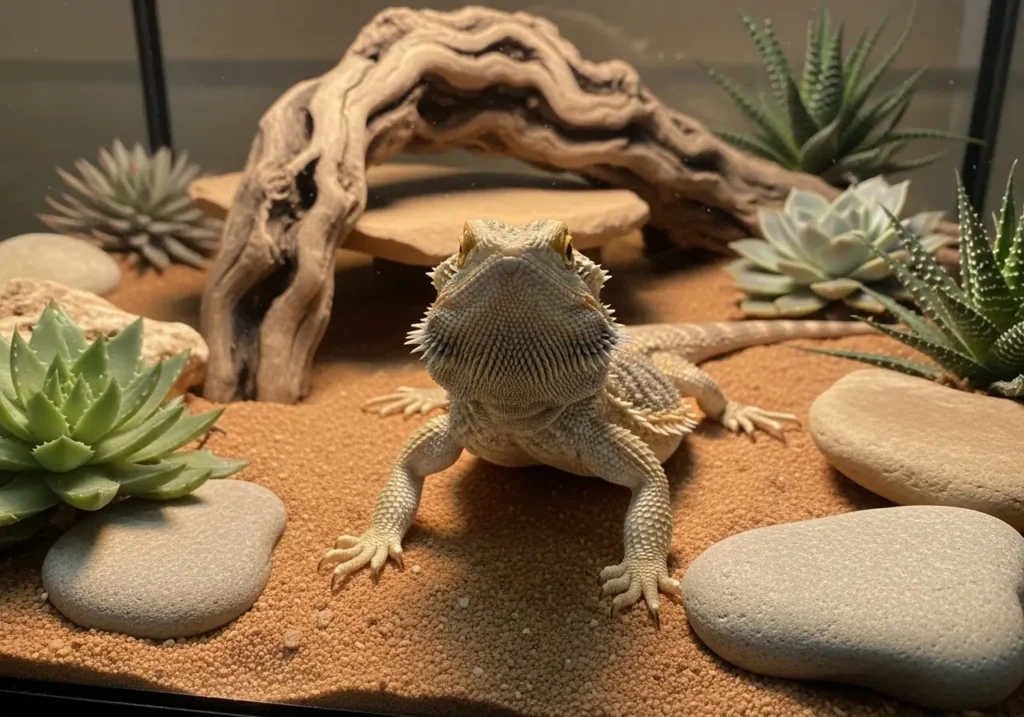
Beginner-friendly reptiles share a few traits: forgiving of minor husbandry mistakes, well-documented care requirements, and calm temperaments.
Top Picks
Leopard Gecko — doesn’t require intense UVB, easy-to-meet humidity needs. Bearded Dragon — interactive and hardy once the basics are dialed in. Corn Snake — among the most manageable pet snakes.
Species to Research More Before Committing
Chameleons and larger monitor lizards demand more precise conditions and experience — better suited to a second or third reptile once you’ve built confidence.
Leopard Geckos: The Classic Beginner Choice
Leopard geckos are widely considered one of the most forgiving reptile species for first-time keepers — they don’t require UVB lighting to thrive (though many keepers now provide low-level UVB as a welfare best practice), tolerate handling reasonably well once settled, and have simple, well-documented care requirements. Their main needs are a temperature gradient with a warm basking side, appropriately sized live insect prey, and a secure hide on both the warm and cool ends of their enclosure.
Bearded Dragons: More Involved but Highly Interactive
Bearded dragons need a larger enclosure, strong UVB lighting, and a varied diet of both insects and vegetables, making them a bigger commitment than leopard geckos. In exchange, they’re famously interactive, often described as one of the most dog-like reptiles in personality, and tend to tolerate — even seem to enjoy — regular handling more than most other beginner species.
Corn Snakes: A Manageable First Snake
For keepers specifically interested in snakes, corn snakes are consistently recommended as the most beginner-friendly option — they stay a manageable adult size, are generally calm and easy to handle, and have straightforward temperature and feeding requirements (pre-killed, appropriately sized rodents on a set schedule). They’re less demanding on the lighting front than bearded dragons since they don’t require UVB in the same way.
Crested Geckos: Low-Maintenance and Humidity-Tolerant
Crested geckos have become popular beginner picks because they don’t require live insects as a dietary staple (commercial crested gecko diet powders mixed with water are a complete, widely used option), don’t need intense UVB or heating setups, and tolerate a range of home temperatures without supplemental heat in many climates. Their humidity needs are a bit more involved than a leopard gecko’s, but overall care complexity remains low.
Species to Approach with More Caution as a First Reptile
Larger monitor lizards, chameleons, and most aquatic turtles have considerably more demanding or specialized care requirements — chameleons in particular are notoriously stress-sensitive and don’t tolerate handling or incorrect setups well, making them a poor first-reptile choice despite their striking appearance. Ball pythons are often marketed as beginner snakes but can be inconsistent, sometimes finicky eaters that intimidate first-time keepers unfamiliar with normal feeding-refusal patterns.
Matching Species to Your Actual Lifestyle
Consider how much handling you want (bearded dragons and corn snakes generally tolerate more than leopard geckos or crested geckos), your budget for lighting/heating equipment (UVB-dependent species cost more to set up correctly), and your comfort feeding live insects versus prepared diets. The “best” beginner reptile genuinely depends on which of these trade-offs fits your situation, not a single universal answer.
Setting Realistic Expectations Before You Buy
Every reptile species listed here still requires real investment — appropriate enclosure size, correct temperature gradients, and consistent care — even the most beginner-friendly options aren’t “low effort” in an absolute sense, just more forgiving of minor mistakes than more demanding species. Research your specific chosen species’ full adult care needs before bringing one home, not just the beginner-friendly headline.
The Bottom Line
Leopard geckos and crested geckos suit keepers wanting simpler care and less demanding lighting needs; bearded dragons suit those wanting a highly interactive, handleable pet willing to invest in UVB and space; corn snakes suit those specifically wanting a manageable first snake. Match the species to your actual lifestyle and commitment level rather than picking based on appearance alone.
Beginner-Friendly Amphibian Options
Fire-bellied toads and White’s tree frogs are commonly recommended as accessible amphibian starting points — both tolerate a range of humidity conditions better than more specialized species and have straightforward feeding requirements centered on appropriately sized insects. Amphibians generally have more specific humidity and water-quality needs than beginner reptiles, so research species-specific requirements carefully even among “beginner-friendly” options.
Comparing Cost of Entry Across Species
Leopard geckos and corn snakes tend to have the lowest equipment costs (simpler heating, no mandatory intense UVB for corn snakes), while bearded dragons and many amphibians require a larger upfront investment in lighting, misting systems, or larger enclosures. Factor total setup cost, not just the animal’s purchase price, into your beginner species decision — the cheapest animal to buy isn’t always the cheapest to correctly house.
Sourcing Your First Reptile or Amphibian Responsibly
Reputable breeders and specialty reptile stores typically offer healthier animals with better husbandry history than general pet store chains, and can answer species-specific questions a generalist retailer may not be equipped to address. Avoid wild-caught animals as a beginner choice — they often carry higher parasite loads and adjust to captivity less readily than captive-bred individuals.
Common Mistakes Across All Beginner Species
- Setting up the enclosure the same day as bringing the animal home. Set up and stabilize temperatures/humidity for at least several days before introducing your pet.
- Underestimating ongoing costs. Bulb replacement, feeder insects, and vet visits add up meaningfully beyond the initial purchase.
- Handling too much, too soon. Most reptiles and amphibians need a settling-in period of one to two weeks with minimal handling before regular interaction begins.
Trial-Run Species Before Committing Long-Term
Some keepers start with a shorter-lived species (like a hamster-adjacent commitment level) before committing to a decades-long tortoise or large snake, using the shorter-lived pet to build genuine husbandry confidence first. This isn’t necessary for everyone, but it’s a reasonable, low-risk way to test your interest and reliability before a much longer commitment.
Researching Beyond Care Sheets
Care sheets provide a useful baseline, but joining species-specific keeper communities (forums, well-moderated social media groups) often surfaces practical, real-world details — common individual quirks, realistic troubleshooting, product recommendations from experienced keepers — that generic care sheets don’t fully capture.
Budgeting Time, Not Just Money
Beyond financial cost, be realistic about the weekly time commitment — feeding, spot-cleaning, temperature/humidity checks, and periodic deep cleaning add up across even a single beginner-friendly reptile, and multiply with each additional animal. Underestimating time commitment is a less-discussed but equally common source of beginner reptile-keeper regret compared to underestimating cost.
Learning From the Beginner-Reptile Community
Species-specific beginner forums and social communities are full of first-time keepers navigating the exact same early decisions you’re facing — reading through recent posts from people choosing between the same species you’re considering often surfaces practical concerns (real supply costs, common early mistakes, individual temperament variation) that polished care guides sometimes gloss over.
Reassessing Fit After the First Few Months
Give yourself permission to honestly reassess after the first few months of ownership — most beginner-friendly species prove to be a good fit, but if the reality of ongoing care doesn’t match what you expected, addressing that early (adjusting your setup, seeking more experienced guidance, or in rare cases responsible rehoming) serves both you and the animal better than pushing through silently.
What Makes a Species Genuinely Forgiving of Mistakes
The species most commonly recommended for beginners share a specific trait beyond simple popularity: a wider tolerance band for minor husbandry imperfections. A leopard gecko kept a few degrees outside its ideal temperature range for a short period will generally recover without lasting harm, while a more sensitive or specialized species might not show the same resilience under identical circumstances. This forgiveness matters enormously for a first-time keeper who is inevitably going to make some early mistakes while learning — choosing a species that tolerates those mistakes while you build genuine competence is arguably more important than any other single factor in a beginner-species decision, more so even than temperament or handling tolerance.
Setting a Realistic First-Year Expectation
The first year with any new reptile or amphibian species typically involves a genuine learning curve — fine-tuning temperature and humidity to match what your specific enclosure and room conditions actually produce (which often differs somewhat from generic care-sheet numbers), learning your individual animal’s feeding and activity patterns, and building the observational skills that make ongoing care feel routine rather than effortful. Expecting this adjustment period, rather than assuming everything should run smoothly from day one, helps new keepers respond to early hiccups with troubleshooting rather than discouragement, which meaningfully improves both animal welfare and keeper satisfaction during that formative first year.
Weighing Beginner Species Against Your Specific Household
Beyond general beginner-friendliness, consider your own household specifics — other pets that might pose a stress factor through proximity, family members with allergies or sensitivities, and available quiet space for an enclosure — since even the most universally beginner-friendly species can be a poor fit if your particular home situation isn’t well suited to its basic needs.
A Final Word on Starting Simple
There’s real wisdom in choosing the simpler, more forgiving option as your genuine first reptile or amphibian, even if a more exotic species initially catches your eye — building real, hands-on competence with a beginner-friendly animal creates a much stronger foundation for eventually keeping more demanding species successfully than starting ambitious and learning through a more difficult animal’s mistakes.
More Reptiles & Amphibians Resources
FAQ
Leopard geckos are frequently recommended — calm, well-documented, and forgiving of minor husbandry mistakes.
Generally yes — amphibians are more sensitive to water quality and humidity swings, making species like leopard geckos or bearded dragons a more forgiving starting point than most amphibians.
Most do — even beginner-friendly species like leopard geckos and bearded dragons need appropriate UVB exposure for healthy bone development.
