

Most starter cages sold in stores are too small — a C&C-style or large wire cage with at least 7.5 sq ft of floor space suits guinea pigs, while rabbits typically need even more.
| Species | Minimum Floor Space |
|---|---|
| Guinea Pig (single) | 7.5 sq ft |
| Guinea Pig (pair) | 10.5+ sq ft |
| Syrian Hamster | ~450 sq in (much larger than typical store cages) |
| Rabbit | Large pen/exercise area, not just a hutch |
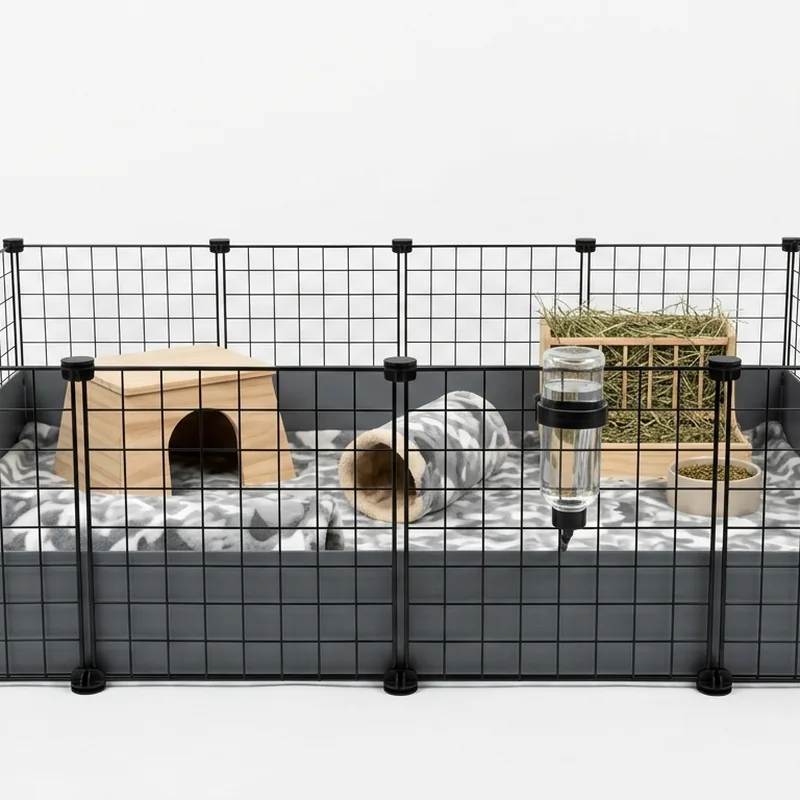
C&C-Style Grid Cage
Modular and expandable to hit the real minimum floor space guinea pigs need.
Check PriceWhy Pet Store Starter Cages Almost Always Fall Short
Starter cages are designed around shelf space and price point at retail, not the actual welfare needs of the species they’re marketed for — this is the single most consistent complaint from small-pet rescues and experienced keepers. A guinea pig “starter cage” frequently offers a fraction of the recommended 7.5 square feet per animal. A hamster starter cage often lacks the depth needed for natural burrowing behavior. Treat the minimums in the table above as genuine floors, not aspirational targets, and size up whenever your budget and space allow.
Floor Space vs. Total Cage Volume
Multi-level cages with ramps and platforms look impressive and can add usable space, but floor space at ground level still matters most for species like guinea pigs and rabbits that don’t naturally climb — a tall cage with a small footprint doesn’t substitute for genuine horizontal running room. For climbing species like rats and mice, vertical space and levels genuinely do add usable, valuable territory in a way that’s more directly comparable to floor space.
Solid-Bottom vs. Wire-Bottom Cages
Wire-bottom cages were common in older small-pet housing but are now generally discouraged — they can cause a painful condition called bumblefoot in rabbits and guinea pigs from continuous pressure on soft foot pads, and they don’t allow for a proper absorbent bedding layer. Solid-bottom cages with several inches of appropriate bedding are the current best-practice recommendation across nearly every commonly kept small-pet species.
Material Considerations
Plastic-bottomed cages with wire tops are common, affordable, and reasonably easy to clean, but persistent chewers can eventually damage plastic components over time — inspect regularly for cracks or sharp edges. Cages built from powder-coated wire (rather than uncoated metal) resist rust better in humid environments and won’t corrode from urine exposure as quickly. Glass or acrylic terrariums, more common for smaller species like hamsters, offer good visibility and draft protection but need adequate ventilation to avoid humidity and ammonia buildup.
Setting Up the Interior Right
A well-set-up cage isn’t just about square footage — it needs a hideout for security, enough bedding depth for burrowing species, a stable food and water station, and (for rabbits and guinea pigs) enough room for a litter area separate from resting and eating space. Cramming a large cage with too much furniture can paradoxically reduce usable open running space, so balance enrichment items against genuine open floor area.
When to Upgrade an Existing Cage
Signs it’s time to size up include an animal that seems to have limited room to move without bumping into cage furniture, reduced activity that improves noticeably with more space during supervised out-of-cage time, or simply an animal that has grown into adulthood since the original cage was purchased. Upgrading is rarely wasted money — a correctly sized cage tends to reduce stress-related behaviors and health issues linked to confinement over the animal’s lifetime.
Exercise Pens as a Supplement, Not a Replacement
A secure exercise pen for supervised time outside the main cage adds valuable space and enrichment, but it doesn’t replace the need for an adequately sized primary enclosure — pen time is typically limited to certain hours, while the cage is where the animal spends the majority of its life. Think of a pen as a genuine addition to a correctly sized cage, not a workaround for buying a smaller one.
Budgeting for Cage Size
A larger, correctly sized cage is almost always the single biggest expense in small-pet setup, and it’s worth prioritizing spend here over accessories — a big cage with basic furnishings beats a small cage packed with expensive extras every time from a welfare standpoint. Watch for sales on multi-level or larger cages, and consider that a well-built larger cage purchased once, correctly sized, is more cost-effective long-term than repeatedly upgrading a series of undersized ones.
Cage Placement in Your Home
Where a cage lives affects both the animal’s wellbeing and how consistently you’ll keep up with care. Avoid direct sunlight and drafty spots near doors or windows, both of which cause temperature swings small pets are sensitive to. A moderately trafficked room helps social species like guinea pigs and rats get used to household activity and stay confident, while a very high-traffic or loud location can be genuinely stressful for more skittish species like hamsters. Avoid the kitchen specifically, since cooking fumes and temperature changes from appliances can affect respiratory-sensitive small pets.
Multi-Animal Cage Sizing
Sizing for pairs or groups isn’t simply the single-animal minimum multiplied by the number of animals — most species need meaningfully more than a linear increase to avoid territorial stress, since social animals still need enough space to retreat from each other when needed. Guinea pig pairs, for example, need considerably more than double the single-animal minimum to comfortably support both individual space and shared areas. When in doubt, size generously upward rather than calculating the bare minimum for a group.
Cleaning Access
A cage that’s difficult to clean gets cleaned less often, which directly affects respiratory health through ammonia buildup — a genuinely underrated factor when choosing cage design. Look for wide top or front openings that let you reach every corner easily, removable trays that don’t require disassembling the whole cage, and enough clearance to use a scoop or vacuum without knocking over furniture inside. A beautiful cage that’s a hassle to clean thoroughly is a worse choice than a plainer one that makes weekly maintenance quick and easy.
Reading Manufacturer Size Claims Critically
Some cages marketed for a species technically meet the bare legal or industry minimum while still falling short of what welfare-focused rescues and vets actually recommend — “suitable for guinea pigs” on packaging doesn’t guarantee it meets modern best-practice sizing. Cross-check any cage’s actual floor space (length times width, not just the box’s stated capacity) against the specific recommendations for your species, from a rescue or veterinary source rather than the product’s own marketing claims.
DIY and C&C Cage Options
Many experienced guinea pig and rabbit owners build their own enclosures from cube-and-coroplast (C&C) kits, which are widely used specifically because they allow far more customizable, generous floor space at a lower cost than most commercial cages of equivalent size. This is worth researching if you’re comfortable with basic assembly — it’s often the most cost-effective way to hit or exceed genuinely generous floor-space recommendations, particularly for guinea pigs and rabbits.
Top Cage Picks by Species
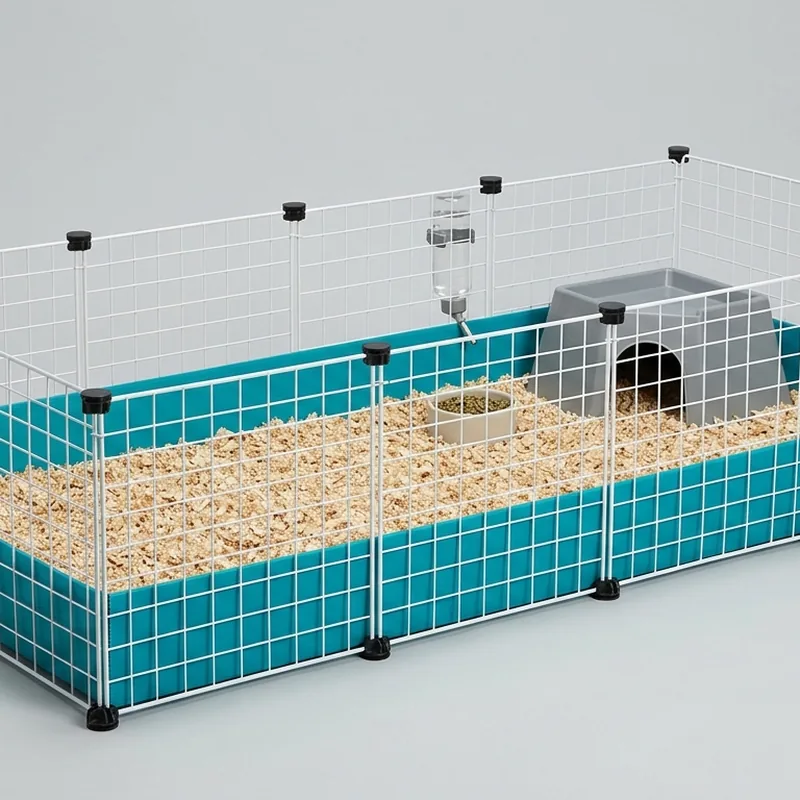
Large C&C-Style Coroplast Cage
Easily exceeds the 7.5 sq ft single-animal minimum, expandable for pairs, and easy to clean thanks to a low-sided open design.
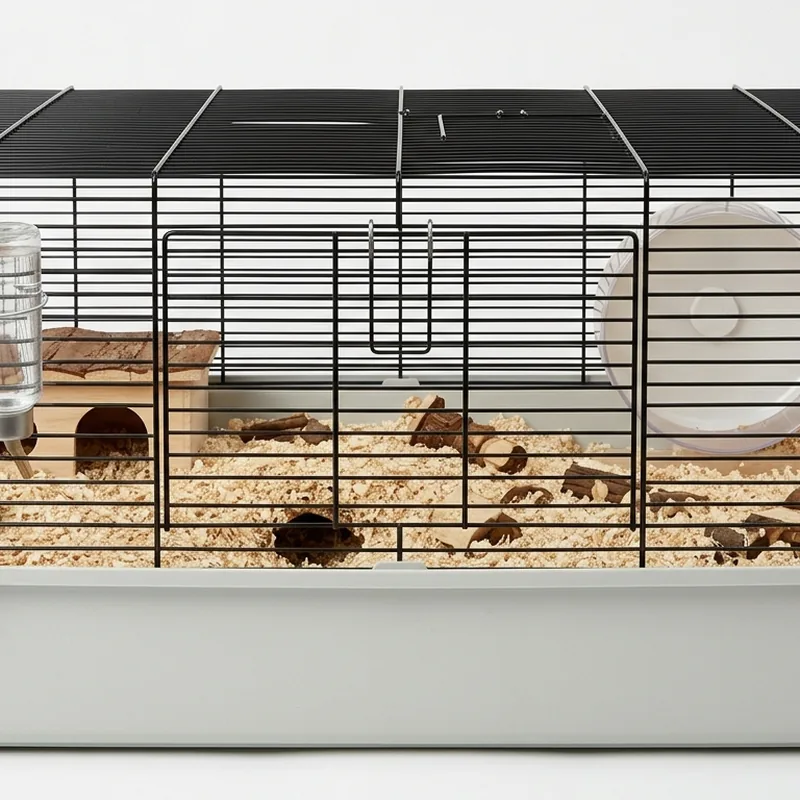
Deep-Base Wire-Top Cage
Enough bedding depth for natural burrowing behavior, well beyond typical shallow starter-kit cages.
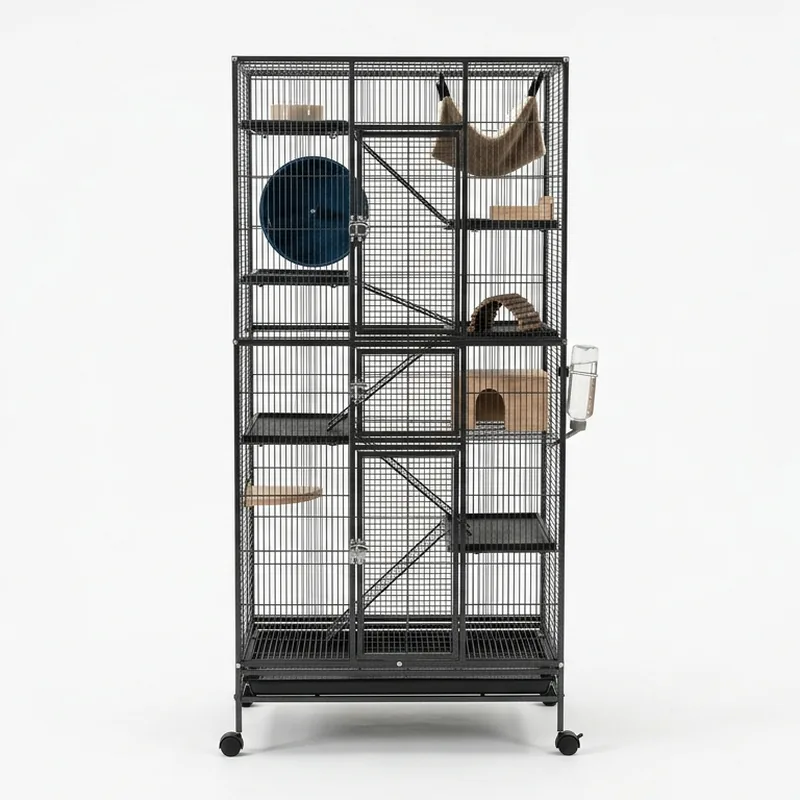
Multi-Level Wire Cage
Vertical levels genuinely add usable space for a climbing, exploring species, with narrow enough bar spacing to prevent escapes.
Whichever you choose, treat the manufacturer’s stated size as a starting point to verify against species-specific recommendations, not as the final word.
Common Sizing Mistakes to Avoid
- Buying based on the animal’s current juvenile size. Most small pets grow substantially in their first several months.
- Trusting “starter kit” labeling as a welfare guarantee. These are priced and sized for retail convenience, not necessarily species needs.
- Underestimating multi-animal space needs. Pairs and groups need meaningfully more than a simple size multiplication.
- Prioritizing appearance over cleaning access. A cage that’s hard to clean thoroughly will be cleaned less often, with real health consequences.
Getting cage size right from the start is one of the highest-leverage decisions in small-pet ownership — it affects daily wellbeing, long-term health, and how much you’ll enjoy caring for your pet far more than most accessory purchases ever will.
A Final Sizing Sanity Check
Before finalizing any cage purchase, measure the actual footprint against the species minimum with a tape measure rather than trusting a product listing’s stated dimensions, which occasionally include the packaging or exclude the base tray. If you’re between two sizes, size up — it’s rare for owners to regret extra space, and common to regret buying the minimum and needing to upgrade within the first year regardless.
A correctly sized cage, chosen once with genuine care, sets the foundation for nearly everything else in small-pet keeping — good habits around feeding, cleaning, and enrichment are all easier to maintain in a properly sized space than in a cramped one.
Take the extra time before buying — it’s one of the most consequential decisions you’ll make for the animal’s entire life with you.
It’s worth getting right the first time.
Your future self, and your pet, will both benefit from the extra square footage.
More Small Pets Resources
FAQ
At minimum 7.5 square feet for one guinea pig, more for a pair — well beyond most store-bought starter cages.
Generally yes, but layout matters too — a cage with more usable floor space and vertical climbing area beats a taller cage with a small footprint.
Yes, as long as the floor is solid (not wire-bottomed), since wire flooring can injure a guinea pig's feet over time.
