
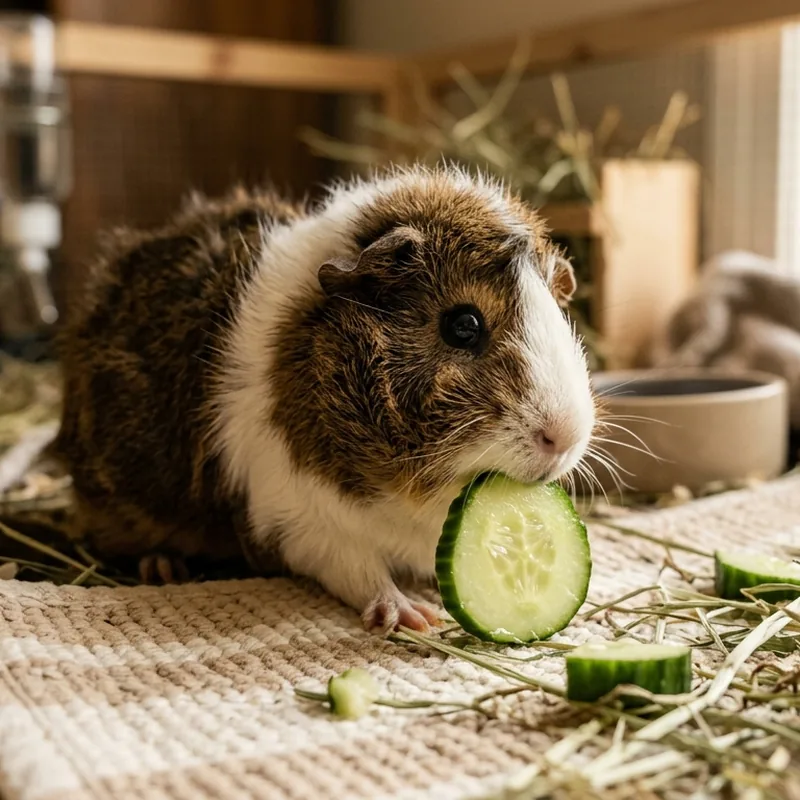
Why Cucumber Works for Guinea Pigs
Cucumber’s high water content and low calorie count make it a refreshing, low-risk treat, especially in warm weather. It’s a common addition to a guinea pig’s fresh vegetable rotation alongside leafy greens and bell peppers.
Vitamin C Still Matters More From Other Sources
Guinea pigs, unlike most mammals, can’t produce their own vitamin C and need a reliable dietary source every day. Cucumber contains only a small amount of vitamin C, so it shouldn’t be relied on for this — bell peppers, guinea-pig-formulated pellets, and other vitamin-C-rich vegetables should remain the main source, with cucumber as a hydrating extra rather than a nutritional pillar.
How Much Cucumber Is Too Much
A small slice or two, a few times a week, is a reasonable amount. Because cucumber is mostly water, overfeeding it can lead to loose stool or diarrhea, more from dilution and volume than from any toxicity.
Preparing Cucumber for Guinea Pigs
Wash thoroughly, slice thin, and consider peeling if your guinea pig has a sensitive stomach. Remove any uneaten cucumber from the cage after a few hours so it doesn’t spoil.
FAQ
Small amounts most days are generally fine, but it shouldn't replace their main vegetables and vitamin C sources.
Yes, the skin is fine, though peeling is an option for guinea pigs with sensitive digestion.
It can contribute some extra hydration alongside their regular water bottle, but it isn't a substitute for a constant supply of fresh water.
Yes, overfeeding any high-water vegetable can lead to loose stool. Moderation is the key, not avoidance.
