
The Defensive Arch — the ‘Halloween Cat’ Posture
This is the classic scared or threatened posture: back arched high, fur puffed out (a response called piloerection), body turned sideways to look bigger, ears flattened, and often a low growl or hiss. It usually appears when a cat feels cornered or threatened — by another animal, a stranger, or a sudden startling event — and is a clear signal to give the cat space rather than approach.
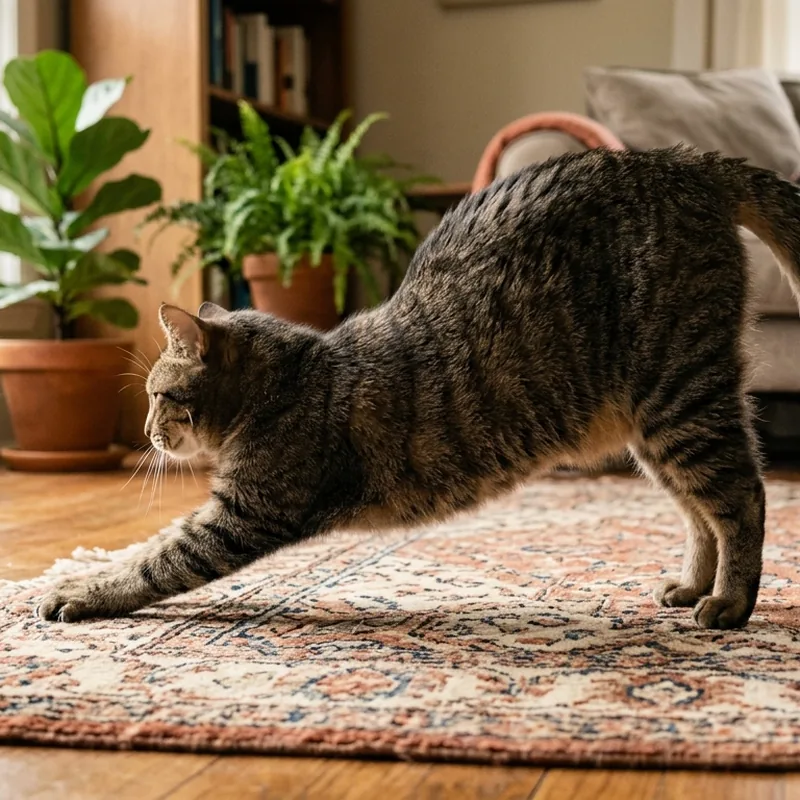
The Relaxed Stretch Arch
The other common arched back is just a stretch — typically after waking up or getting up from resting, the back arches briefly and smoothly, often followed by the cat extending its front legs forward in a long, satisfied stretch. There’s no puffed fur, no hissing, and the cat’s overall posture stays loose and relaxed throughout.
How to Tell Them Apart Quickly
- Fur: Puffed out and bristled = defensive. Smooth and flat = normal stretch.
- Ears: Flattened back = defensive. Neutral or forward = relaxed.
- Sound: Hissing or growling = defensive. Silent, maybe a small yawn or chirp = relaxed.
- Context: Just encountered something startling = defensive. Just woke up or getting comfortable = relaxed stretch.
What to Do If You See the Defensive Arch
Give your cat space and remove whatever’s causing the stress if you can identify it — another pet, a loud noise, an unfamiliar person. Don’t try to pick up or comfort a cat in this state, since a frightened, defensive cat is much more likely to scratch or bite even toward someone it normally trusts.
FAQ
No — it's just as often a completely normal stretch. The surrounding body language, like fur and ear position, tells you which one you're seeing.
Piloerection makes a cat look larger and more intimidating to a perceived threat, an instinctive defensive display shared with many other animals.
Separate them calmly and give both animals space to settle. Repeated defensive posturing between pets in the home may need a slower, supervised reintroduction process.
In some cases, yes, particularly if the arching is unusual, persistent, or paired with reluctance to move or be touched — that combination is worth a vet visit rather than assuming it's behavioral.
