
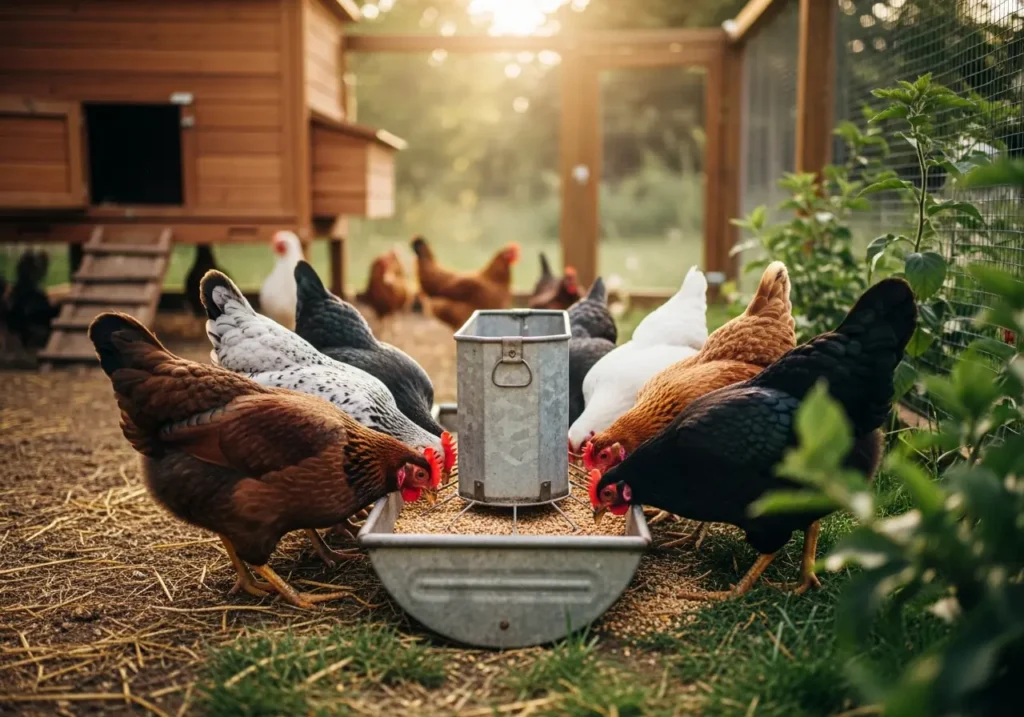
Good backyard chicken nutrition comes down to a quality layer feed as the base of the diet, supplemented thoughtfully — not a free-for-all of scraps and treats. Getting feeding right directly affects egg production, shell quality, and overall flock health.
Layer Feed Basics
Once hens start laying (typically around 18–20 weeks old depending on breed), they should transition to a complete layer feed formulated with the calcium and protein levels needed for consistent egg production. A general guideline is about a quarter-pound of feed per bird per day, though this varies by breed size and season.
Calcium Supplementation
Even with a good layer feed, offering free-choice crushed oyster shell separately (not mixed into the feed) lets hens self-regulate calcium intake based on their individual laying rate — heavier layers need more calcium than birds laying less frequently.
Grit
Chickens don’t have teeth — they grind food in their gizzard using small stones (grit). Free-ranging birds often pick up enough naturally, but confined birds need grit offered separately to digest food properly.
Treats and Scraps
Many kitchen scraps and garden treats are fine in moderation — leafy greens, fruit, cooked grains — but treats should stay a minor portion of the diet since too much dilutes the nutritional balance of the main feed. Avoid chocolate, avocado skin and pit, raw dried beans, moldy food, and heavily salted or processed foods.
Water
Fresh, clean water available at all times is critical — hens that go without adequate water can stop laying and are at higher risk of heat stress in summer. Water should be checked and refreshed daily, more often in hot weather.
For specific feed brand comparisons, see our Best Food for Backyard & Farm Pets buying guide.
Life Stage Feed Categories Explained
Commercial poultry feed is formulated by life stage, and using the correct category matters more than most new keepers initially realize. Starter feed (higher protein, around 18-20%) supports chicks from hatch through roughly 8 weeks. Grower feed transitions birds through adolescence with moderated protein and calcium levels appropriate for developing but not-yet-laying birds. Layer feed, introduced once hens approach laying age (typically 18-20 weeks), includes significantly higher calcium to support eggshell production — feeding layer feed to young, non-laying birds can actually cause kidney damage from excess calcium, making this a genuinely important distinction to get right, not a minor technicality.
Understanding Protein and Calcium Needs
Laying hens have substantial ongoing calcium needs to produce eggshells daily, and layer feed alone sometimes isn’t quite sufficient for heavy layers during peak production — offering free-choice oyster shell alongside layer feed lets hens self-regulate additional calcium intake as needed, without over-supplementing birds that don’t need as much. Protein needs shift with life stage and purpose — meat-purpose breeds being raised for eventual processing often do best on higher-protein grower rations maintained longer than laying-flock birds would need.
Treats, Scraps, and the 90/10 Rule
Many backyard keepers enjoy supplementing commercial feed with garden scraps, mealworms, and other treats — a reasonable practice as long as treats stay to roughly 10% or less of total diet, with complete commercial feed making up the remaining 90%. Treats given too generously can dilute overall nutritional balance, since birds will often preferentially eat favorite treats over their balanced complete feed if given the choice in excess.
Foods That Are Genuinely Dangerous to Poultry
Avocado (toxic to birds), raw dried beans (contain a toxin destroyed only by proper cooking), chocolate, and moldy or spoiled feed are all things to keep away from a flock entirely. Onions and garlic in large quantities, while sometimes debated, are generally kept minimal or avoided by cautious keepers. Always research before offering any new treat item, since bird-specific toxicity doesn’t always match mammalian toxicity lists.
Fresh Water — More Important Than Feed Itself
Chickens and ducks drink substantial amounts of water daily, and access to clean, unfrozen (in winter) water is arguably more immediately critical than feed access — a flock without water for even a day can see significant drops in egg production and genuine health stress. Heated waterers or regular manual ice-breaking in freezing climates are essential winter equipment, not an optional nicety.
Seasonal Feeding Adjustments
Cold weather increases caloric needs as birds burn more energy maintaining body temperature — some keepers offer a bit of scratch grain (a lower-nutrition treat, but calorie-dense) in the evening during cold months specifically to support overnight warmth through digestion-generated heat. Summer heat, conversely, often reduces appetite, making feed timing (offering the bulk of the day’s feed during cooler morning and evening hours) more important for maintaining adequate intake.
Grit — An Easy-to-Overlook Essential
Chickens don’t have teeth and rely on grit (small stones or a commercial grit product) held in their gizzard to mechanically grind food for digestion. Free-range birds often source enough grit naturally from the ground, but confined birds or those on soft ground need grit offered separately — without it, even a nutritionally perfect feed isn’t properly digested, making this a small but genuinely important piece of the nutrition picture that’s easy for new keepers to miss entirely.
Duck Nutrition Differs From Chicken Nutrition
If your backyard flock includes ducks, note that their nutritional needs differ somewhat from chickens — ducks generally need slightly higher niacin levels than standard chicken feed provides, and duck-specific or waterfowl feed (or chicken feed supplemented with brewer’s yeast, a niacin source some keepers use) helps prevent leg problems associated with niacin deficiency, particularly in fast-growing ducklings.
Probiotics and Digestive Supplements
Poultry-specific probiotic supplements, added to water or feed periodically, are used by some keepers to support gut health, particularly during stressful periods like a move, a new-bird introduction, or recovery after illness or antibiotic treatment. While not essential for a healthy flock under normal conditions, many keepers find value in using them proactively during known stress points rather than only reactively once digestive issues have already appeared.
Fermented Feed as a Nutrition Strategy
Fermenting feed (soaking dry feed in water for 24-48 hours before offering it) is a practice some experienced keepers use, citing improved nutrient bioavailability and natural probiotic benefits from the fermentation process, along with a modest feed-cost reduction since fermented feed expands and can reduce the total dry feed volume needed for the same nutritional intake. This requires proper technique — daily fresh batches, clean equipment, and recognizing the difference between beneficial fermentation and spoilage — to do safely, and isn’t necessary for good flock nutrition, but is a legitimate option for keepers interested in optimizing further.
Nutrition During Molt
Molting is genuinely protein-intensive, since feathers are largely composed of protein, and a flock going through a heavy molt benefits from a temporary switch to a higher-protein feed (sometimes a grower or all-flock formulation, or a dedicated feather-fix supplement) rather than staying on standard layer feed throughout the process. This typically coincides with a natural pause or reduction in egg-laying, so the temporarily lower calcium needs of a non-laying or lightly-laying molting flock align reasonably well with a temporary shift away from high-calcium layer feed during this specific period.
Nutrition Considerations for Meat Birds
Birds being raised specifically for meat, whether fast-growing commercial meat breeds or slower dual-purpose birds destined for eventual processing, generally need sustained higher-protein grower-type rations rather than the layer-formulated feed appropriate for an egg-focused flock, since their nutritional priority is efficient muscle growth rather than eggshell calcium needs. This is a meaningfully different feeding approach worth planning deliberately if raising birds for this purpose rather than defaulting to standard layer-flock feeding practices.
Nutrition Basics for Other Backyard Livestock
Keepers with a broader mix of backyard animals should note that poultry nutrition principles don’t transfer to other species. Rabbits need a high-fiber diet built around unlimited grass hay plus a measured pelleted ration, with sudden diet changes risking serious digestive upset. Goats are ruminants requiring a forage-based diet (pasture or hay) with any grain feeding carefully limited, since excess grain can cause serious, sometimes fatal digestive issues in goats specifically. Keeping feed and feeding routines for each species clearly separated in a mixed backyard setup is essential, not just a best practice, given how different — and in some combinations genuinely dangerous if cross-fed — these species’ nutritional needs actually are.
Reading and Comparing Feed Labels Effectively
Beyond the basic protein and calcium percentages, comparing the ingredient list across feed options reveals real quality differences — named whole grains and identifiable protein sources near the top of the list generally indicate a higher-quality formulation than feeds relying heavily on vague catch-all ingredient terms. Price-per-pound comparisons are less useful than price-per-serving-day comparisons once you know your flock’s actual daily consumption, since a seemingly cheaper feed with lower nutritional density can end up costing more per bird per day if birds need to eat more of it to meet their needs.
Transitioning Nutrition as Your Flock Ages
A flock’s nutritional needs shift meaningfully across its full lifespan, not just through the early starter-grower-layer stages — older hens past peak production still need adequate nutrition even as their egg output naturally declines, and some keepers transition aging hens to an all-flock or lower-calcium maintenance feed once production has dropped significantly, avoiding the kidney strain risk of continued high-calcium layer feed in birds no longer using that calcium for consistent egg production.
More Backyard & Farm Pets Guides
FAQ
A complete layer feed formulated with the calcium and protein levels laying hens need, offered as the main part of the diet, supplemented with free-choice oyster shell for extra calcium.
Many scraps are fine in moderation, but they shouldn't make up more than a small portion of the diet, and some foods (chocolate, avocado skin/pit, raw beans, salty foods) should be avoided entirely.
Yes, if they don't have access to natural soil with small stones — grit helps chickens grind up food in their gizzard since they don't have teeth.
