
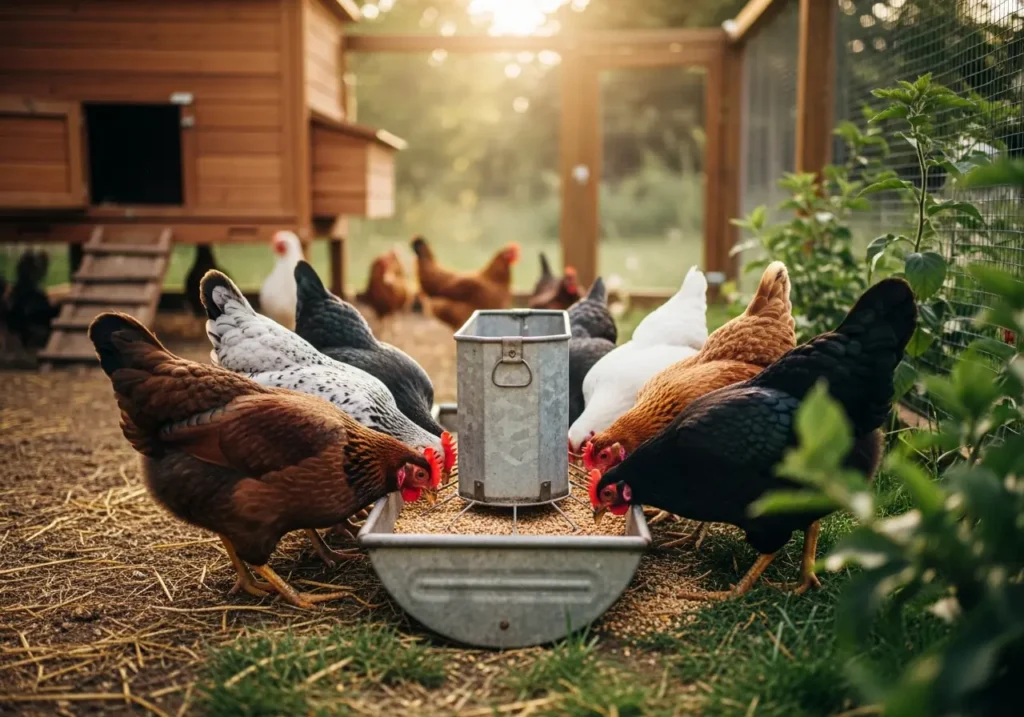
The best backyard chicken feed matches your birds’ life stage: starter feed for chicks, grower feed for young pullets, and complete layer feed for hens actively laying eggs — each formulated with different protein and calcium levels.
| Feed Type | Life Stage | Key Trait |
|---|---|---|
| Starter feed | Day-old to ~8 weeks | Higher protein for rapid growth |
| Grower feed | ~8–18 weeks | Balanced protein, lower calcium than layer feed |
| Layer feed | Actively laying hens (18+ weeks) | Higher calcium for shell production |
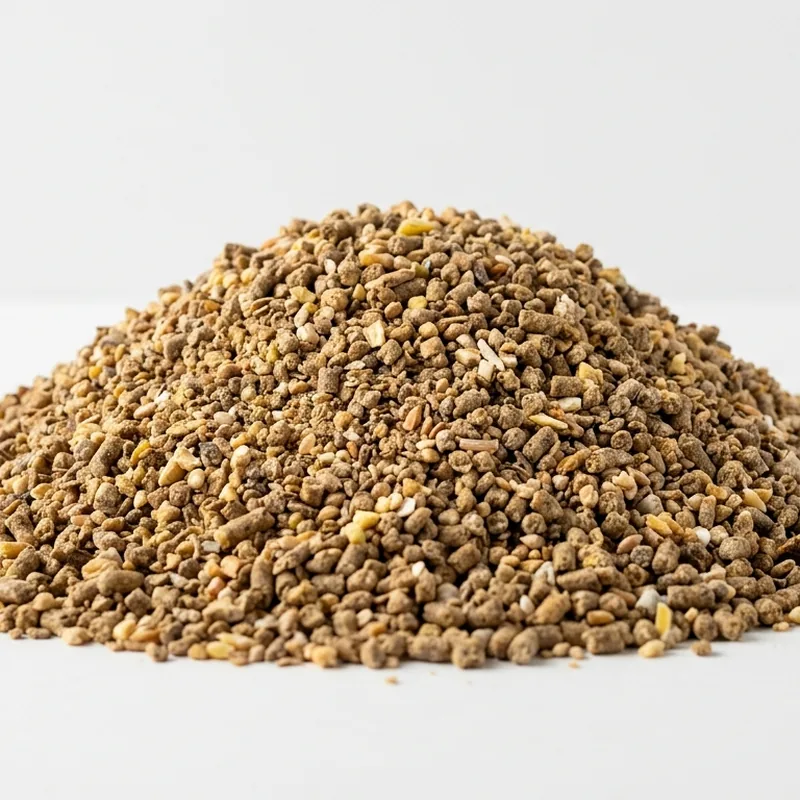
Complete Layer Crumble/Pellet
A balanced, ready-to-feed layer ration covering protein and calcium needs for consistently laying hens.
Check Price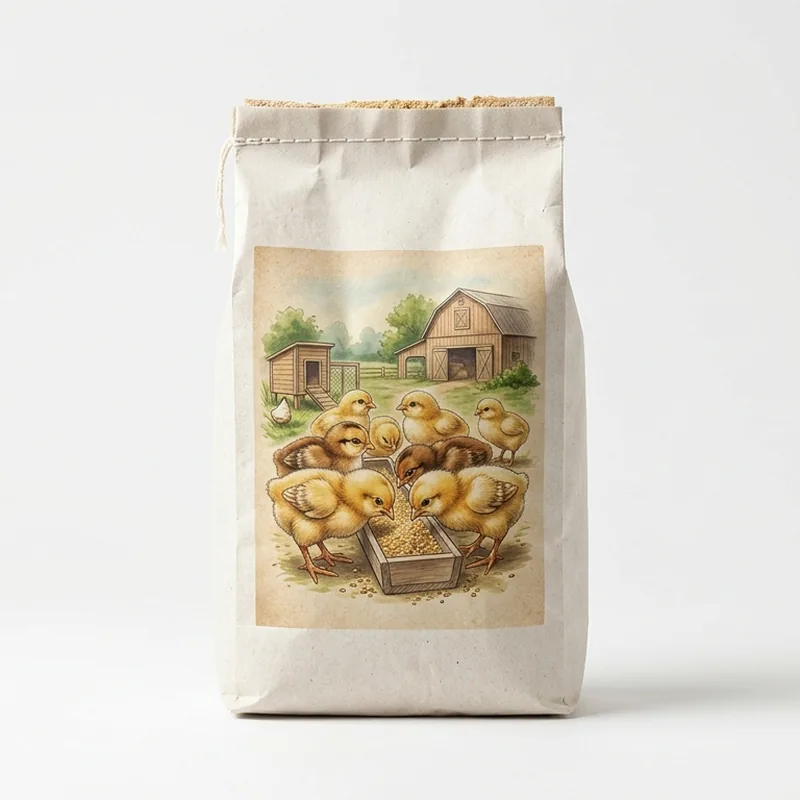
Chick Starter Feed
Higher-protein formula designed for the rapid growth phase in the first weeks of a chick’s life.
Check Price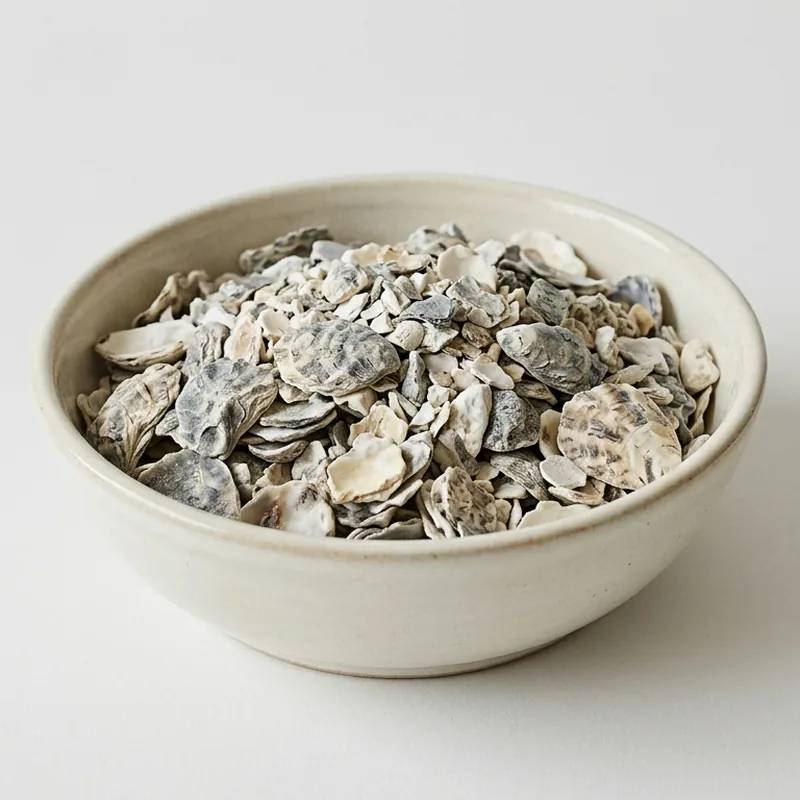
Free-Choice Oyster Shell
Offered separately from feed so hens can self-regulate calcium intake based on individual laying rate.
Check PriceReading the Label
Check the guaranteed protein percentage (typically 16–18% for layer feed) and confirm the feed matches your flock’s actual life stage — feeding the wrong stage feed long-term can affect growth or, in the case of early calcium exposure, young birds’ health.
Matching Feed Type to Your Flock’s Actual Composition
A mixed-age or mixed-purpose flock (layers plus a few meat birds, or layers plus chicks) complicates simple feed selection, since different birds in the same space may technically need different formulations. Many keepers in this situation default to an all-flock or grower-style feed with calcium offered separately (free-choice oyster shell) so laying hens can self-supplement without over-calcifying younger or non-laying birds who’d be harmed by full layer feed.
Organic and Non-GMO Options
For keepers prioritizing these factors, organic and non-GMO poultry feeds are increasingly available, generally at a meaningful price premium over conventional feed. The nutritional completeness matters more than the organic/non-GMO status for basic flock health — these labels reflect ingredient sourcing philosophy more than nutritional superiority, worth understanding clearly if cost is a genuine factor in your decision.
Fermented Feed — A Growing Practice
Some keepers ferment their feed (soaking in water for a day or two before feeding) citing improved digestibility and nutrient availability, along with some feed cost savings since fermented feed expands and can reduce total dry feed needed. This requires proper technique to avoid mold or spoilage and isn’t necessary for flock health, but it’s a popular practice worth researching if you’re interested in optimizing further.
Buying and Storing Feed Properly
Buy feed in quantities you’ll use within about a month for freshness, store in rodent-proof metal or heavy plastic containers, and keep it dry — damp or moldy feed is a genuine health hazard, not just a waste of money. A cool, dry storage location out of direct sun preserves nutritional quality significantly longer than exposed or poorly stored feed.
Regional Feed Availability and Sourcing
Local feed stores often carry region-appropriate formulations and can offer genuinely useful, locally-relevant advice based on common regional conditions and challenges — building a relationship with a knowledgeable local feed store is a genuinely underused resource many keepers overlook in favor of pure online research.
Feed Cost Management Without Compromising Quality
Buying in appropriately sized bulk (balanced against your actual flock size and feed turnover rate to avoid staleness), taking advantage of any loyalty programs, and avoiding excessive treat-feeding that displaces nutritionally complete feed intake are all legitimate ways to manage ongoing feed costs without cutting corners on actual nutritional quality.
Feeding Ducks and Geese Differently Than Chickens
Backyard flocks that mix in ducks or geese alongside chickens need more than one feed on hand, since waterfowl have meaningfully different nutritional needs — most notably a higher niacin requirement that standard chicken feed doesn’t fully cover, and inadequate niacin can cause leg and joint problems in growing ducklings and goslings specifically. Some keepers feed an all-flock or waterfowl-formulated feed to the whole mixed group with calcium offered separately for laying birds of any species, rather than trying to manage multiple exclusive feeding stations in a shared space. Waterfowl also drink and splash in water far more than chickens, so their water source needs checking and refreshing more frequently in a mixed setup, and feed placed too near water access gets fouled faster than most keepers initially expect.
Treats and Table Scraps: What’s Safe, What’s Toxic
Occasional treats are fine for backyard poultry but should stay a small fraction of total intake, since treats displacing proper feed is a common route to nutritional imbalance even when the treats themselves aren’t harmful. Safe, popular options include leafy greens, cooked squash, mealworms, and small amounts of fruit. Genuinely toxic items to keep away from chickens include avocado skin and pit, raw or dried beans, chocolate, and anything moldy — moldy food in particular is a bigger practical risk than most of the “toxic food” list, since it’s the one many keepers accidentally offer without realizing spoilage has set in. Salt-heavy processed human food is also worth avoiding regularly, since poultry are more sensitive to excess sodium than many keepers assume.
Grit and Free-Range Foraging’s Real Nutritional Contribution
Birds with real foraging access pick up bugs, greens, and grit that supplement their diet, but the actual nutritional contribution varies enormously with season, location, and how much genuine foraging space is available — it’s a meaningful bonus, not a dependable core nutrition source. Confirm grit is available even for foraging flocks unless you’re certain their range includes enough coarse natural grit on its own, since a nutritionally strong feed still underperforms if birds can’t mechanically process it properly in the gizzard.
Transitioning Feed Without Upsetting Your Flock
Whenever changing feed brand, formulation, or life-stage type, blend the new feed into the old gradually over about a week rather than switching all at once — birds can be surprisingly resistant to unfamiliar feed, and an abrupt switch sometimes causes several days of reduced intake and a corresponding dip in growth or egg production that a gradual transition avoids almost entirely. This matters even when switching between two nutritionally similar and reputable feeds, since the resistance is often about taste and texture familiarity rather than the feed’s actual quality.
Feeding Rabbits and Goats in a Mixed Backyard Setup
Keepers with a broader mix of backyard animals — rabbits, goats, or other small livestock alongside poultry — need to keep feeds strictly separated, since poultry feed is generally unsuitable for these species and vice versa. Rabbits need a high-fiber pelleted diet with unlimited access to grass hay, not poultry crumble, while goats are ruminants whose digestive systems require a fundamentally different, primarily forage-based diet with any grain kept limited and carefully dosed. Cross-feeding, even accidentally through a shared or poorly secured feed area, is a real risk in mixed setups and worth designing feeding stations specifically to prevent.
Reading Feed Freshness and Recognizing Spoilage
Fresh feed should smell neutral to faintly grain-like, not musty, sour, or off — trust your nose as a first check whenever opening a new bag or reassessing feed that’s been in storage a while. Visible clumping, discoloration, or any sign of insect activity in the bag are all reasons to discard that batch rather than continue feeding it out, since the health cost of feeding spoiled feed outweighs the relatively small cost of the lost feed itself. Buying only what your flock will use within its freshness window (roughly a month for most feeds under proper storage) is the simplest way to avoid ever facing this tradeoff in the first place.
How Weather Extremes Change Feed Needs
Cold weather increases caloric needs across most backyard poultry and livestock as animals burn more energy maintaining body temperature, and a modest increase in feed quantity or an evening scratch-grain supplement for extra calories overnight is a common, reasonable adjustment. Heat has the opposite effect on appetite — birds and animals often eat less in extreme heat, making feed palatability and freshness (not letting feed sit out going stale or attracting pests in warm conditions) more important than trying to force intake up. Neither adjustment requires switching feed brands entirely, just being responsive to how your specific animals’ intake shifts with the seasons.
Working With a Vet or Extension Office on Feed Questions
For anything beyond routine feed selection — genuine growth concerns, a flock-wide production drop, or questions specific to an unusual mixed-species setup — a vet experienced with backyard poultry or livestock, or a local agricultural extension office, is a more reliable resource than general online guidance. Extension offices in particular are often an underused, free or low-cost resource for region-specific feed and husbandry questions that account for local climate and common regional conditions in a way generic advice can’t.
Keeping a Simple Feed Log
A basic log noting feed brand, purchase date, and any observed changes in appetite, production, or condition helps connect cause and effect when something changes — far easier than trying to recall from memory whether a dip in egg output started before or after a recent feed switch. This doesn’t need to be elaborate; even a simple notebook entry every time you buy feed is enough to spot patterns over a season.
More Backyard & Farm Pets Resources
FAQ
No — layer feed's higher calcium content can harm young, non-laying birds' kidney development. Chicks need starter feed formulated for their growth stage.
Typically around 18–20 weeks old, or when the first eggs appear, whichever comes first.
It's a personal choice — organic feed avoids certain synthetic pesticides and additives, but standard commercial feed is nutritionally complete and safe for most backyard flocks.
